
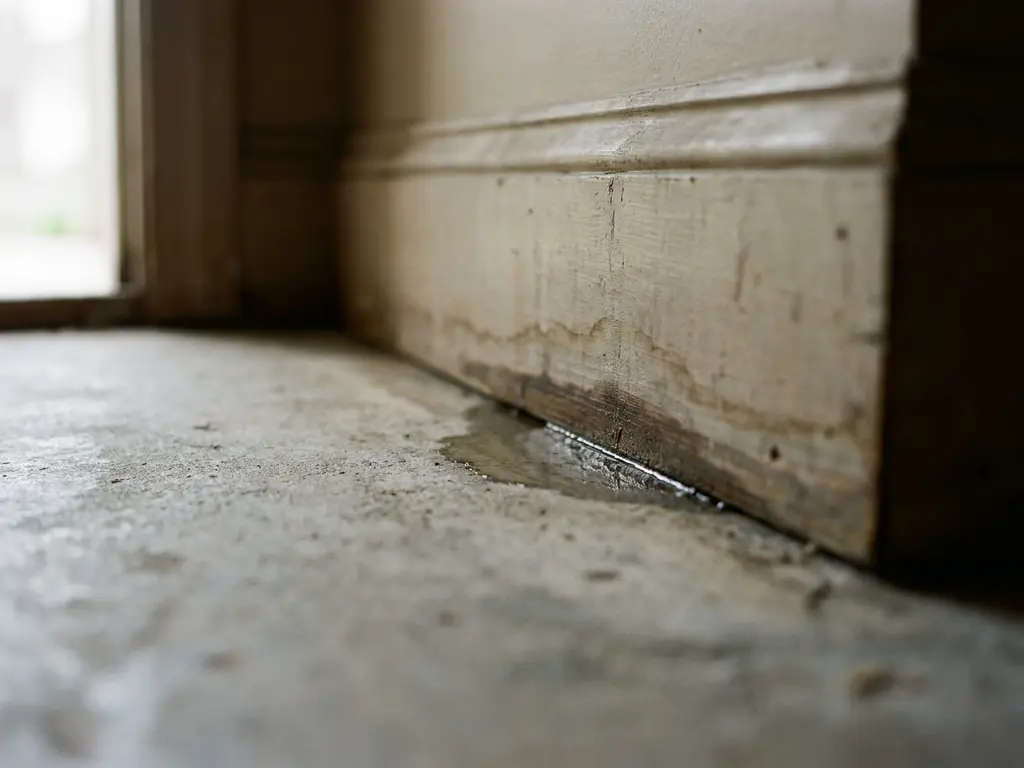
Damp baseboards are usually caused by rising damp from the floor or foundation, condensation due to poor ventilation, or leakage from the crawl space. It is a common problem in older homes, but new-build houses can also suffer from it. In this article, we answer the most frequently asked questions about damp baseboards and what you can do about it.
What are the most common causes of moisture in baseboards?
Moisture in skirting boards is almost always caused by one of three factors: rising damp from the ground, condensation due to insufficient ventilation, or a leak somewhere in or under the home. Which cause applies in your case depends on the construction of your house, the condition of the crawl space, and the indoor humidity.
The most common causes listed:
- Rising damp: Groundwater rises through the foundation or floor and reaches the underside of the skirting boards.
- condensation: Warm, humid air in the house comes into contact with the cooler wall or floor and condenses as moisture.
- Poor crawl space ventilation: A damp crawl space causes a continuous supply of moist air towards the living floor and baseboards.
- Leakage: A leak in the water pipes, the sewer, or the roof can transport moisture to the underside of the baseboards.
- Missing or damaged moisture barrier: In older homes, a proper damp-proof layer is sometimes missing in the foundation.
It is important to identify the correct cause before starting a solution. An incorrect approach will not solve the problem and can even make it worse.
How can you recognize rising damp by your baseboards?
Rising damp at baseboards can be recognized by a combination of visible and tactile signs. The underside of the baseboard feels clammy or wet, white efflorescence appears on the wall or baseboard, and the paint or wallpaper begins to peel or flake off. In advanced cases, mold growth is also visible.
Specific characteristics of rising damp are:
- The moisture pattern is limited to the bottom 30 to 100 centimeters of the wall.
- The spots are irregular in shape and grow larger as the season progresses.
- There is a musty smell present, which is stronger in winter or after periods of rain.
- The skirting board or plaster feels soft or crumbly.
- White salt drawings (efflorescence) are visible on the wall surface.
The difference between rising damp and condensation is that rising damp is present almost all year round and does not disappear by ventilating more. Condensation, on the other hand, is seasonal and responds quickly to improved airflow.
Can poor ventilation cause damp baseboards?
Yes, poor ventilation is one of the most underestimated causes of damp baseboards. When humid air is not properly vented, moisture condenses on the coldest surfaces in the house, including the floor and the underside of baseboards. This applies to both indoor ventilation and crawl space ventilation.
A poorly ventilated crawl space is a particularly common culprit. The damp air that lingers in the crawl space slowly rises through the floor structure. The result: skirting boards that feel damp, a musty smell in the house, and eventually mold growth on the floor or walls.
Signs that ventilation is the cause:
- Fogged windows, especially in the morning.
- A musty or stuffy smell that does not go away.
- Damp baseboards that improve when you open windows or leave a window slightly ajar.
- Mold spots in multiple places in the house, not just near the baseboards.
When are damp baseboards a sign of a bigger problem?
Damp skirting boards are a sign of a larger problem when moisture spreads to the walls, the floor structure is affected, or visible mold growth occurs. In those cases, there is structural moisture penetration that worsens without intervention and can harm health and the condition of the home.
Pay attention to the following warning signs:
- Mold spreading past the baseboard to the wall or floor.
- Wood rot in the floor joists or window frames.
- Moisture that is visible on multiple floors or in multiple rooms at the same time.
- A strong, persistent musty odor that does not respond to ventilation.
- Subsidence or deformation in the floor.
In these situations, it is advisable to act quickly. Prolonged moisture in the structure leads to higher repair costs and can eventually compromise the load-bearing capacity of floors and walls.
What solutions are there for moisture at the bottom of baseboards?
The right solution for damp skirting boards depends on the cause. For rising damp, injection techniques or installing a horizontal damp barrier are effective options. For condensation, better ventilation helps. In the case of a damp crawl space, improving the ventilation in the crawl space often the most direct and sustainable solution.
An overview of commonly used solutions:
- Improve crawl space ventilation: Installing ventilation grilles in the crawl space ensures constant air circulation and significantly reduces moisture buildup.
- Mechanical ventilation: A heat recovery system or simple mechanical extraction helps regulate indoor humidity.
- Fluid injection: In the case of rising damp, a chemical barrier is applied in the wall to stop further moisture migration.
- Crawl space foil: A vapor barrier foil on the floor of the crawl space limits the evaporation of groundwater.
- Detecting and repairing leaks: In the event of a leak, fixing the source is the only effective solution.
Preventive maintenance also plays a major role. Ensure that the crawl space is regularly checked for moisture buildup, and keep ventilation openings free of leaves and debris.
When is it wise to hire a professional?
It is wise to call in a professional when you cannot determine the cause of the moisture, when the problem recurs despite your own measures, or when there is mold, wood rot, or structural damage. A professional has the knowledge and resources to accurately diagnose the cause and resolve it sustainably.
Definitely seek professional help if:
- The humidity spreads to multiple rooms or floors.
- Own ventilation measures have not resulted in any improvement.
- There is mold growth larger than a palm.
- You suspect that the crawl space is structurally poorly ventilated.
- The floor structure or foundation may be affected.
Early intervention prevents higher costs later. A moisture problem that remains untreated for months or years can lead to substantial repair work on the floor, walls, and foundation.
How De Betonboorder helps with crawl space ventilation
Poor crawl space ventilation is one of the most common causes of damp skirting boards. We at De Betonboorder offer a practical and durable solution: installing ventilation grilles in the crawl space. We improve this by drilling precisely into concrete or masonry, allowing air to circulate freely and preventing moisture buildup.
What we arrange for you:
- Professional drilling of openings for ventilation grilles in the crawl space.
- Work with high-quality diamond core drills for a precise result with minimal collateral damage.
- Execution by experienced professionals throughout the Netherlands.
- A tidy workspace afterwards, taken care of from start to finish.
- In many cases, a professional at your home within two days.
Good crawl space ventilation not only reduces damp baseboards but also improves your home's insulation and eliminates musty odors. Would you like to know what we can do for your situation? Contact us and order a professional immediately.
Related Articles
- Can my concrete floor accommodate an opening for a stairwell?
- How quickly will I see results after installing crawl space ventilation?
- Wall-mounted or floor-standing model: which air conditioner fits better in your interior?
- Innova vs Qlima: which air conditioner is the quietest in the bedroom?
- What are the 10 best air conditioners?
- Can an air conditioner increase the value of your home?
- What is the best air conditioner?
- What temperature in the house is unhealthy?
- What happens if damage occurs during drilling?
- How do you drill multiple holes at exactly the same height?
- What is a chemical anchor and when do you need it?
- Can you remove a load-bearing wall in an apartment?