
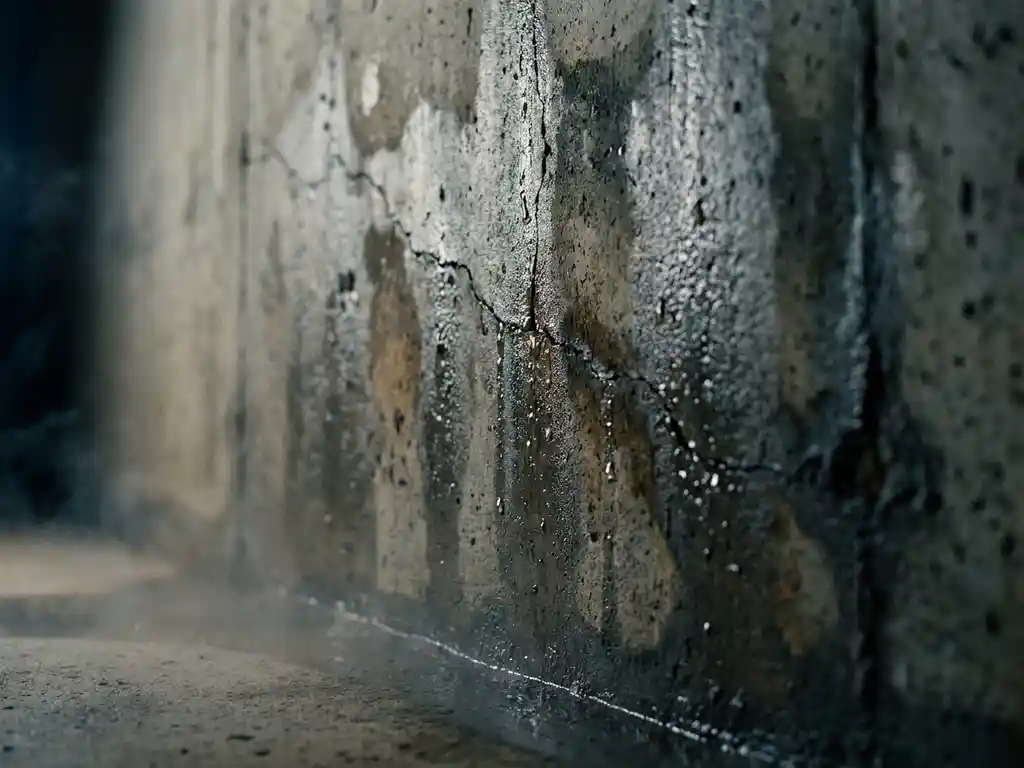
Musty odors worsen after a wet period because moisture penetrates deep into concrete, walls, and wooden structures, activating mold spores and bacteria there. The longer it remains wet, the more time microorganisms have to grow. This is especially true in poorly ventilated areas such as basements and crawl spaces. In this article, you will read exactly why this works this way and what you can do about it.
What happens to moisture in concrete and walls after rain?
After rain, moisture seeps in through small pores and cracks in concrete and walls. Concrete is naturally porous: it absorbs water like a sponge, but also releases it slowly. During and after a wet period, this system becomes overloaded, causing moisture to accumulate in the structure and the surrounding environment.
As soon as moisture enters concrete or walls, a chain reaction begins. Minerals dissolve and are carried along, which eventually leads to efflorescence (white spots) and structural damage. At the same time, the relative humidity in adjacent rooms rises, promoting condensation on cold surfaces. This effect is strongest in crawl spaces and basements, because the air there is hardly refreshed.
Why does damp in the house smell worse after a long rain shower?
After a long rain shower, dampness smells worse because mold spores, bacteria, and organic material in walls and floors are activated by the excess moisture. These microorganisms produce volatile organic compounds (VOCs) that your nose recognizes as musty or earthy odors. The longer the wet period lasts, the more of these substances are released.
Moreover, prolonged rain saturates the soil around the house. Groundwater levels rise, capillary rise increases, and moisture penetrates through the foundation or floor. This is particularly noticeable in homes with a crawl space: the combination of damp soil, stagnant air, and organic material such as wood and earth creates the ideal environment for mold growth and the associated odor.
Which places in the house are most affected by musty odors?
The places most affected by musty odors after a wet period are the crawl space, the basement, windowless bathrooms, and poorly ventilated corners in living rooms and bedrooms. These are spaces where air moves very little and moisture has difficulty escaping.
- Crawl space: Moisture from the ground rises, condenses against cold structural elements, and spreads through cracks to the floor above.
- Cellar: Groundwater pressure and poor ventilation make basements vulnerable to moisture buildup and mold growth.
- Bathroom without mechanical ventilation: Shower vapor combines with penetrating external moisture, which quickly leads to mold on grout and ceilings.
- Corners of exterior walls: Thermal bridges cause condensation, especially if the outer wall is still wet after rain.
A good one crawl space ventilation is in many cases the most effective way to tackle the source of musty air in the home, because the crawl space is the biggest source of moisture in homes with a wooden ground floor.
How do you know if the musty smell is caused by a structural moisture problem?
Musty air is structural if the odor returns after every rain shower, does not disappear upon airing, or is accompanied by visible mold, efflorescence on walls, or condensation on windows. A one-off odor after a short shower is normal; an odor that persists or worsens indicates an underlying problem.
Pay attention to these signs that indicate a structural moisture problem:
- Mold spots that return after you have cleaned them
- Paint or wallpaper that bubbles, peels, or discolors
- White efflorescence (lime bloom) on exterior walls or foundation
- A damp or sticky floor in the crawl space
- Wood that feels rotten or soft in floor joists or window frames
After a wet period, give your house two to three days to dry with the windows open. If the odor persists after that, there is a good chance that the moisture is not coming from the outside via rain on windows or doors, but is penetrating the building structure itself.
What really helps against musty odors after a wet spell?
What really helps against musty air is tackling the source of moisture, not just masking the odor. Ventilating, dehumidifying, and improving air circulation in vulnerable areas are the most effective measures. Air fresheners or scented candles do not solve the problem.
Concrete steps that work:
- Ventilate actively: Open windows and doors on both sides of the house to create cross-ventilation, preferably on a dry, windy day.
- Use a construction dryer or dehumidifier: Mechanical dehumidification helps quickly, especially in basements and crawl spaces.
- Check and improve the ventilation of the crawl space: Ensure that air can circulate freely so that humid air does not stagnate.
- Clean mold thoroughly: Use a chlorine-based mold cleaner or a specialized product, and then dry the surface completely.
- Check gutters and drains: Clogged drains lead to moisture accumulation around the foundation.
Long-term solutions focus on improving the structure itself: better insulation, installing a vapor barrier in the crawl space, or placing ventilation grilles in the foundation.
When should you call in a professional for moisture problems?
You must call in a professional when the musty odor persists despite ventilation, when structural damage such as rot or cracking is visible, or when you suspect that the crawl space or foundation is the source. These types of problems do not resolve themselves and will worsen without intervention.
A professional can identify the exact source of moisture, assess the extent of the damage, and take targeted measures. Examples include drilling ventilation openings in the foundation, installing an active ventilation system in the crawl space, or applying a moisture barrier. These are interventions that require specific knowledge and tools and are not easy to carry out yourself.
Do not wait too long: the longer moisture remains in structural elements, the greater the risk of wood rot in floor joists, deterioration of insulation material, and the spread of mold spores throughout the home. Early intervention is always cheaper than repairing advanced damage.
How De Betonboorder helps with crawl space ventilation
Poor crawl space ventilation is the main cause of musty air in many homes. We solve this effectively by drilling and installing ventilation grilles in the foundation, allowing air to circulate freely and damp air to exit the crawl space instead of rising to the living floor.
- We drill precise openings in concrete or masonry without causing unnecessary damage to the structure.
- We install high-quality ventilation grilles that match the size and type of foundation.
- We work in both occupied properties and shell buildings.
- We leave the workplace neat and tidy.
- In many cases, we schedule an appointment within two days.
Good one crawl space ventilation Prevents structural moisture problems, reduces musty odors, and contributes to better insulation of your home. Would you like to know what we can do for your situation? Contact us and we respond within 24 hours.
Related Articles
- How is it prevented that the floor weakens after a stairwell?
- Will my energy bill be higher due to a cold, damp floor?
- Which air conditioner is best for tropical nights in the bedroom?
- Can one air conditioner also cool the hallway and adjacent rooms?
- How do you prevent an air conditioner from freezing?
- What is a portable air conditioner?
- How long does it take to make a stairwell opening in the floor?
- How do you optimize the energy consumption of an air conditioner?
- How much does it cost to have your air conditioning on for 1 hour?
- Why does a concrete driller use water when drilling?
- Can you remove a load-bearing wall in a corner house?
- How long does it take to apply for an environmental permit in 2026?