
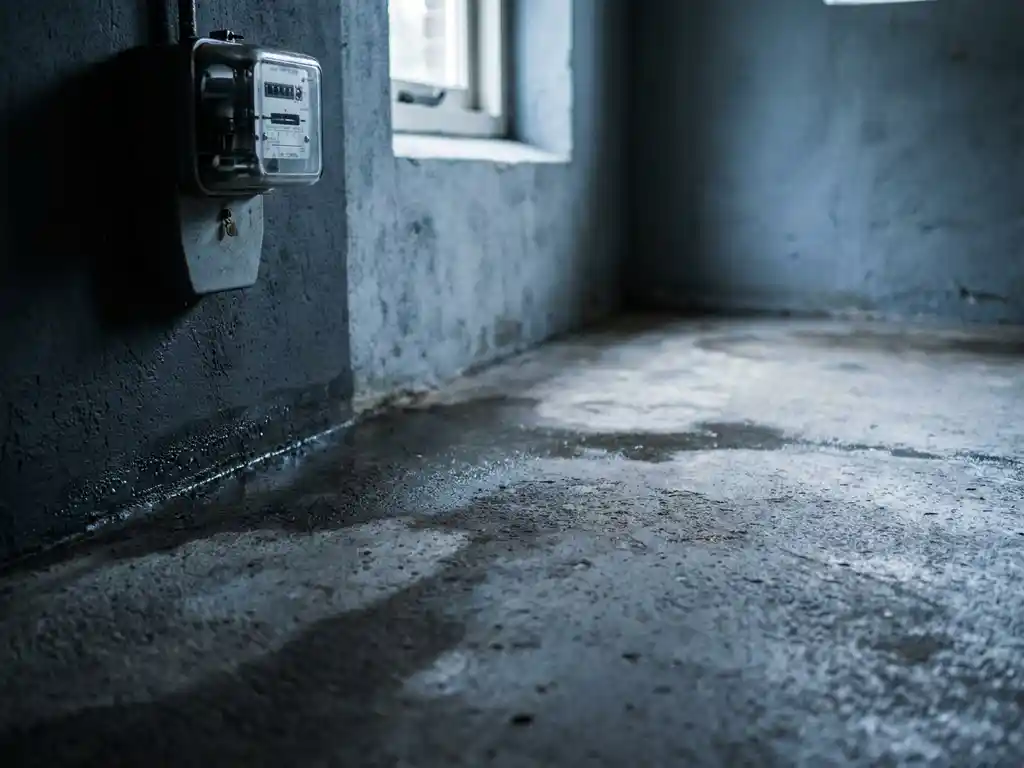
Yes, a cold and damp concrete floor can noticeably increase your energy bill. A poorly insulated floor is one of the biggest sources of heat loss in a home, and moisture makes that problem significantly worse. In this article, we answer the most frequently asked questions about damp concrete floors, heat loss, and what you can do about it.
How much heat do you lose through a cold concrete floor?
A home can lose up to 15 to 20 percent of its total heat through an uninsulated concrete floor. Concrete is naturally a good heat conductor, which means it quickly transfers heat to the cold subsoil or crawl space underneath. This heat loss is constant as long as there is a temperature difference between the inside and the outside.
In practice, this means that your heating system has to work harder to maintain the indoor temperature. Especially during the winter months, when the ground temperature is low, an uninsulated concrete floor feels cold and continuously draws heat away from the room. This is not only uncomfortable but also directly costs money in energy consumption.
Why does moisture in the floor worsen energy loss?
Moisture in a concrete floor increases energy loss because water is a much better heat conductor than dry concrete or air. A damp floor dissipates heat faster than a dry floor, meaning your heating system requires even more energy to keep the room at temperature.
Moreover, moisture in the structure causes insulation materials to perform less effectively. Insulation works based on trapped air; as soon as that air is replaced by moisture, the insulation value decreases sharply. A damp floor is therefore not only a structural problem, but also an energy problem that is reflected in your monthly energy bill.
What are the most common causes of a damp concrete floor?
The most common causes of a damp concrete floor are capillary moisture absorption from the ground, condensation due to temperature differences, and insufficient ventilation of the crawl space. In older homes, a proper moisture barrier between the foundation and the floor is often lacking.
- Capillary moisture absorption: Moisture rises from the substrate through small pores in the concrete, especially if no foil or moisture barrier is present.
- condensation: When warm indoor air comes into contact with a cold floor, moisture condenses on or within the structure.
- Poor crawl space ventilation: A poorly ventilated crawl space ventilation The system allows moist air to stagnate under the floor, leading to moisture accumulation in the concrete.
- Leaks: Damaged pipes or inadequate waterproofing can introduce localized moisture into the floor structure.
How do you know if your floor has moisture?
You can recognize a damp concrete floor by visible discoloration, a musty odor, loose floor coverings, or condensation on the underside of carpet or laminate. A simple test is to tape a piece of plastic sheeting to the floor; if there is condensation under the sheeting after 24 hours, there is moisture penetration.
Other signs are:
- White efflorescence on the concrete surface, indicating salt deposits due to moisture transport.
- Mold formation at the edges of the floor or on the underside of furniture
- A persistently cold floor, even when the heating is on
- A musty or earthy smell in the home, especially in the morning
Are you in doubt? A structural engineer or moisture specialist can accurately determine the moisture content in the floor using measuring equipment.
What can you do about a cold, damp concrete floor?
The approach to a cold, damp concrete floor depends on the cause, but the most effective solutions are improving crawl space ventilation, installing floor insulation, and sealing sources of moisture. Addressing the cause is always more effective than treating the symptoms.
Improving ventilation under the floor
A well-ventilated crawl space is essential to prevent moisture buildup. By ensuring sufficient air circulation under the floor, the crawl space dries out and moisture penetration to the floor is significantly reduced. This can be achieved by installing ventilation grilles or a mechanical ventilation system in the crawl space.
Insulating the floor
Once the source of moisture has been addressed, floor insulation is the next step. Options include insulation boards under a new screed, sprayed PUR foam in the crawl space against the underside of the floor, or insulating underlays when replacing the floor covering. Each of these methods reduces heat loss and increases living comfort.
How much can a well-insulated floor save on the energy bill?
A well-insulated floor can reduce heating energy costs by 10 to 20 percent, depending on the initial situation and the type of insulation. In combination with resolving moisture problems, the savings can be even greater in practice, because your heating system does not have to work as hard.
The exact savings depend on factors such as the floor area, the thickness and quality of the insulation, the type of heating system, and the condition of the rest of the home. Floor insulation is generally one of the more cost-effective measures, as the investment pays for itself relatively quickly through lower energy bills and increased living comfort.
In 2026, energy conservation is more relevant than ever. With current energy prices, it pays off even more to invest in measures that structurally limit heat loss, and the floor is an underestimated but important factor in this regard.
How De Betonboorder helps with crawl space ventilation
A damp concrete floor often starts with a poorly ventilated crawl space. We offer a direct and effective solution: installing ventilation grilles in the crawl space, so that damp air can escape and moisture problems are prevented or resolved.
What we do for you:
- Professional drilling of openings in concrete for ventilation grille installation
- Professional installation of crawl space ventilation in both occupied situations and shell properties
- Neat finish and tidy workspace afterwards
- Nationwide network of experienced professionals, available within two days in many cases
- Contact within 24 hours of request
Good crawl space ventilation reduces moisture problems, limits musty odors, and contributes to a better insulation value of your home. Would you like to know what we can do for your situation? Contact us and we will discuss the possibilities with you without obligation.
Related Articles
- Is a stairwell worth the investment for an extra room in the attic?
- What is the difference between natural and mechanical crawl space ventilation?
- Which energy label does an air conditioner need for energy-efficient cooling?
- Innova ELEC series compared: 12HP vs 15HP vs 18HP
- How big does an air conditioner need to be for my room?
- Which air conditioner is best for an office?
- How do you drill a hole for a spotlight in a concrete ceiling?
- How do you ensure a hole goes straight into the wall?
- What is core drilling and when do you need it?
- Why is my drill slipping on a tile?
- What are the alternatives to removing a load-bearing wall?
- Can you remove a load-bearing wall in a listed building?