
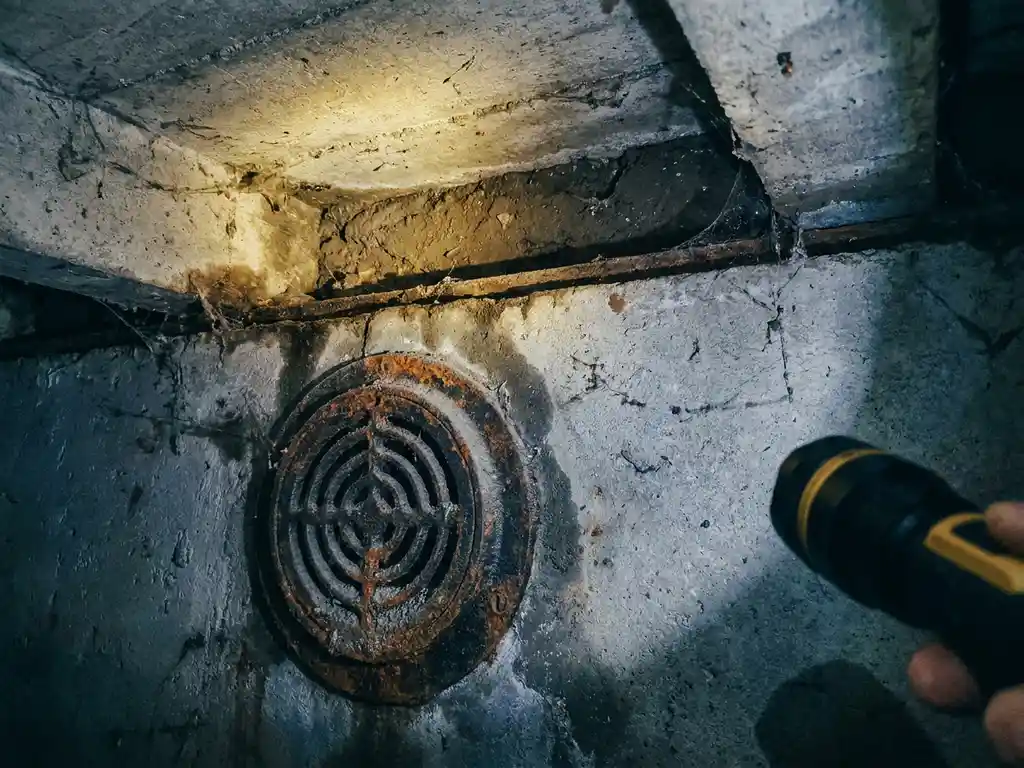
Crawl space ventilation is not a one-time investment that you can simply forget about. It is a lasting solution to moisture problems, but only if you regularly inspect and maintain the system. Without maintenance, ventilation loses its effectiveness, which can lead to moisture, mold, and wood rot. In this article, we answer the most frequently asked questions about maintenance, lifespan, and choices regarding crawl space ventilation.
How long does crawl space ventilation last without maintenance?
The lifespan of maintenance-free crawl space ventilation varies greatly depending on the system type, but in most cases, expect five to ten years before performance issues become apparent. Passive grilles last longer than active fans, but they too become clogged or damaged by moisture, dirt, and insects.
Active ventilation systems with an electric fan have moving parts that wear out. Without periodic inspection, a motor can seize up or a filter can become so clogged that the airflow virtually stops. Passive grilles appear maintenance-free, but in practice, they become blocked by cobwebs, leaves, or dirt, severely reducing ventilation. In short: the system may be physically intact, but functionally it has long ceased to operate optimally.
What problems arise if crawl space ventilation is not maintained?
If crawl space ventilation is not maintained, problems accumulate. Insufficient air circulation leads to increased humidity in the crawl space, which is the direct cause of mold growth, wood rot in the floor joists, and a musty odor that permeates the living space.
The consequences extend beyond mere inconvenience. Wood rot in load-bearing floor joists is a structural problem that is costly to repair. Mold spreads through the air and can cause respiratory issues, especially in children and the elderly. Furthermore, a damp crawl space attracts pests such as cellar moths and woodworm. What starts as a clogged grate can escalate into a major renovation.
How often should crawl space ventilation be checked?
Crawl space ventilation must be checked at least once a year, preferably at the end of autumn before winter begins. In areas with a high groundwater level or in older homes, twice a year is a sensible frequency.
During an inspection, you check the following:
- Are the grates free of dirt, leaves, and cobwebs?
- Is the fan (in an active system) still working correctly?
- Is there visible mold growth or condensation in the crawl space?
- Are the filters clean and not clogged?
- Is there moisture damage to the floor joists or insulation?
An annual visual inspection takes little time but prevents major damage. Also pay attention to signs from the home itself, such as a musty smell or cold floors, as these can indicate a malfunctioning ventilation system in the crawl space.
When is replacing crawl space ventilation better than repairing it?
Replacement is better than repair when the system is older than ten to fifteen years, when malfunctions occur repeatedly, or when the current ventilation has structurally insufficient capacity for the size of the crawl space. Repair makes sense for a one-off defect in a relatively new system.
A rule of thumb: if repair costs exceed fifty percent of replacement costs, installing a new system is more economically sensible. Additionally, replacement is always the better choice if the cause of the moisture problem is not the system itself, but its capacity. A vent that is too small or incorrectly installed will never solve the problem, no matter how well you repair it. In that case, a professional assessment of the situation is the first step.
What is the difference between passive and active crawl space ventilation?
Passive crawl space ventilation works on the basis of natural air circulation through grilles in the foundation, without electricity or moving parts. Active ventilation uses an electric fan that actively pumps air through the crawl space, independent of wind direction or outside temperature.
Passive ventilation
Passive grilles are simple, inexpensive to purchase, and virtually maintenance-free from a mechanical perspective. They rely on wind pressure and temperature differences to move air. In situations with little wind or in deep crawl spaces, their effectiveness is limited. Passive ventilation works best in homes with a good orientation and sufficient grilles on multiple sides of the foundation.
Active ventilation
Active systems provide a constant and controllable airflow, regardless of weather conditions. They are more effective for severe moisture problems or in crawl spaces with an unfavorable layout. The disadvantage is that they consume electricity and require periodic maintenance on the fan and filters. For homes with persistent moisture problems, an active system is generally the better choice.
Can crawl space ventilation be installed yourself, or is a professional needed?
Installing a simple passive grate can be done by a handy do-it-yourselfer, provided an opening is already present in the foundation. As soon as a hole needs to be drilled in concrete, a professional with professional tools is required. For active systems, installation by a professional is always recommended.
Drilling a ventilation opening in a concrete or masonry foundation requires diamond drilling tools and knowledge of the load-bearing structure. A mistake in the wrong place can weaken the foundation. Furthermore, the diameter of the drill hole must precisely match the grille or system to be installed. For the installation of active ventilation, the electrical connection is added, for which a certified installer is required. If in doubt, always seek advice from a specialist before you begin.
How De Betonboorder helps with crawl space ventilation
We handle the entire process for installing crawl space ventilation in your home. From precisely drilling the necessary openings in the foundation to leaving the workspace tidy: our professionals handle everything from start to finish. This is what you can expect from us:
- Professional drilling of ventilation openings in concrete, stone, or masonry
- Use of high-quality diamond core drills for a clean and precise result
- Minimal collateral damage to the area surrounding the borehole
- Execution by experienced professionals from a nationwide network
- In many cases, a professional is available within two days.
- The workspace is left neat and tidy.
Good crawl space ventilation prevents moisture problems, reduces musty odors, and improves your home's insulation. Would you like to know what we can do for your situation? Contact us and we respond within 24 hours.
Related Articles
- How much does a structural engineer cost for a stairwell in the floor?
- How is a stairwell finished after sawing?
- How do I choose a specialist for crawl space ventilation?
- Innova 15HP ELEC vs Innova 18HP ELEC: when do you choose more capacity?
- Innova 15HP vs Innova 15HP Vertical: which variant fits in your space?
- Innova ELEC series compared: 12HP vs 15HP vs 18HP
- Why is my air conditioner dripping water?
- Can an air conditioner increase the value of your home?
- Which air conditioner fits in a small space?
- How is a penetration in an exterior wall made watertight?
- How do I drill into metal?
- Removing a load-bearing wall in a terraced house: what should you look out for?