
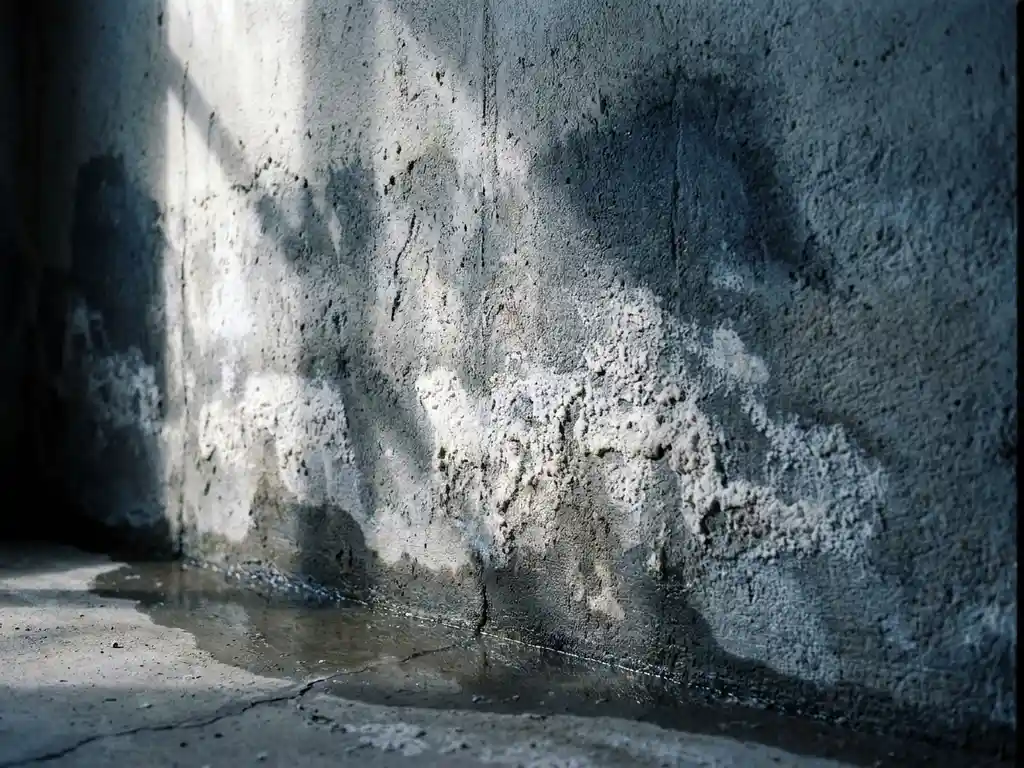
Rising damp is moisture that rises from the soil through building materials such as brick, concrete, or mortar. This occurs via small pores and capillaries in the material, a process called capillary action. It is a common problem in older homes, but newer buildings can also be affected. In this article, we answer the most frequently asked questions about rising damp so that you can quickly recognize it and know when to take action.
Where does rising damp come from?
Rising damp occurs when groundwater rises through the pores and capillaries in building materials. This process, also known as capillary action, occurs when there is no proper moisture barrier present between the foundation and the walls of a building. Older homes, in particular, often lack a sound horizontal damp-proof course, also known as a damp-proof course or DPC (Damp Proof Course).
The amount of rising moisture depends on various factors: the porosity of the building material, the height of the groundwater level, and the presence or absence of ventilation under the floor. A poorly ventilated crawl space plays a major role in this. When moisture accumulates under the ground floor without sufficient air circulation, humidity rises and the moisture penetrates further up into the walls. Good crawl space ventilation is therefore one of the most effective ways to limit or prevent rising damp.
What are the first signs of rising damp?
The first signs of rising damp are visible stains or discoloration on the lower parts of walls, often up to a height of one meter. Additionally, you frequently see salt efflorescence on the wall surface, a musty smell in the room, and peeling wallpaper or paint at the bottom of the walls.
Listed below are the most common early signs:
- Dark or wet spots at the bottom of walls, especially in winter or after periods of rain
- White discoloration on the masonry, caused by salts carried along with the moisture
- Peeling wallpaper or paint at a height of 20 to 100 centimeters
- Musty or moldy smell which is persistently present, even after ventilating
- Mold formation on or near the floor and in corners of rooms
- Damage to the plaster layer, where the plaster comes loose or crumbles
It is important to take these signs seriously as soon as you notice them. Rising damp worsens the longer it remains untreated, and the damage to the structural integrity can mount up significantly.
How does rising damp differ from other moisture problems?
Rising damp differs from other moisture problems in that it always originates from below and is confined to the lower zone of the wall. Other common moisture problems, such as condensation or penetrating damp, have a different pattern and cause. Recognizing the difference is essential for the correct approach.
Rising damp versus condensation
Condensation occurs when warm, humid indoor air comes into contact with a cold wall or floor. This is often seen in poorly ventilated bathrooms, kitchens, or bedrooms. In these cases, the damp patches are not found exclusively at the bottom of the wall, but also higher up, around windows, or in ceiling corners. Rising damp, on the other hand, is limited to the zone close to the floor.
Rising damp versus penetrating damp
Penetrating damp penetrates the facade from the outside, for example through a damaged exterior wall, a leaking roof, or a poorly sealed window frame. The damp patch is then often directly related to the location of the damage and worsens during rain. With rising damp, there is no direct relationship with precipitation, and the damage is consistently located at the bottom of the wall, regardless of the weather.
Which building materials are most susceptible to rising damp?
Brick, sand-lime brick, and traditional mortars are most susceptible to rising damp because these materials have high porosity and easily absorb moisture through their capillaries. Concrete is generally less susceptible, but concrete walls without a proper damp-proof course can also absorb moisture, especially in the case of damaged or porous concrete.
Aerated concrete, also known as cellular concrete or Ytong, is a special case. This material has an open cell structure that absorbs moisture quickly but also releases it just as quickly. Nevertheless, prolonged exposure to moisture can lead to structural weakening of aerated concrete. Natural stone, such as sandstone or limestone varieties, is likewise vulnerable due to the open structure of the material.
More modern building materials such as glazed tiles, dense ceramics, or well-sealed types of concrete are much less susceptible. That is also the reason why new-build homes are less prone to rising damp: nowadays, moisture barriers are applied as standard in the foundation and the ground floor.
When should you call in a professional for moisture problems?
You must call in a professional as soon as the moisture damage spreads, the cause is unclear, or when there are signs of structural deterioration of the wall. You can sometimes deal with small, superficial damp patches yourself, but rising damp in most cases requires a structural solution that demands expertise.
Definitely call in a professional if you recognize one or more of the following situations:
- The damp patch is growing despite ventilation or other measures.
- There is visible mold growth in multiple places in the house.
- The plaster or masonry is crumbling
- There is a musty odor that lingers even after prolonged airing.
- You are not sure whether it is rising damp, condensation, or penetrating damp.
- The crawl space under your home is poorly ventilated or partially flooded.
A professional can determine the exact cause, assess the severity of the damage, and recommend the most suitable solution. This could include installing a new horizontal damp-proof barrier, injecting the wall with a damp-proofing agent, or improving ventilation under the floor via the crawl space.
How De Betonboorder helps with moisture problems in your crawl space
One of the most effective ways to combat rising damp is to improve ventilation in the crawl space. We provide concrete assistance with this. Our professionals install ventilation grilles in the crawl space, creating sufficient air circulation and preventing moisture buildup.
This is what we arrange for you:
- Installing ventilation grilles in the crawl space for optimal airflow
- Drilling openings in concrete or masonry for the installation of ventilation systems
- Reducing musty odors in the house by lowering the humidity under the floor
- Improvement of insulation of your home as an additional benefit of good crawl space ventilation
- Neat finish from the workplace to completion, taken care of from start to finish by our professionals.
In many cases, we can schedule a professional for you within two days. Are you suffering from damp and do you want to know the best approach for your situation? Contact us and we are happy to think along with you.
Related Articles
- Why does my ground floor always feel damp and cold?
- Can my concrete floor accommodate an opening for a stairwell?
- Air conditioning for a busy living room: cooling with children and pets
- How big does an air conditioner need to be for my room?
- What is a cassette air conditioner?
- How does a Wi-Fi controlled air conditioner work?
- Which air conditioner is the quietest?
- Are you allowed to drill in a rental property without permission?
- How do I know if my wall is made of concrete or sand-lime brick?
- How do you ensure a hole goes straight into the wall?
- What is core drilling and when do you need it?
- What are the costs of removing a load-bearing wall?