
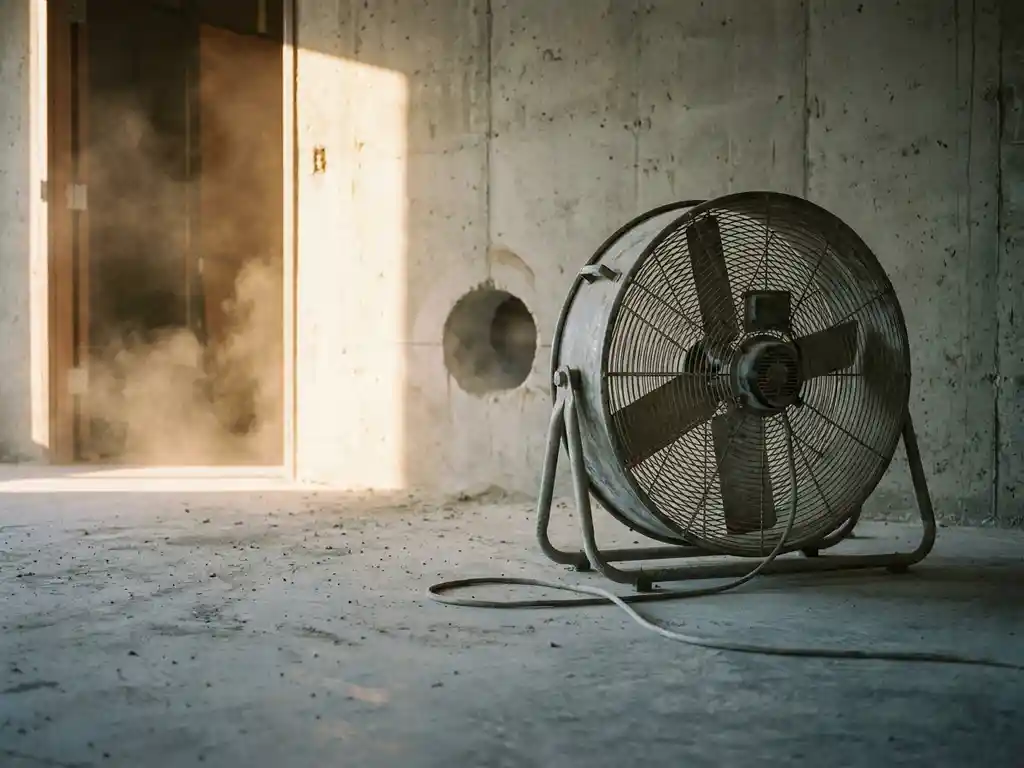
An air conditioner actually cools a room down, whereas a fan only moves the air without lowering the temperature. For those seriously seeking cooling on hot days, an air conditioner offers the most effective solution. Below you will find answers to the most frequently asked questions about air conditioners and fans, so that you can make an informed choice.
What is the difference between an air conditioner and a fan?
The main difference is that an air conditioner actively lowers the air temperature in a room, whereas a fan only circulates air. A fan creates a windchill effect on the skin, making you feel cooler. feel, but the room temperature itself remains the same. An air conditioner extracts heat from the indoor air and expels it outside.
An air conditioner works via a cooling cycle: a refrigerant absorbs heat from the indoor air, transports that heat outside, and blows cool air back into the room. This process measurably lowers the actual air temperature. A fan has no refrigerant and no compressor; the device simply moves air from one place to another.
For people battling heatwaves in the summer of 2026, this distinction is crucial. At outdoor temperatures above 35 degrees, a fan loses its usefulness almost entirely, because the circulating air is itself already too hot to provide cooling.
How does an air conditioner work in extreme heat?
In extreme heat, an air conditioner works by continuously extracting heat from the indoor air and dissipating it via an outdoor unit. Even when it is 38 degrees outside, a properly sized air conditioner can bring the indoor temperature down to a comfortable 22 to 24 degrees. The effectiveness depends on the capacity of the unit and the insulation of the room.
Modern air conditioners are equipped with inverter technology, which means the compressor system does not constantly switch on and off, but runs continuously at the correct speed. This makes them more energy-efficient and effective during prolonged heat. Via the air conditioning selection guide You will quickly find which type best suits your situation.
An important consideration during extreme heat is the capacity of the air conditioner. An undersized unit runs continuously at full load but never reaches the desired temperature. When choosing an air conditioner, always take into account the volume of the room and the degree of insulation.
Does a fan really cool the room down?
No, a fan does not cool a room down. The air temperature in the room remains exactly the same, regardless of how fast the fan spins. What a fan does do is accelerate the evaporation of sweat from your skin, making your body feel cooler. This effect disappears as soon as the outside temperature is higher than your body temperature.
In mild heat, think temperatures around 25 to 28 degrees, a fan is perfectly usable as a cheap alternative. But during a real heatwave where the indoor temperature also rises above 30 degrees, a fan offers insufficient relief and the circulating warm air can even feel unpleasant.
A combination of a fan with a bucket of ice water in front of it is popular folk wisdom, but the effect is limited and temporary. For structural cooling in the summer, this is not a sustainable solution.
What is cheaper: using air conditioning or a fan?
A fan is cheaper to purchase and consumes significantly less power than an air conditioner. An average fan consumes between 20 and 100 watts, while an air conditioner easily consumes 800 to 2500 watts. The difference is noticeable on the energy bill, especially if you use an air conditioner daily during warm periods.
However, the comparison is more nuanced than just power consumption. An air conditioner actually delivers results: cool air, better sleep, and less heat stress. A fan is cheaper, but offers little comfort in real heat. The question, therefore, is not just what is cheaper, but also what provides sufficient cooling for your situation.
- Fan: low purchase price, low power consumption, no real temperature reduction
- Air conditioner: higher purchase price, higher power consumption, but effective and measurable cooling
- Mobile air conditioner: Middle ground in terms of price, no fixed installation required, slightly less efficient than a split-unit
For those who suffer from the heat for only a few weeks a year, a fan may suffice. Those who experience multiple heatwaves every year will quickly recoup the investment in air conditioning in terms of comfort and productivity.
When is an air conditioner better than a fan?
An air conditioner is better than a fan as soon as the outside temperature consistently exceeds 30 degrees, the indoor temperature no longer drops at night, or if you experience sleep or health problems due to the heat. An air conditioner also offers clear added value for people who work from home, or have young children or elderly people living at home.
Specific situations where air conditioning is the better choice:
- Bedrooms where the temperature stays above 24 degrees at night
- Home workspaces where concentration and productivity are important
- Homes with large glass surfaces or little shade that heat up quickly
- Households with babies, the elderly, or people with a heart or lung condition
- Periods of sustained heat like the summers of recent years
A fan is fine for short, mild warm periods or as a supplement to an air conditioner to better distribute the cool air throughout the room.
Which tips really help keep your house cool?
The most effective way to keep your home cool is to combine sun shading during the day, ventilation at night, and mechanical cooling where necessary. No single measure works optimally on its own, but together they ensure a noticeably cooler indoor climate without having to run the air conditioning at full load all day.
Practical tips that really work:
- Close windows and curtains during the day: Keep the heat out by blocking sunlight, especially on the south side of the house.
- Ventilate at night: As soon as the outside temperature drops, open your windows and doors to let in the cool night air.
- Use an air conditioner specifically: Cool only the rooms you actually use, not the whole house.
- Avoid heat sources during the day: The oven, dishwasher, and dryer produce a lot of heat. Use them early in the morning or late in the evening.
- Insulate well: A well-insulated home heats up more slowly and retains cool air longer.
- Combine fan with air conditioner: A fan helps distribute cool air from the air conditioner through the room more quickly.
For a proper air conditioning installation, it is sometimes necessary to drill a hole in the wall for the pipes of a split unit. This is a precision job that requires professional tools.
How De Betonboorder helps with installing an air conditioner
A split air conditioner, the most effective and energy-efficient option, requires a pass-through in the exterior wall for the pipes between the indoor and outdoor units. That hole must be drilled tight, straight, and in the correct location to prevent damage to the structure. That is exactly where professional concrete drilling comes into play.
We help you with:
- Drilling neat through-holes in concrete, brick, or other facade materials
- Working in both occupied properties and new construction projects
- Minimal disturbance thanks to diamond core drills that operate cleanly and vibration-free.
- Delivery with a neat, tidy workspace
- In many cases, we can schedule a professional within two days.
Whether you are a private individual looking to have air conditioning installed or a contractor preparing multiple homes for cooling, we ensure professional installation. Schedule a professional immediately and ensure that your air conditioning installation is carried out properly from start to finish.
Related Articles
- What is included in the price of a stairwell?
- Will my wallpaper or floor be damaged if a stairwell is sawn?
- How do I inspect my crawl space for moisture damage myself?
- Innova 9HP Mini vs Innova 12HP: small but powerful or generously sized?
- What temperature should you set on an air conditioner?
- Can an air conditioner cause noise nuisance for neighbors?
- Why does a concrete driller use water when drilling?
- Can an oversized drill hole weaken a wall?
- How does load-bearing wall removal work in a 70s home?
- When will temporary stamps be removed?
- Can you continue to live in your home during load-bearing wall removal?
- What investigations are required before removing a load-bearing wall?