
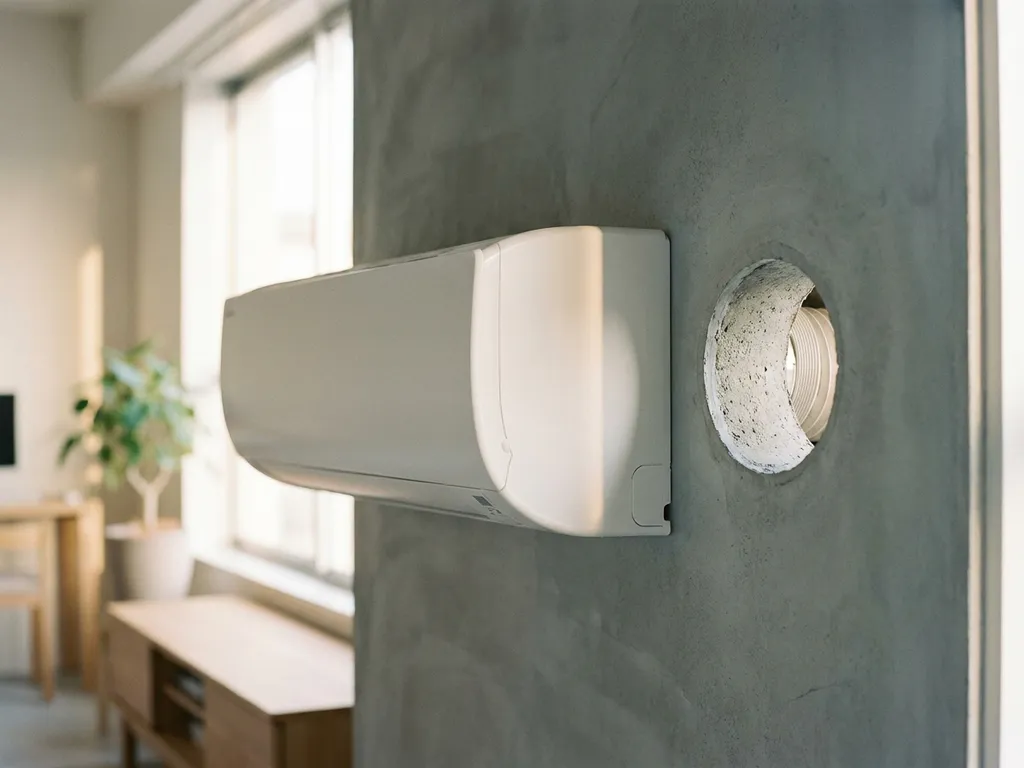
On average, a monoblock air conditioner costs between 300 and 900 euros for the unit itself, depending on the brand, capacity, and features. You pay less for a basic model, while a more powerful or energy-efficient variant costs more. In this article, you will find a complete overview of all costs associated with a monoblock air conditioner, from purchase to annual power consumption.
What determines the price of a monoblock air conditioner?
The price of a monoblock air conditioner is determined by four main factors: cooling capacity (expressed in BTU or kW), energy class, brand, and extra features. The higher the capacity and the better the energy class, the more you invest in the purchase, but the lower your monthly electricity costs usually turn out to be.
Specifically, the following factors play a role in the price:
- Cooling capacity: An appliance for a small room (up to 20 m²) requires less power than one for a large living room. More power means a higher purchase price.
- Energy class: Models with energy label A or higher are more expensive to purchase, but more economical to use. In the long run, you will recoup this difference.
- Brand and quality: Well-known brands such as Electrolux, De'Longhi, or Olimpia Splendid charge more than store brands, but often offer a longer lifespan and better warranty.
- Additional features: Think of a heat pump (heating and cooling), Wi-Fi control, air purification functions, or a timer. Every extra feature drives the price up.
- Version type: Some monoblock air conditioners have one hose, others two. A double-hose model operates more efficiently and is therefore slightly more expensive.
How much does a monoblock air conditioner cost on average?
On average, you pay between 300 and 900 euros for a monoblock air conditioner. An entry-level model for small rooms starts at around 300 euros, a mid-range unit for rooms up to 35 m² costs between 450 and 650 euros, and a powerful or energy-efficient top model can go up to 900 euros or more.
By comparison: a simple fan costs ten euros, but doesn't really cool the air. A monoblock air conditioner is therefore the cheapest real cooling solution without a fixed installation. Do you want to know which model suits your situation? Via the air conditioning selection wizard you will quickly find a suitable device.
Also take into account any additional costs:
- Hoses and drain sets (sometimes not included): 20 to 50 euros
- Window seal or wall penetration: 30 to 100 euros
- Extended warranty or service contract: variable
What are the installation costs of a monoblock air conditioner?
One of the biggest advantages of a monoblock air conditioner is that you do not need a professional installer. You install the unit yourself, connect the exhaust hose through a window or wall penetration, and plug it into the socket. As a result, installation costs are zero euros in most cases.
However, there may be situations where you do incur costs:
- Have a wall penetration drilled: If you do not want to use a window for the drain hose, you can have a hole drilled in the wall. This is a skilled job where accuracy is important, especially with concrete walls.
- Special window seal: For sliding windows or skylights, custom seals are sometimes required, which entail additional costs.
- Electrical connection: Powerful models sometimes require a heavier circuit in the fuse box. Hiring an electrician costs extra.
Do you want a neat wall penetration without the hassle? Then check out the Price tool for concrete drills to get an indication of what such a job costs.
How much does a monoblock air conditioner cost in electricity per year?
A monoblock air conditioner consumes an average of between 50 and 200 euros worth of electricity annually, depending on how often you use the unit, the energy class, and the power output. With normal use during the summer months, a few hours a day, you quickly end up paying 80 to 120 euros per year.
A few factors that influence power consumption:
- Energy class: An A-label model consumes significantly less than a D-label device at the same cooling capacity.
- Usage time: Cooling for eight hours daily in a hot summer costs more than just an occasional hour in the evening.
- Room size versus capacity: An undersized device that runs constantly at full power consumes more power than a properly sized model.
- Electricity tariff: The current energy prices in 2026 naturally play a direct role in the final costs on your energy bill.
Recouping the cost of an energy-efficient model through lower electricity costs is realistic, especially if you also use the air conditioner for heating in the winter via the heat pump function.
What is the price difference between a monoblock and a split air conditioner?
A monoblock air conditioner is cheaper to purchase and requires no installation, while a split air conditioner costs more but is quieter, more efficient, and more suitable for permanent use. The overall cost ratio shifts as you use the device more intensively.
Purchase costs compared
A monoblock air conditioner costs between 300 and 900 euros, and you install it yourself. A split air conditioner costs 500 to 2.000 euros for the unit alone, plus installation costs from a certified technician, which quickly add up to an extra 500 to 1.000 euros. As a result, the total investment for a split system is easily two to three times higher than for a monoblock.
Long-term operating costs
Split air conditioners generally have a higher COP (coefficient of performance), which means they cool or heat more per kilowatt-hour. With intensive use of more than four months per year, a split air conditioner can prove more cost-effective in terms of electricity costs in the long run. For occasional use, a monoblock remains the financially smartest choice.
When is a monoblock air conditioner the best choice?
A monoblock air conditioner is the best choice if you are looking for an affordable, flexible, and installation-free cooling solution for temporary or seasonal use. It is ideal for rental homes, home offices, bedrooms, or situations where a permanent installation is not possible or desired.
Choose a monoblock air conditioner if:
- You are renting and are not allowed to make any modifications to the home.
- You want to move the air conditioner between rooms or locations
- You have a limited budget and want quick results
- You only use the air conditioner for a few months a year
- You don't want to call in a mechanic and are going to do it yourself
A split air conditioner is better if you cool and heat year-round, want maximum silence, and are willing to invest in a permanent solution.
How De Betonboorder helps with the installation of your air conditioner
You can hang or install a monoblock air conditioner yourself, but for a neat and durable exhaust penetration through a concrete or brick wall, you need a professional. That is exactly where The Concrete Driller in focus. We ensure a clean and watertight drill hole in the right place, so that your air conditioner functions optimally without mess or damage to the wall.
What we do for you:
- Drilling a precise hole through concrete, stone, or masonry for the drain hose
- Working with diamond core drills for a clean result and minimal collateral damage.
- Suitable for use in both new construction and occupied situations
- Nationwide network of professionals, often available within two days
- The workspace is left neat and tidy.
Ready to have your air conditioner installed properly? Contact us and we will arrange it quickly and professionally for you.
Related Articles
- Which grilles are best for crawl space ventilation?
- How much does professional air conditioning installation by a professional cost?
- Innova vs Olimpia Splendid: which monoblock air conditioner cools best?
- Air conditioning in a home with many windows: how to prevent a greenhouse effect
- How can I lower the temperature in my house?
- How do you prevent an air conditioner from freezing?
- Can an air conditioner double the electricity bill?
- Which insurance covers damage caused by drilling activities?
- Why does a concrete driller use water when drilling?
- What is core drilling and when do you need it?
- How long does a chemical anchor last in concrete?
- As a tenant, are you allowed to have a load-bearing wall removed?