
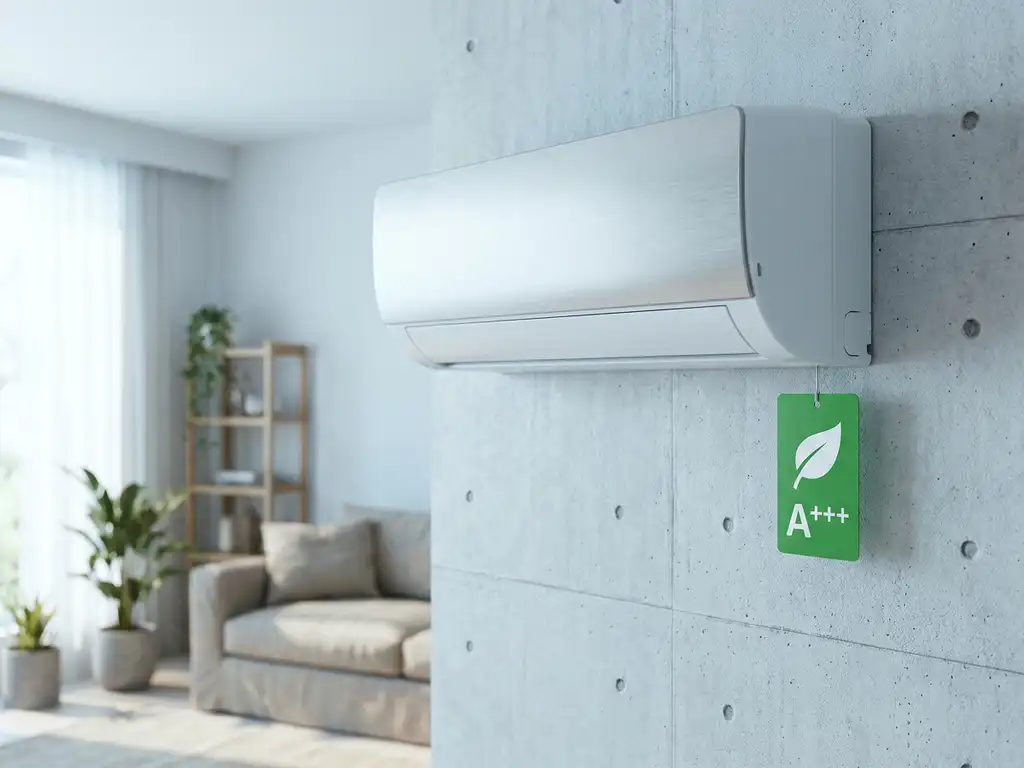
For energy-efficient cooling, it is best to have an air conditioner with energy label A+++In 2026, this is the highest achievable label for cooling and represents the lowest energy consumption per unit of cooling capacity. The higher the label, the less power the air conditioner consumes for the same cooling performance. In this article, we answer the most frequently asked questions about energy labels, SEER values, and smart choices when purchasing an air conditioner.
What energy classes exist for air conditioners?
Air conditioners are classified into energy classes of A+++ through D, where A+++ is the most energy-efficient class and D the least efficient. This classification applies specifically to the cooling function and is based on the so-called SEER value. The higher the class, the more efficiently the air conditioner converts energy into cooling.
Energy classes were introduced by the European Union to help consumers compare appliances. In addition to the class, the energy label also provides information on annual energy consumption in kilowatt-hours. This makes it easy to compare the actual costs of different models.
It is good to know that the classes are regularly revised. Models that were previously labeled as A++ may score lower under the revised standards. Therefore, always check the current label and not just the manufacturer's marketing text.
What does the SEER value mean for energy consumption?
De SEER value (Seasonal Energy Efficiency Ratio) indicates how much cooling energy an air conditioner delivers per kilowatt-hour of electricity over an entire season. A SEER of 6 means that the air conditioner produces six kilowatt-hours of cooling for every kilowatt-hour of electricity. The higher the SEER, the more energy-efficient the air conditioner is in practice.
The SEER is calculated based on a simulated seasonal average, not just at maximum power. This makes it a more realistic measure than the simple EER, which only measures efficiency at full load. The SEER takes into account varying outdoor temperatures and partial load conditions, which is closer to actual usage.
How do you translate the SEER into energy classes?
Each energy class has a corresponding minimum SEER value. Generally, the following applies:
- A+++: SEER of 8,50 or higher
- A++: SEER between 6,10 and 8,49
- A+: SEER between 5,60 and 6,09
- A: SEER between 5,10 and 5,59
- B to D: SEER lower than 5,10
Why is SEER important when making a choice?
A higher SEER directly means lower electricity costs on an annual basis. With intensive use during hot summers, the difference between an A+ and an A+++ model can amount to tens of euros per season. Over the entire lifespan of an air conditioner, that adds up significantly.
Which energy label is the most energy-efficient for cooling?
The most energy-efficient label for cooling is A + + +An air conditioner with this label has the highest SEER value and therefore consumes the least electricity per cooled room. In practice, these are almost always modern variable-speed inverter air conditioners.
Inverter technology ensures that the compressor does not constantly switch on and off, but adjusts its power to the current demand. This prevents energy waste and ensures a more stable indoor climate. Models with A+++ are slightly more expensive to purchase, but pay for themselves through lower power consumption.
Do you want to know which model best suits your space? Via the air conditioning selection wizard You will quickly find a suitable model based on your situation.
From which energy label is an air conditioner truly energy-efficient?
An air conditioner is really energy-efficient starting energy label A+Models with this label or higher meet modern efficiency standards and consume significantly less power than older or lower-rated appliances. For households that cool regularly, A++ or A+++ is the most sensible choice.
Air conditioners with an A label or lower will be outdated in 2026 and will no longer meet the expectations of an energy-conscious consumer. While they may be cheaper to purchase, the higher energy bill negates that advantage in the long run. If you invest in an air conditioner for several years of use, a higher label always pays off.
A rule of thumb: for occasional use in a small room, A+ may be sufficient. For daily use in a living room or bedroom, A++ or A+++ is the better investment.
What other factors influence the energy consumption of an air conditioner?
In addition to the energy label, there are several factors that determine the actual power consumption of an air conditioner. The label provides an indication, but the practical situation always differs from the test conditions. The most important factors are:
- Size of the room: A model that is too small has to work harder and therefore consumes more power. A model that is too large switches on and off too quickly, which is also inefficient.
- Insulation quality: Poor insulation lets heat in quickly, causing the air conditioner to run longer to maintain the temperature.
- Thermostat setting: Every degree lower in cooling costs extra energy. A setting of 24 to 26 degrees is comfortable and economical.
- Solar radiation: Rooms with many south-facing windows heat up faster, which puts more strain on the air conditioning.
- Maintenance: Dirty filters reduce airflow and increase consumption. Regular cleaning is essential.
- Installation location of the outdoor unit: An outdoor unit in the shade operates more efficiently than one that stands in full sun all day.
Proper installation also plays a major role. An air conditioner that is correctly installed, with neat and airtight ducting, performs better than a sloppily installed system.
Does the energy label of an air conditioner affect subsidies or taxes?
In the Netherlands, there is no direct subsidy specifically for air conditioners based on the energy label. However, the label can indirectly play a role in broader schemes for energy saving or home improvement. It is advisable to check the current possibilities with your municipality or the Netherlands Enterprise Agency (RVO).
For companies and self-employed individuals, the purchase of an energy-efficient air conditioner may in some cases qualify for the Energy Investment Allowance (EIA). This is a tax scheme that allows you to deduct a portion of the investment from taxable profit. The condition is that the device is listed on the RVO energy list, which is more often the case for A+++ models than for lower classes.
Private individuals currently do not benefit from a direct tax advantage for the purchase of air conditioning, but a more energy-efficient air conditioner does result in lower energy costs, which yields an indirect financial benefit. Also check whether your housing association or municipality has local schemes for improving the indoor climate.
How De Betonboorder helps with the installation of your air conditioner
An air conditioner with an excellent energy label starts with a good installation. And for that, a wall penetration is almost always necessary: a precisely drilled hole for the pipes between the indoor and outdoor units. That is exactly where we at De Betonboorder excel.
- We drill clean, dust-free holes in concrete, masonry, and other materials for the passage of air conditioning pipes.
- We use diamond core drills to minimize collateral damage to the surrounding wall.
- We operate throughout the Netherlands and are available within two days in most cases.
- After the job, we leave the workspace neat and tidy.
- We work for private individuals as well as contractors and installers.
Do you want to know how much a drilling job costs or schedule a professional immediately? Then use our pricing tool for a targeted quote, or please contact us directly so that we respond within 24 hours.
Related Articles
- Is moisture from the ground really coming into my house?
- Why is it so damp under my house?
- Air conditioning or fan: what really works against the heat?
- The complete Innova range compared: from 9HP Mini to 18HP ELEC
- How big does an air conditioner need to be for my room?
- Which air conditioner fits in a small space?
- Can you get a subsidy for an air conditioner?
- What do I need to arrange before a concrete driller comes?
- How do you recognize if a wall has been weakened by previous drilling work?
- How do I know if there are pipes behind my wall?
- How do I know if a contractor is allowed to just drill a hole in my wall?
- Who is allowed to remove a load-bearing wall?