
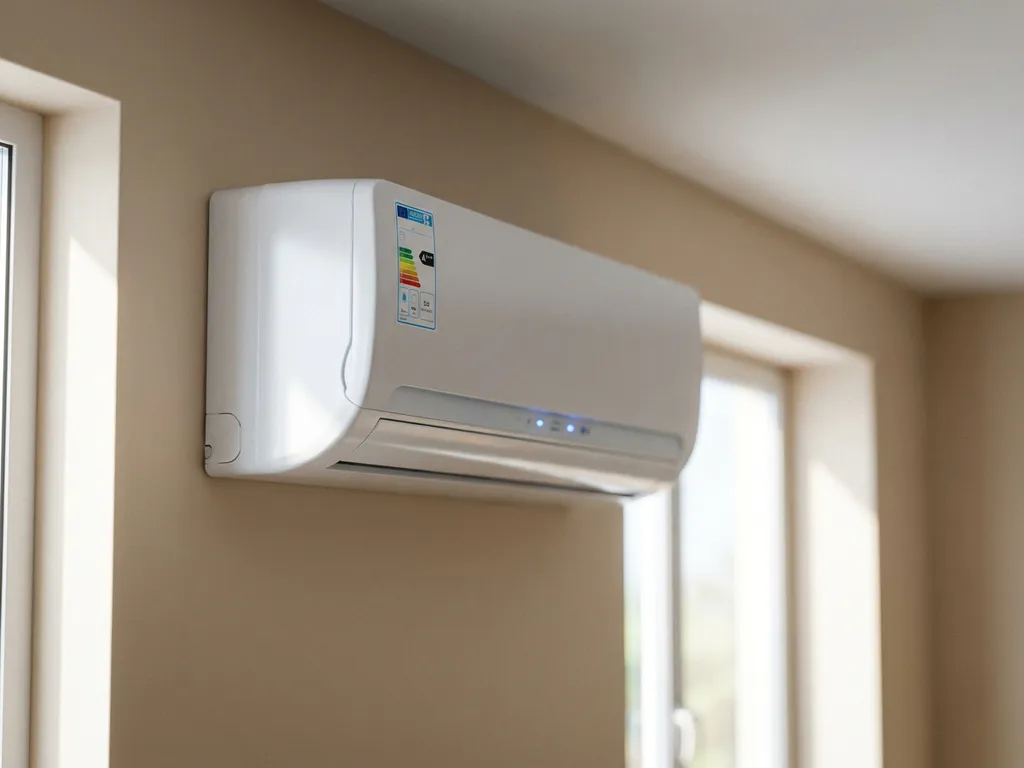
The power consumption of your air conditioner directly determines how much you spend on energy costs each month. Modern inverter air conditioners consume an average of between 0,5 and 1,5 kWh per hour, while older models can use up to 3 kWh per hour. The difference can amount to hundreds of euros per year.
Why does your air conditioner consume more power than necessary?
Many homeowners only notice at the end of the summer that their energy bill has risen significantly due to their air conditioner. This often happens because they have an outdated model that runs constantly at full power, even when the desired temperature has already been reached. Such an air conditioner can easily consume 40% more electricity than a modern variant with smart control.
The solution lies in choosing an air conditioner with inverter technology. This automatically adjusts the power as soon as the correct temperature is reached, drastically reducing energy consumption without sacrificing comfort.
How does choosing the wrong air conditioner cost you hundreds of euros a year?
An air conditioner that does not match the size of your room operates inefficiently and wastes energy. Models that are too small run constantly at maximum power to cool the room, while models that are too large run for short cycles and never reach their optimal efficiency. This can result in 50-70% higher power consumption than necessary.
By choosing the right capacity for your space and investing in an energy-efficient model, you can reduce electricity consumption by more than half. This means that an efficient air conditioner often pays for itself within two years.
Which factors determine the power consumption of an air conditioner?
The power consumption of an air conditioner depends on several important factors that together determine how much energy the device needs to keep your room comfortable.
The most important factors are:
- Cooling capacity (BTU/h or kW): The higher the wattage, the more power the device consumes.
- Energy label: A+++ models consume up to 60% less than C-label air conditioners.
- Room size: An air conditioner that is too small for the room has to work harder.
- Insulation of the house: Poorly insulated rooms require more cooling capacity.
- Outside temperature: The greater the temperature difference, the more energy is needed.
- Desired indoor temperature: Every degree lower costs approximately 8% more energy.
The age of the device also plays a role. Air conditioners older than 10 years are often much less efficient than modern models and can consume up to three times more power for the same cooling effect.
What is the difference between inverter and conventional air conditioners in terms of energy consumption?
Inverter air conditioners are much more energy-efficient than traditional on/off models due to their smart mode of operation. The difference in power consumption can amount to 40-60% in favor of inverter technology.
Traditional air conditioners work like a light switch: they are fully on or fully off. When the desired temperature is reached, the device switches off. As soon as the weather gets warmer, it starts up at full power. This constant switching on and off wastes a lot of energy.
Inverter air conditioners, on the other hand, adjust their power gradually. As soon as the desired temperature is almost reached, the device automatically reduces its power and continues to run at a low speed to maintain a constant temperature. This prevents energy waste and ensures a more stable indoor climate.
A practical example: a standard 2,5 kW air conditioner consumes an average of 2,5 kWh per hour when running. A comparable inverter air conditioner often consumes only 0,5-0,8 kWh per hour to maintain the desired temperature after it has been reached.
How much power does an air conditioner consume per hour on average?
The average power consumption of an air conditioner is between 0,5 and 3 kWh per hour, depending on the type, size, and efficiency of the device. Modern inverter models are at the lower end of this range.
Here are the average consumption figures per type:
- Small inverter air conditioner (up to 2,5 kW): 0,5-1,2 kWh per hour
- Medium-sized inverter air conditioner (2,5-3,5 kW): 0,8-1,5 kWh per hour
- Large inverter air conditioner (3,5-5 kW): 1,2-2,0 kWh per hour
- Traditional on/off air conditioning: 1,5-3,0 kWh per hour
- Mobile air conditioner: 1,0-2,5 kWh per hour
Actual consumption depends heavily on the circumstances. On very hot days, an air conditioner can consume more, while on milder days or at night it uses significantly less energy. Inverter models automatically adapt to these varying conditions.
How do you calculate the electricity costs of your air conditioner?
Calculating the electricity costs of your air conditioner is simple with the right formula. You need three pieces of information: the power of your air conditioner, the number of operating hours, and the price per kWh from your energy supplier.
The basic formula is: Power (kW) × Operating hours × Price per kWh = Costs
A practical example: suppose you have a 2,5 kW inverter air conditioner that consumes an average of 1 kWh per hour. At an energy price of €0,35 per kWh and 8 hours of use per day for 3 months (90 days):
1 kW × 8 hours × 90 days × €0,35 = €252 per summer season
For a traditional air conditioner with the same power that consumes 2 kWh per hour, the costs will be: 2 kW × 8 hours × 90 days × €0,35 = €504 per summer season.
The difference of €252 shows why investing in an efficient air conditioner pays off. Remember that modern air conditioners do not run at full power constantly, so the actual consumption is often 30-50% lower than the maximum power.
Which air conditioner brands are the most energy-efficient?
The most energy-efficient air conditioner brands combine advanced inverter technology with high-quality components and smart controls. Various brands distinguish themselves by their focus on energy efficiency.
Top energy-efficient brands are:
- Mitsubishi Electric: Known for their MSZ series with SEER values up to 8,5
- Daikin: Ururu Sarara series with very high efficiency and humidity control
- LG: Artcool series with dual inverter technology
- Panasonic: Etherea series with nanoe-X technology and A+++ labels
- Samsung: WindFree technology for energy-efficient cooling
- Innovate: Monoblock models with high SEER values and smart control
When choosing, pay particular attention to the energy label and the SEER value (Seasonal Energy Efficiency Ratio). The higher the SEER value, the more energy-efficient the appliance. Modern top models achieve SEER values of 7-9, while older models often hover around 3-4.
In addition to the brand, proper installation is crucial for optimal efficiency. A professional air conditioning installation ensures that the device performs optimally and achieves the lowest power consumption.
How can you reduce your air conditioner's power consumption?
There are several practical ways to significantly reduce your air conditioner's power consumption without sacrificing comfort. Small adjustments can lead to major savings.
Effective money-saving tips:
- Do not set the thermostat too low: 24-26°C is comfortable and saves up to 20% energy compared to 20°C.
- Use a timer or smart thermostat: Ensure the air conditioning does not run unnecessarily when you are not at home.
- Keep windows and doors closed: Prevent cool air from flowing away
- Maintain your air conditioning regularly: Clean filters can save 15% energy.
- Use curtains or blinds: Keep sunlight out to reduce the heat load
- Turn off other heat sources: Unnecessary lighting and appliances increase the heat load.
The location of your air conditioner within the room also affects its efficiency. Ensure there is sufficient free space around the unit and avoid placing it in direct sunlight. A well-placed air conditioner needs to work 10-15% less hard.
How De Betonboorder helps with energy-efficient air conditioning installation
We help you choose and install the most energy-efficient air conditioner for your situation. Our expertise in monoblock air conditioners ensures that you benefit optimally from modern, energy-saving technology.
Our services include:
- Tailored advice: We determine the correct capacity for your space to prevent energy waste.
- Professional installation: Professional installation for optimal performance and lowest power consumption
- Monoblock specialization: Installation without an outdoor unit, ideal for monumental buildings or HOA situations.
- Quick service: Installation within 10 working days after confirmation of the quotation
Our Innova monoblock air conditioners combine high efficiency with easy installation. By utilizing inverter technology, these units save up to 40% energy compared to traditional systems.
Do you want to know which energy-efficient air conditioner best suits your situation? Contact us today. touch with Contact us for personal advice and a tailored quote.
Related Articles
- Does crawl space ventilation also work in the winter?
- Does moisture damage in the crawl space affect the value of my house?
- Innova 15HP ELEC vs Innova 18HP ELEC: when do you choose more capacity?
- Innova vs Olimpia Splendid: which monoblock air conditioner cools best?
- What temperature should you set on an air conditioner?
- Which air conditioner works best in humid rooms?
- How do I request a quote for concrete drilling?
- What happens if you accidentally drill through a pipe?
- How do I drill into metal?
- Why does my drill get so hot when using concrete?
- How do I know if I can drill myself or need a professional?
- How long is a structural calculation valid?