
The program removing a load-bearing wall Creating more space isn't always necessary. Several practical alternatives exist that maintain the load-bearing function while still achieving the desired openness. These methods range from creating an opening with steel support to partial modifications. Each alternative has specific advantages and disadvantages in terms of cost, implementation, and permitting.
What are the alternatives to completely removing a load-bearing wall?
The most common alternatives are creating an opening with a steel girder, partial removal while retaining supporting points, creating openings instead of complete removal, and installing reinforcing structures. These methods maintain structural integrity while allowing for more space and natural light.
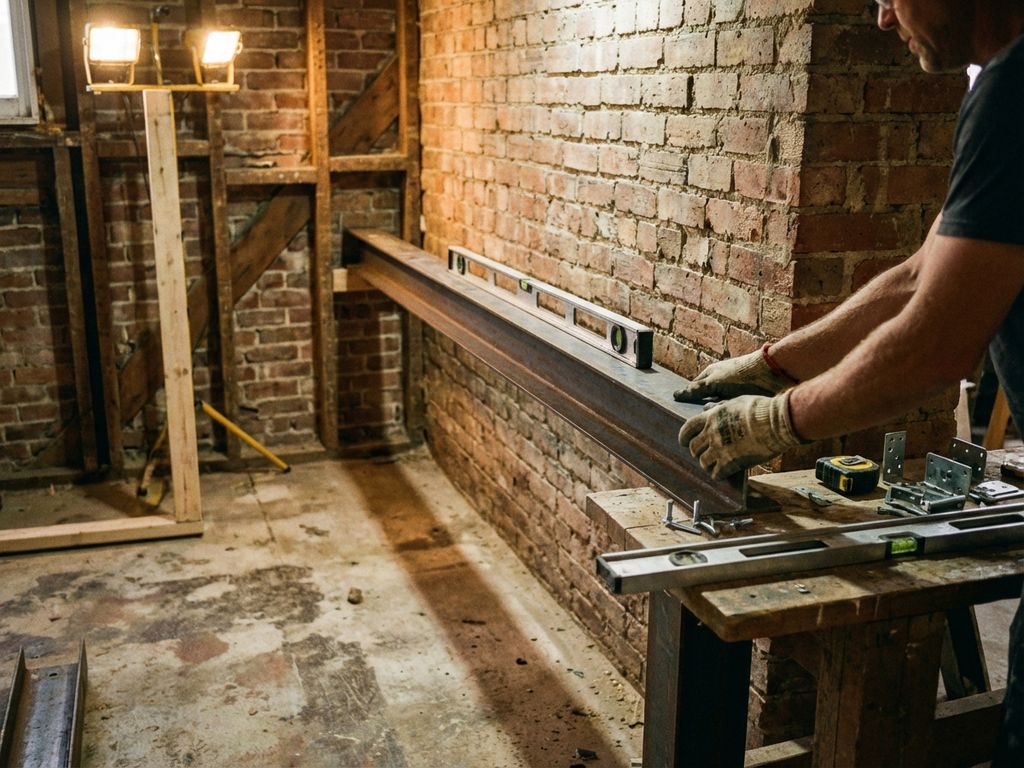
Making a opening with steel support is the most popular option. This involves removing a section of the wall and replacing it with a steel beam that takes over the load-bearing capacity. This method offers considerable flexibility in the size and shape of the opening.
Partial removal involves removing only specific sections of the wall, such as the lower portion for a doorway, while leaving the upper portion intact. This significantly reduces the structural impact.
Another option is to create several smaller breakthroughs instead of one large opening. This can create interesting architectural effects while largely maintaining the load-bearing capacity.
Reinforcement solutions, such as adding extra columns or beams, can also create space by redistributing the load-bearing function to other construction elements.
How does creating an opening in a load-bearing wall with a steel beam work?
The process begins with the installation of temporary supports to support the load during the work. Then, the steel beam is installed before the wall opening is created. This is done using precision concrete drilling and sawing to achieve the exact dimensions.
The preparation starts with a structural calculation To determine the correct dimensions of the steel girder. This calculation takes into account the load, span, and safety factors.
Temporary supports are installed to support the load. This support will remain in place until the permanent steel structure is fully installed and cured.
The steel beam is anchored to the wall using chemical anchors or mechanical fasteners. The concrete drilling process ensures the precise holes for these fasteners.
After installation of the beam, the wall opening is cut out or drilled to the required dimensions. Diamond drilling and sawing ensure clean, precise cuts without vibration or tearing.
The process concludes with finishing the edges and removing the temporary support once everything has fully cured.
What are the costs of different alternatives for adjusting a load-bearing wall?
Costs vary considerably depending on the method and situation. An opening with a steel beam typically costs between €1.500 and €4.000, depending on the size and complexity. Partial removal is often less expensive, while complex reinforcement solutions can be more expensive.
Making a standard opening (approximately 2–3 meters wide) with steel support costs an average of €2.000–€3.500. This includes materials, labor, and finishing.
Partial removal is often 30–50% cheaper because less material and labor are required. The cost is between €1.000 and €2.500.
Factors that influence the price are:
- The size of the desired opening
- The thickness and material of the wall
- The accessibility of the workplace
- The complexity of the supporting structure
- The desired finish
Reinforcement solutions Costs can range from €1.200 for simple columns to €5.000 for complex structures. Multiple small openings typically cost between €800 and €1.500 per opening.
Additional costs include structural calculations (€300–€800), permits (€150–€500) and any repairs to floors or ceilings.
What permits do you need for alternatives to load-bearing walls?
For most modifications to load-bearing structures, you need an environmental permit. Structural calculations are also required to demonstrate that safety is maintained. The municipality assesses these documents before work can begin.
Create a environmental permit is almost always required for modifications to load-bearing elements. This request must be accompanied by technical drawings and calculations.
Structural calculations must be performed by a certified engineer. These calculations demonstrate that the chosen solution complies with building regulations and safety standards.
The municipality checks whether the plans comply with the zoning plan and the Building Decree. For apartments, permission from the Homeowners' Association (VvE) is also required.
Minor adjustments, such as limited breakthroughs, sometimes fall under permit-free construction, but this must always be verified in advance with the municipality.
The processing time for permits is typically 6–8 weeks. Therefore, begin your application early to avoid delays.
How The Concrete Driller helps with adjustments to load-bearing walls
De Betonboorder offers professional support for all aspects of load-bearing wall modifications. We provide:
- Precision concrete drilling for mounting points of steel beams
- Diamond saws for clean, vibration-free openings
- Advice on the most suitable method for your situation
- Collaboration with constructors and guidance through the permitting process
- Complete finishing and cleaning of the workplace
Our experienced professionals use high-quality diamond core drills to minimize collateral damage. We'll arrange a concrete drill within two days and contact you within 24 hours for a personalized quote.
Would you like to know more about the possibilities for your load-bearing wall? Contact us for professional advice and a no-obligation quote.
Related Articles
- How does mechanical crawl space ventilation work?
- How much does it cost to have crawl space ventilation installed?
- Can crawl space ventilation be installed in any type of home?
- Innova 15HP ELEC vs Innova 18HP ELEC: when do you choose more capacity?
- How do you prevent your air conditioning from having to run all day in the summer?
- Can an air conditioner cause noise nuisance for neighbors?
- Which air conditioner is the quietest?
- What is core drilling and when do you need it?
- When do you use a diamond drill instead of a regular drill?
- What are the advantages of professional drilling over doing it yourself?
- How do you report the removal of a load-bearing wall to the Owners' Association?
- What are the risks of removing a load-bearing wall yourself?