
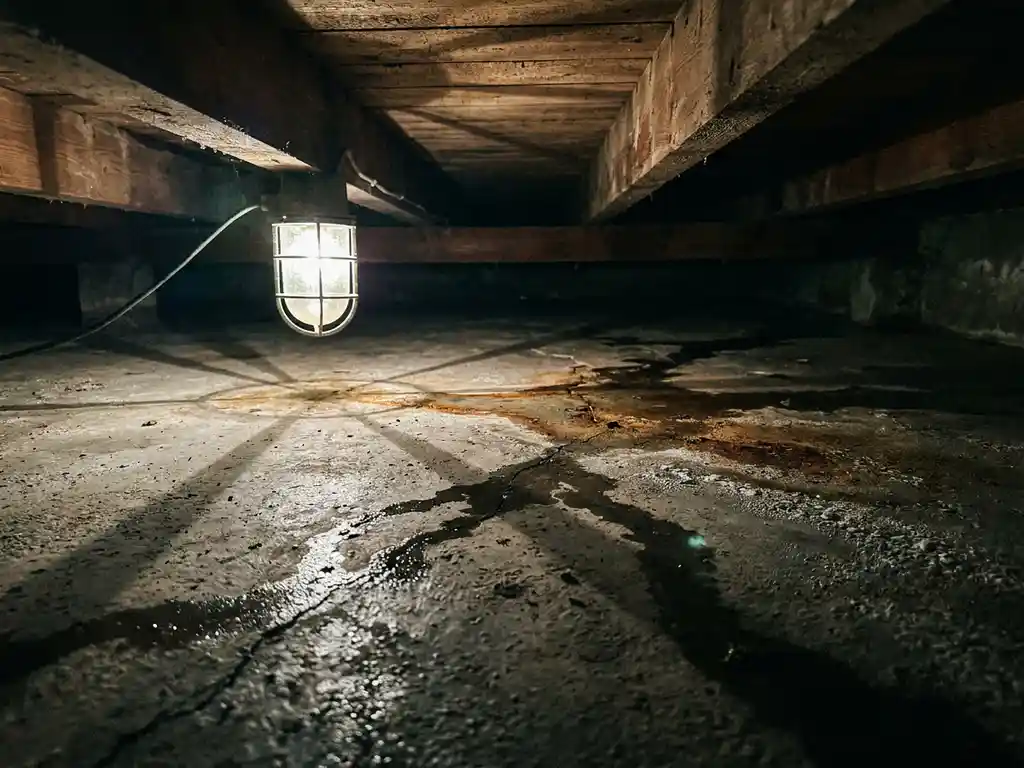
Yes, moisture from the ground can really penetrate your home. This phenomenon, also known as rising damp, occurs when groundwater creeps up through small pores and capillaries in the masonry. Older homes without a proper damp-proof barrier are particularly vulnerable to this. In this article, we answer the most frequently asked questions about rising damp, from the causes to the solutions.
How does moisture get into a house from the ground?
Moisture from the ground penetrates a house via capillary action: the process by which water rises through small pores and cracks in materials, just as a sponge absorbs water. Concrete, brick, and mortar are porous materials that facilitate this process. Without an effective moisture barrier in the foundation or masonry, groundwater slowly but surely rises into the walls.
The speed and height at which moisture rises depend on various factors: the porosity of the building material, the surrounding groundwater level, and the amount of precipitation. During periods of heavy rain or when the groundwater level is high, the problem worsens noticeably. Homes built without crawl space ventilation or with an outdated horizontal damp layer are particularly susceptible to this problem.
Which places in the house are most susceptible to rising damp?
The most vulnerable areas to rising damp are the lower parts of exterior walls, ground-floor floors, and the crawl space under the house. These are the zones closest to the ground and therefore most exposed to groundwater. As the moisture rises higher up the wall, the concentration decreases, but the damage remains significant.
Inside the house, the following areas are particularly sensitive:
- Bottom of exterior walls, typically up to a height of 50 to 150 centimeters
- Ground floor floors, especially if there is no proper vapor barrier present
- De crawl space ventilation zone where stagnant, moist air promotes mold formation
- Cellars and basements that border directly on the ground
- Connections between floor and wall, where moisture easily seeps through
Many homeowners only notice the problem when the damage is already visible. Regular inspection of these areas helps to detect moisture problems early.
How do you recognize rising damp on the walls?
Rising damp can be recognized by a combination of visual signs that almost always manifest at the bottom of the wall. The most common signs are efflorescence (white spots on the masonry), peeling wallpaper or paint, dark discoloration of the wall, and a musty odor in the room. These phenomena are characteristic of prolonged moisture penetration from below.
Concrete signals to look out for:
- Salt efflorescence: White, powdery stains on the wall, caused by minerals carried by the moisture.
- Peeling of finishing layers: paint, wallpaper, or plaster that is bubbling, cracking, or peeling off at the bottom of the wall
- Dark or wet spots: Discoloration of the masonry or plasterwork, often with an irregular, wavy top
- Mold formation: Black or green spots, especially in corners and along the floor
- Musty smell: persistent, humid air that does not disappear after airing
The difference compared to condensation problems is that rising damp always starts at the bottom and gradually moves upwards. Condensation, on the other hand, forms more often on cold spots high up in the wall or on windows.
What are the dangers of moisture coming up from the ground?
Moisture rising from the ground poses serious risks to both the home and the health of the residents. Structurally, it damages the foundation, masonry, and wooden floorboards. In terms of health, persistent dampness promotes the growth of mold and bacteria, which can cause respiratory problems.
The main dangers at a glance:
- Structural damage: Prolonged moisture weakens masonry, mortar joints, and wooden structural elements such as beams and floorboards.
- Mold growth: Molds thrive in damp environments and produce spores that can cause allergic reactions and respiratory problems.
- Loss of insulation: Damp walls and floors conduct heat better, causing the energy bill to rise.
- Decrease in value: Visible moisture damage has a negative effect on the sales value of a home.
- Musty living environment: A persistent unpleasant odor and visual damage significantly reduce living comfort.
How is rising damp effectively tackled?
Rising damp is effectively tackled by stopping the source of the problem: moisture penetration through the foundation or masonry. This can be done by injecting a chemical damp-proof barrier into the wall, applying a new horizontal damp-proof course, or improving ventilation under the floor. Which method is most suitable depends on the severity and cause of the problem.
Chemical injection
With chemical injection, small holes are drilled into the wall, after which a water-repellent liquid is injected into the masonry under pressure. This liquid adheres to the pores of the material, thereby forming a new moisture barrier. This is a widely used and effective method for existing homes.
Improvement of crawl space ventilation
Poor or absent ventilation in the crawl space is one of the most common causes of moisture problems in the ground floor and lower wall sections. By installing or enlarging ventilation openings, humid air can be removed and dry air can enter. This prevents stagnant moisture from rising into the structure and also reduces the musty smell in the house. Good crawl space ventilation moreover, improves the insulation value of the home.
When is professional help needed for moisture problems?
Professional help is needed as soon as the moisture damage is structural, spreads despite your own measures, or when the cause is unclear. Small damp patches that appear temporarily after heavy rain can sometimes be dealt with yourself, but with rising damp, a thorough diagnosis and expert intervention are almost always required to prevent recurrence.
Call in a professional if you recognize one or more of the following situations:
- The fluid spot grows or keeps recurring after treatment
- There is visible mold growth in multiple places in the house.
- Wooden floorboards or structural parts feel soft or rotten.
- The musty smell is persistent and does not dissipate after ventilating.
- You are not sure what the cause of the moisture is.
A professional can accurately determine the cause, choose the right method, and carry out the work safely. Tampering with foundations or walls yourself without the proper knowledge can worsen the damage.
How De Betonboorder helps with crawl space ventilation
Good crawl space ventilation is one of the most effective ways to prevent rising damp and improve indoor air quality. De Betonboorder helps you with this in a concrete way:
- We drill ventilation openings in the foundation or concrete floor edge for optimal airflow.
- We install ventilation grilles in the crawl space, which prevents moisture buildup.
- We work for private individuals as well as contractors and SMEs, in occupied properties and shell buildings.
- We ensure that the workplace is left neat and tidy afterwards.
- In many cases, we arrange a professional within two days, with contact within 24 hours.
Would you like to know what we can do for your situation? Contact us and we are happy to help you think about the best approach for your moisture problem.
Related Articles
- What is the guideline price for an opening in a concrete floor?
- Can I have crawl space ventilation installed without damaging the facade?
- Qlima monoblock vs Innova monoblock: price, noise and cooling performance compared
- Can an air conditioner be on 24 hours a day?
- What is the difference between R32 and R410A refrigerant?
- What is the difference between a portable and a monoblock air conditioner?
- Can an air conditioner affect sleep quality?
- What is a floor-standing air conditioner?
- Can I have a stairwell created in an occupied property?
- How long are you allowed to drill indoors per day?
- How do you drill multiple holes at exactly the same height?
- What do you need to arrange with the neighbors when removing a load-bearing wall?