
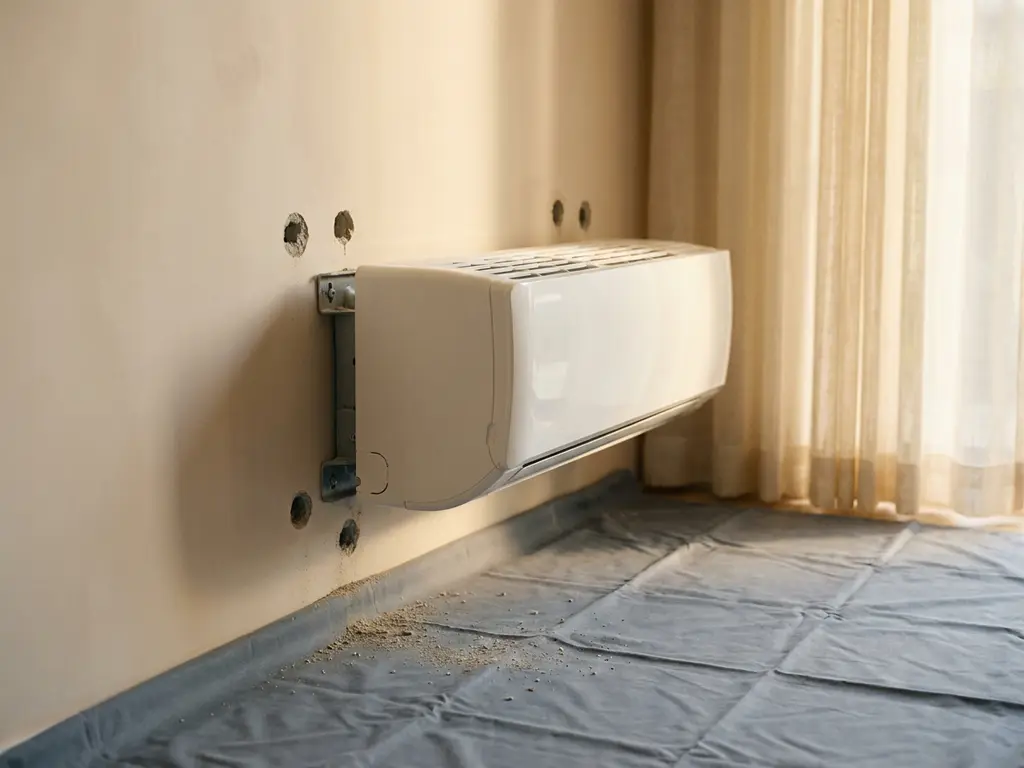
For an average bedroom of 15 to 25 m², the Innova 9HP Mini in most cases, the best choice. This compact model delivers sufficient power for smaller rooms, operates more quietly than its larger counterpart, and consumes less energy. The Innova 12HP Vertical is more suitable for larger bedrooms or if you also want to cool an adjacent room. In this article, we answer the most frequently asked questions about both models so that you can make an informed decision.
What power do you need for a bedroom?
For a bedroom of 10 to 20 m², an air conditioner with a cooling capacity of approximately 2,0 to 2,5 kW is sufficient. A room of 20 to 35 m² typically requires 2,5 to 3,5 kW. As a rule of thumb, roughly 100 watts of cooling capacity per square meter applies, although insulation, window surface area, and sun exposure also play a significant role.
A model that is too weak never cools the room down properly and runs constantly at full power, which actually consumes more energy. A model that is too strong cools down too quickly, switches on and off constantly, and regulates humidity less effectively. Especially in a bedroom, where comfort is paramount, choosing the right power output is essential for a good night's sleep.
Unsure which capacity suits your bedroom? Via the air conditioning selection wizard you can quickly determine the suitable model based on your situation.
What is the difference between the Innova 9HP Mini and the 12HP Vertical?
The main difference between the Innova 9HP Mini and the 12HP Vertical lies in power, size, and airflow. The 9HP Mini is a compact monoblock split air conditioner with a cooling capacity of approximately 2,6 kW, ideal for smaller rooms. The 12HP Vertical delivers approximately 3,5 kW and is larger in size, with a vertical airflow that distributes air more effectively through a taller or larger space.
Furthermore, there are practical differences in installation. The 9HP Mini is lighter, easier to install, and requires less wall space. The 12HP Vertical requires more space but, due to its vertical air discharge direction, offers more even cooling in rooms with high ceilings or an irregular layout.
Both models operate as a monoblock system, which means that no outdoor unit is required. However, a hole must be drilled through the wall for the exhaust hose. This is where professional installation assistance makes all the difference.
Which model is quieter for use in the bedroom?
The Innova 9HP Mini is generally quieter than the 12HP Vertical, especially on the lowest setting. In silent mode, the smaller model produces a noise level of around 26 to 30 dB(A), which is comparable to whispering. The 12HP Vertical sits slightly higher due to its more powerful fan and higher airflow.
In a bedroom, noise is one of the most important factors. Even a difference of 3 to 5 dB(A) can be noticeable when you are trying to sleep. When in doubt, always choose the model with the lowest noise level on the minimum setting, as this is the setting in which the air conditioner is active for the most hours during the night.
Also take the placement of the device into account. An air conditioner hanging or standing directly next to the bed will always feel louder than a model mounted on the other side of the room.
How much energy does the Innova 9HP Mini consume versus the 12HP Vertical?
The Innova 9HP Mini consumes less energy than the 12HP Vertical, simply because it is a smaller and less powerful device. The energy consumption of the 9HP Mini averages around 800 to 900 watts at full power. The 12HP Vertical typically consumes 1.100 to 1.300 watts at full power.
Both models are equipped with inverter technology or an energy-efficient compressor, meaning they do not constantly run at full power. In practice, this means that actual consumption is significantly lower than the maximum power suggests. Nevertheless, for a small bedroom, the 9HP Mini is the more energy-efficient choice, both in terms of purchase and running costs.
When comparing, also pay attention to the EER value (Energy Efficiency Ratio). A higher EER means that the appliance cools more efficiently per kilowatt-hour used. Always check the energy label before making a choice.
Which air conditioner is best suited for a small bedroom?
For a small bedroom of up to approximately 18 m², the Innova 9HP Mini is the best choice. This model combines a compact size with sufficient cooling capacity, a low noise level, and lower energy consumption. The 12HP Vertical is overkill for small spaces and can even cause uncomfortable temperature fluctuations because it cools down too quickly.
In addition to capacity, available wall space also plays a role. The 9HP Mini has a smaller footprint and fits more easily in a bedroom with limited wall surface area or little room for installation. Furthermore, the drain hose of the 9HP Mini is shorter and can be positioned more flexibly.
Do you want to know exactly which model suits your bedroom? Then use the Air conditioner selection guide to find the right model based on your space.
What should you look out for when installing a split air conditioner in the bedroom?
When installing a split or monoblock air conditioner in a bedroom, there are three crucial points to consider: the position of the unit, the routing of the exhaust hose, and the sealing of the drill hole. Poor installation leads to noise pollution, heat leakage, or even moisture problems in the wall.
Position of the device
Do not hang or place the air conditioner directly above the bed. The airflow must be able to cool the room without blowing directly on sleeping people. A corner or side wall at a height of approximately 1,5 to 2 meters is ideal for even air distribution.
The drill hole through the wall
A hole must be drilled through the exterior wall for the drain hose, typically with a diameter of 80 to 120 mm depending on the model. This requires precision drilling, especially in reinforced concrete or thick masonry structures. A clean, straight drill hole prevents leakage and ensures a neat finish. Always have this work performed by someone with the right equipment and experience to ensure your wall remains undamaged.
After drilling, a good seal around the hose is essential. Thermal bridges and draft loss are common mistakes that increase energy consumption and reduce comfort.
How De Betonboorder helps with the installation of your air conditioner
Installing an air conditioner starts with a good drill hole. We take care of drilling the pass-through hole for your air conditioner exhaust hose from start to finish, neatly and without damage to the surrounding structure. Whether it involves a concrete exterior wall, a sand-lime brick wall, or reinforced concrete, we have the right diamond drill bits and experience to carry out the work professionally.
- Drilling through holes in any type of wall, including reinforced concrete
- Precise diameters tailored to your air conditioning model (80 to 120 mm)
- The workspace is left neat and tidy.
- In many cases, a professional at your home within two days
- Nationwide network of experienced concrete drillers
Do you want to know what drilling a through-hole costs for your situation? Then use our pricing tool for a specific indication. Or contact us directly get in touch to schedule a professional. We will contact you within 24 hours.
Related Articles
- Innova 15HP vs Innova 15HP Vertical: which variant fits in your space?
- Can air conditioning worsen allergies?
- How often should you clean an air conditioner?
- What types of air conditioners exist?
- Can an air conditioner cause noise nuisance for neighbors?
- What to do about a hot house?
- What happens if damage occurs during drilling?
- Do I need a permit for a penetration in the exterior wall?
- Can a concrete driller also handle small jobs?
- Can I stay at home during concrete drilling work?
- Can you remove a load-bearing wall in a corner house?
- When will temporary stamps be removed?