
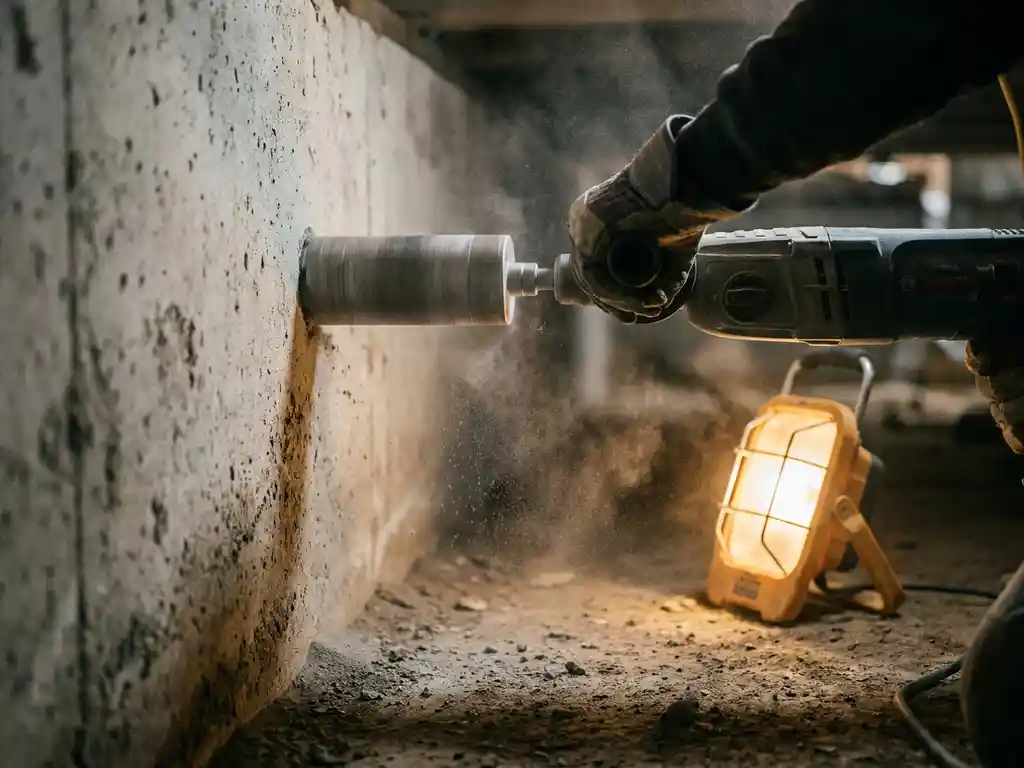
Drilling ventilation holes in the foundation causes limited nuisance which is usually over quickly. You will have to deal with temporary noise, slight vibrations, and some dust, but with professional work, the nuisance is kept to a minimum. Below you will find answers to the most frequently asked questions regarding the nuisance, duration, and preparation.
How much noise does drilling ventilation holes make?
Drilling ventilation holes in concrete or foundations produces a clearly audible but temporary sound. Diamond drilling operates more quietly than traditional impact drilling because the drilling speed is higher and the material is cut away in a controlled manner rather than hammered in. The sound is comparable to that of a powerful drill and lasts only a few minutes per hole.
However, it is wise to inform your neighbors, especially if you live in a terraced house or apartment complex. Sound vibrates through walls and floors, carrying further than you might expect at first glance. Therefore, preferably schedule the work on a weekday during the day so that the disturbance for everyone is kept to a minimum.
Does the drilling cause vibrations that could cause damage?
When using diamond drilling techniques, the vibrations are significantly lower than with conventional impact drilling. Diamond drilling operates rotaryally and cutting, allowing material to be removed accurately without hard impacts. Consequently, damage to the surrounding structure or finish is extremely rare with professionally executed drilling work.
However, there are situations where extra caution is required. Consider older foundations with cracks, historic masonry, or structures that have been previously damaged. In such cases, it is advisable to have a professional assess the condition of the foundation beforehand so that the drilling method can be tailored accordingly. An experienced concrete driller adjusts the approach based on the material and the condition of the structure.
How much dust is released when drilling into concrete?
When drilling into concrete or a foundation, some dust is always released, but the amount depends heavily on the method used. Wet drilling, in which water is used as a coolant, produces virtually no dust. The water binds the concrete residue immediately and prevents fine dust from entering the air. This is the most commonly used method in professional drilling.
Dry drilling, which is sometimes used in situations where water is undesirable, generates more dust. In that case, it is preferable to work with an industrial vacuum cleaner directly connected to the drill. This keeps the work environment clean and minimizes exposure to concrete debris. After the drilling work is completed, the workplace must be left tidy, including the removal of drilling debris and sludge.
How long does it take to drill ventilation holes in the foundation?
Drilling a single ventilation hole in a foundation takes usually between five and twenty minutes, depending on the thickness of the foundation, the type of material, and the diameter of the hole. An average ventilation hole for crawl space ventilation has a diameter of approximately 100 to 125 millimeters and is drilled through a foundation typically 20 to 40 centimeters thick.
When multiple holes need to be drilled, such as for a complete ventilation system around the crawl space, the total working time increases. For an average home with four to six ventilation holes, allow half a workday to a full one, including preparation and cleanup. This means most jobs are fully completed in a single day.
Does the crawl space need to be empty before drilling?
The crawl space does not need not completely empty to be, but there must be sufficient space for the concrete driller to work safely and effectively. If insulation material, foils, or stored items are lying directly against the wall to be drilled, it is wise to remove them beforehand. This prevents damage to materials and ensures that the professional can get to work immediately.
Also check whether there are pipes, cables, or other installations running near the drilling position. Provide the concrete driller with a clear picture of the situation in advance so that he can determine the correct position for the holes without the risk of damaging existing installations. Good preparation saves time and prevents unexpected complications.
When is the best time to have ventilation holes drilled?
Ventilation holes in the foundation can be all year round have drilling done, but spring and summer are practically the most favorable times. The weather is drier, the crawl space is more accessible, and the new ventilation openings can immediately start working before the damp autumn begins. This way, you quickly benefit from the improved air circulation under your home.
Are you already suffering from damp, mold, or a musty smell in your home? Then there is no reason to wait for a specific season. Damp problems in the crawl space can worsen year-round and have a direct impact on the air quality in your home and the condition of your insulation. The sooner the ventilation is in order, the sooner the situation will improve.
How De Betonboorder helps with crawl space ventilation
We handle the drilling of ventilation holes in foundations from start to finish, for private individuals as well as contractors and companies throughout the Netherlands. What you can expect from us:
- Professional drilling with high-quality diamond core drills for precise, damage-free holes
- Working with wet drilling techniques to minimize dust generation
- Tradespeople who leave the workplace neat and tidy
- Rapid response: in many cases, a concrete driller on site within two days
- Contact within 24 hours of your request
Good one crawl space ventilation prevents moisture problems, reduces musty odors, and improves your home's insulation. Would you like to know what we can do for your situation? Contact us and we will respond within 24 hours with a suitable proposal.
Related Articles
- How much ventilation does a crawl space actually need?
- Does the musty smell in the house disappear after installing crawl space ventilation?
- Does moisture damage in the crawl space affect the value of my house?
- When should you have an air conditioner installed so you are ready for summer?
- Can an air conditioner make the air too dry?
- How long do you have to wait after air-conditioned transport?
- Can an air conditioner affect sleep quality?
- Can I have a stairwell created in an occupied property?
- How do you drill a hole in a basement wall without leaks?
- What are the rules for drilling in an apartment?
- How do you report the removal of a load-bearing wall to the Owners' Association?
- When will temporary stamps be removed?