
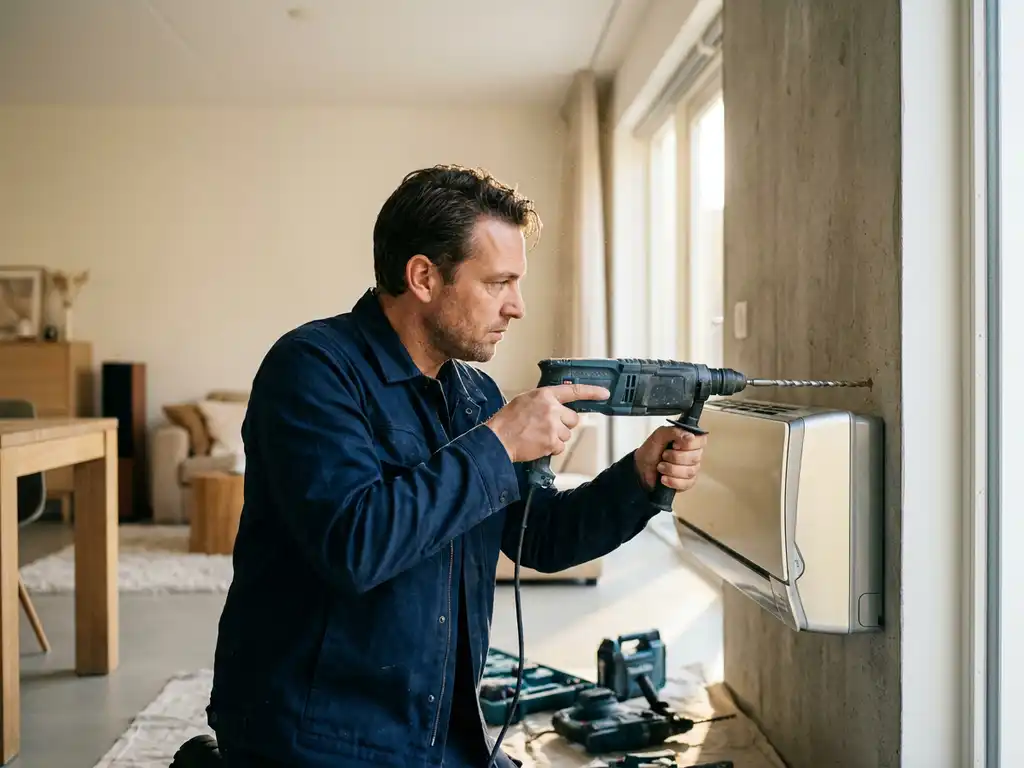
A professional air conditioning installation costs an average of between 300 and 800 euros in labor costs, depending on the type of system, location, and complexity of the installation. On top of that come the costs for the unit itself and any additional work, such as drilling through-holes. In this article, we answer the most frequently asked questions about the costs of an air conditioning installation so that you know exactly what to expect.
What determines the price of an air conditioning installation?
The price of an air conditioning installation is determined by a combination of factors: the type of system, the capacity of the unit, the distance between the indoor and outdoor units, the structural situation, and the experience of the installer. In a standard situation, a split air conditioner is generally cheaper to install than a multi-split system with multiple indoor units.
The most important price-determining factors are:
- Air conditioner type: A single-split system is easier to install than a multi-split or ducted air conditioner.
- Power and capacity: The larger the space that needs to be cooled, the more powerful and expensive the device.
- Pipe length: A greater distance between the indoor and outdoor units requires more material and labor.
- Structural situation: Thick concrete walls, reinforced concrete, or hard-to-reach places increase the installation time.
- Region and installer: Hourly rates vary by region and company.
By thoroughly mapping out all these variables in advance, you avoid surprises later on. Use a handy pricing tool to get an initial indication of the costs for your specific situation.
How much does it cost to have an air conditioner installed on average?
The average installation costs for a split air conditioner range between 300 and 800 euros, excluding the unit. For a complete installation including the unit, you can easily expect to pay between 1.000 and 2.500 euros, depending on the brand, capacity, and complexity of the installation.
A general overview of average total costs:
- Single-split air conditioner (1 room): including device and installation approximately 1.000 to 1.800 euros
- Multi-split air conditioning (2 to 3 rooms): including device and installation approximately 2.000 to 4.000 euros
- Ducted air conditioning or central cooling: custom work, usually from 3.000 euros
Do you want to know which system best suits your home or business premises? Via the air conditioning wizard You will quickly find a suitable system based on your situation.
How much does it cost to drill holes for an air conditioning installation?
For every air conditioning installation, pass-through holes must be drilled for the refrigerant lines, the power cable, and the condensate drain. This is a crucial part of the installation that requires expertise, especially when dealing with reinforced concrete, thick walls, or structural walls.
The cost of drilling through holes depends on:
- The material: Aerated concrete is easier to drill than reinforced concrete or natural stone.
- The diameter of the hole: Air conditioning installations typically require holes of 60 to 100 mm.
- The thickness of the wall: Thicker walls require more time and materials.
- Accessibility: Hard-to-reach locations or working at height increase the price.
Professional drilling with diamond core drills ensures tight, clean holes without cracks or damage to the surrounding structure. This is not only neater but also safer for the stability of the wall. Always have this work performed by a specialist, especially when dealing with load-bearing walls or reinforced concrete.
When do you need a permit for an air conditioner?
In most cases, you do not need an environmental permit to install an air conditioner. However, there are exceptions: if you live in a protected urban or rural landscape, occupy a listed monument, or if the outdoor unit is visible from the public road, municipal regulations may apply.
Take into account the following situations where a permit may be required:
- Your home is a national or municipal monument.
- You live in a protected urban or village landscape.
- The outdoor unit is installed on the front facade or in a location visible to everyone.
- The Owners' Association (VvE) has additional rules for apartments.
Always check with your municipality in advance whether local regulations apply. This prevents fines or the obligation to remove the installation afterwards.
What are the additional costs for an air conditioning installation?
In addition to installation and appliance costs, there are additional costs that many people do not take into account. These include material costs for piping and insulation, costs for drilling through-holes, electrical work, and potential annual maintenance.
Common additional costs are:
- Cold pipes and insulation material: Depending on the pipe length, expect to pay 20 to 50 euros per meter.
- Electrical work: If a separate circuit needs to be installed, it will cost extra.
- Drilling work: For making through-holes in walls, floors, or ceilings.
- Annual maintenance: A maintenance service typically costs between 75 and 150 euros and significantly extends the lifespan of your system.
- F-gas registration: Installers are required to register the use of refrigerant; this is sometimes a separate cost.
When requesting quotes, always ask for an itemized price breakdown so that you know exactly what is and isn't included.
How do you choose a reliable air conditioning installer?
A reliable air conditioning installer is certified, transparent about costs, and has demonstrable experience with the type of system you want to have installed. The F-gas certificate is legally required for anyone working with refrigerants, so always check this first.
What to look out for when choosing an installer:
- F-gas certification: Mandatory for working with refrigerants in air conditioning systems.
- References and reviews: Ask about previous projects or read reviews online.
- Clear quotation: A good installer provides a detailed quote without hidden costs.
- Warranty at work: Ask about the warranty conditions for both the device and the installation.
- Experience with your situation: Does the installer have experience with concrete, reinforced walls, or similar construction challenges?
Take the time to request multiple quotes and compare not only the price, but also the service, warranty conditions, and communication. A cheap installer who delivers poor work will ultimately cost you more.
How De Betonboorder helps with your air conditioning installation
An air conditioning installation stands or falls on good drilling work. We provide professional drilling of through-holes for air conditioning systems through all types of materials: from reinforced concrete and aerated concrete to natural stone and metal. Our professionals work with high-quality diamond core drills for tight, clean holes without unnecessary damage to the surrounding structure.
What we arrange for you:
- Drilling custom-sized pass-through holes for cold lines, power cables, and condensate drain
- Professional drilling in all materials, including reinforced concrete and load-bearing walls
- Neat and tidy workplace afterwards
- In many cases, a professional on site within two days.
- Nationwide network of experienced concrete drillers, active throughout the Netherlands
Would you like to know what we can do for your air conditioning installation? Contact us and we will respond within 24 hours with a suitable proposal.
Related Articles
- Can a stairwell be created in a hollow-core slab floor?
- Is my loft ladder too steep and dangerous to continue using?
- How much does it cost to have crawl space ventilation installed?
- Is crawl space ventilation through the facade the best option?
- Air conditioning or fan: what really works against the heat?
- Air conditioner payback period: when do you recoup the investment?
- How much does an air conditioner in the attic cost, including installation?
- How many degrees can an air conditioner cool your house down?
- Where can I buy the best air conditioner?
- What is the best air conditioner?
- Why does my drill get so hot when using concrete?
- What are the risks of drilling in an old house?