
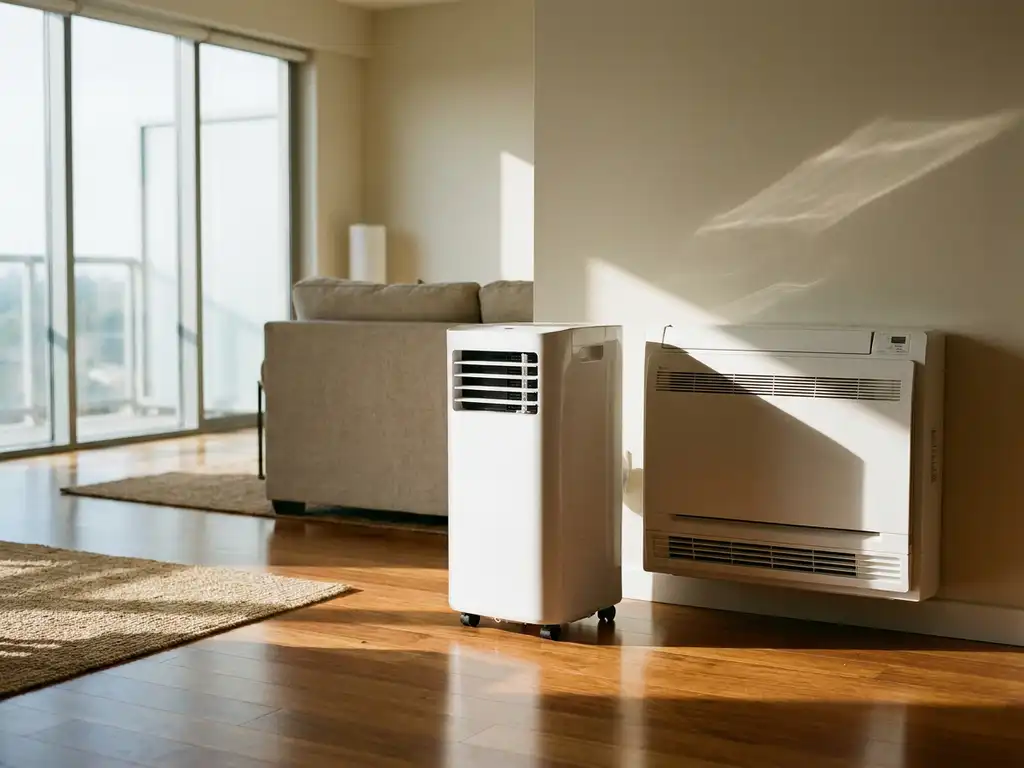
A monoblock air conditioner is a complete air conditioner in a single housing that only requires a wall vent, whereas a portable air conditioner is a mobile unit with an exhaust hose. The main difference lies in installation and performance: a monoblock air conditioner is permanently installed and operates much more quietly and efficiently, while a portable air conditioner is flexible but makes more noise and cools less effectively.
Why does a poorly insulated drain hose lead to higher energy costs?
The exhaust hose of a portable air conditioner is often routed through a window or door, causing warm outside air to leak inside. This means that your air conditioner has to work constantly to cool the incoming warm air, which can significantly drive up your energy bill. Moreover, you lose up to 30% of your cooling capacity due to this air leakage.
The solution lies in choosing a monoblock air conditioner with a professional wall duct. This completely eliminates air leakage and ensures optimal energy efficiency without loss of cooling capacity.
How does noise pollution from portable air conditioners affect your night's rest?
Portable air conditioners often produce 50-60 decibels of noise because the compressor is located in the same room where you are staying. This noise level is comparable to a normal conversation and can disrupt your sleep and cause fatigue during the day. Many people therefore turn off their air conditioners at night, causing the bedroom to heat up again.
A monoblock air conditioner places the loudest components outside, keeping the indoor noise level limited to approximately 35-40 decibels. This ensures an undisturbed night's sleep while your room remains comfortably cool.
What is the difference between a portable and a monoblock air conditioner?
The fundamental difference between these two types of air conditioners lies in their design and installation method. A portable air conditioner is a mobile unit that you can move and only requires an exhaust hose to the outside. A monoblock air conditioner, on the other hand, is a permanently installed system where all components are housed in a single casing that is placed through the wall.
The technical differences are significant. Portable air conditioners have their compressor and condenser inside, resulting in more noise and heat production in the room. Monoblock air conditioners place these components on the outside of the wall, allowing them to operate more quietly and cool more efficiently.
In terms of installation, a portable air conditioner only requires an opening for the exhaust hose, while a monoblock air conditioning installation Professional drilling required for the wall penetration.
Which air conditioner is better for a small home?
For small homes, a monoblock air conditioner is usually the better choice, despite the higher purchase costs. The reason lies in efficiency and space saving. A monoblock air conditioner takes up no floor space and operates more quietly, which is crucial in compact living spaces.
Portable air conditioners can seem tempting for small homes due to their flexibility, but they have some disadvantages:
- They take up valuable floor space
- The drain hose must go through a window or door, which causes insulation problems.
- The noise level can be bothersome in small spaces.
- They are less efficient at cooling small, enclosed spaces.
A monoblock air conditioner, on the other hand, offers constant cooling without loss of space and with minimal noise. For studios and small apartments, this is often the most practical solution.
How much does a portable versus a monoblock air conditioner cost?
The purchase costs differ significantly between the two types. Portable air conditioners cost between 300 and 800 euros, depending on the cooling capacity and features. Monoblock air conditioners are more expensive, usually between 1.500 and 3.000 euros for a complete system including installation.
However, the total costs over time tell a different story. Portable air conditioners have higher operating costs due to:
- Higher energy costs due to inefficiency
- More frequent replacement (average 5-7 years versus 15-20 years for monoblock)
- Maintenance and repairs
- Possible damage to windows caused by drain hose installations
In the long run, a monoblock air conditioner can be more cost-effective, especially for daily use during warm periods. The investment is recouped through lower energy costs and a longer lifespan.
Which air conditioner consumes less energy?
Monoblock air conditioners are significantly more energy-efficient than portable models. This difference is due to their design and installation method. A monoblock air conditioner has an energy efficiency class between A+ and A+++, while portable air conditioners usually score around B or C.
The energy difference arises from various factors. Portable air conditioners lose energy through the exhaust hose, which allows warm outside air to leak inside. Furthermore, the heat-producing compressor is located indoors, forcing the air conditioner to work harder to cool away the excess heat.
Monoblock air conditioners, on the other hand, have no air leakage and produce no excess heat indoors. Their inverter technology automatically adjusts the power to the demand, which can result in up to 40% energy savings compared to portable models.
For an average summer period, this difference can amount to 200-300 euros per year in energy costs, depending on usage and local energy rates.
How do you install a portable or monoblock air conditioner?
The installation of both types differs drastically in complexity and required skills. Installing a portable air conditioner is relatively simple and can usually be done yourself. You only need to route the exhaust hose through a window or door and connect the unit to power.
Professional installation is necessary for a monoblock air conditioner. The process involves drilling one or two holes in the wall with a diameter between 160 and 200 millimeters. This requires specialized tools and expertise, especially for concrete walls where water-cooled drilling is necessary.
The installation steps for a monoblock air conditioner are:
- Determine and measure location
- Professional drilling of wall penetrations
- Installation of insulation and finishing
- Installing indoor and outdoor units
- Connecting electrical connections
- Testing and putting into use
Never attempt to install a monoblock air conditioner yourself. Incorrect drilling can cause structural damage and void the warranty.
How De Betonboorder helps with monoblock air conditioning installation
We specialize in the professional installation of monoblock air conditioners and ensure a perfect wall penetration without damage to your home. With years of experience in concrete drilling, we offer a complete service from start to finish.
Our services include:
- Professional drilling of holes with a diameter of 160-200mm in stone and concrete
- Dust extraction for stone walls and water-cooled drilling for concrete
- Drywall protection for walls and floors
- Installation of facade grilles for invisible finishing
- Optional drilling for condensate drain
- Tidying up the workplace
We can usually arrange a professional within two days, and within 24 hours we will touch with with you. Do you want a professional monoblock air conditioning installation? Contact us today for a suitable solution.
Related Articles
- How many ventilation holes does my crawl space need?
- How much does it cost to have crawl space ventilation installed?
- What uses more electricity: an air conditioner or ventilating with a fan all day?
- Air conditioning in an apartment: how to survive the summer
- What temperature should you set on an air conditioner?
- How long does the warranty on an air conditioner last?
- What is the best Innova air conditioner?
- What happens if an air conditioner becomes overloaded?
- Which air conditioner fits in a small space?
- What happens if you accidentally drill through a pipe?
- How long does it take to apply for an environmental permit in 2026?
- What are the consequences of incorrect load-bearing wall removal?