
In most cases, the best solution for a damp crawl space is a combination of good ventilation and removing the source of the moisture. Crawl space ventilation ensures that moist air is removed before it causes damage to your floor, insulation, or structure. Which approach is best depends on the cause of the moisture problem. In this article, we answer the most frequently asked questions about damp crawl spaces and the solutions that really work.
What are the causes of moisture in a crawl space?
Moisture in a crawl space is almost always caused by a combination of groundwater, condensation, and insufficient air circulation. The most common cause is rising damp from the soil, but leaking pipes, poor sealing of the crawl space, and too few ventilation openings also play a significant role.
The most common causes listed:
- Rising groundwater: In areas with a high groundwater level, moisture rises through the floor of the crawl space.
- condensation: Warm air from inside collides with the cold floor or walls of the crawl space and condenses.
- Insufficient ventilation: Without good air circulation, humid air stagnates and has nowhere to go.
- Leaking pipes: Water or sewage leaks in the crawl space are often discovered late and cause structural moisture problems.
- Bad seal: Cracks and openings in the crawl space walls allow rainwater or outside air with high humidity to enter.
It is important to identify the correct cause before choosing a solution. A ventilation grille does not help if there is a leaking pipe, and drainage does not solve condensation problems.
How dangerous is a damp crawl space for your home?
A damp crawl space is a serious problem that can eventually cause structural damage to your home. Wood rots, mold grows, and the insulation loses its effectiveness. Moreover, the air quality in your home can deteriorate because damp air rises from the crawl space.
The consequences of prolonged moisture in the crawl space include:
- Wood rot: Wooden beams and floorboards continuously exposed to moisture weaken and can eventually sag or break.
- Mold formation: Mold spreads quickly in a damp environment and can reach the rest of the home via the floor.
- Musty smell: The typical crawl space smell that you sometimes smell in your house is a direct result of moisture and mold under the floor.
- Reduced insulation value: Wet insulation materials hardly insulate anymore, causing your energy bill to rise.
- Damage to pipes and installations: Humid conditions accelerate corrosion in metal pipes and can damage electrical installations.
The longer you wait to take action, the greater and more costly the damage becomes. A damp crawl space is therefore something best tackled as soon as possible.
What are the best solutions for crawl space ventilation?
The best solution for crawl space ventilation is to install ventilation openings or grilles in the exterior walls of the crawl space, creating a constant airflow that removes moist air. In situations where natural ventilation is insufficient, mechanical ventilation offers a reliable alternative.
There are various ventilation methods, each suitable for a different situation:
Natural ventilation via grilles
By installing ventilation openings or grilles in the exterior walls of the crawl space, outside air flows through the space and removes moisture. This is the most commonly used and cost-effective method. For proper operation, a minimum of two openings are required on opposite sides of the crawl space to create a continuous airflow. Drilling the necessary openings in concrete or masonry walls requires precision work to prevent damage to the structure. Want to know more about how this works? Check out our crawl space ventilation service for a complete overview.
Mechanical ventilation
When the crawl space is difficult to access or natural air circulation proves insufficient, a mechanical ventilation system can offer a solution. A small fan then actively ensures the removal of moist air. This system also works well in homes where the crawl space has limited exterior wall surface area for vents.
In both cases, good ventilation effectively solves condensation problems and prevents moist air from accumulating under the floor.
When is crawl space foil or drainage the better choice?
Crawl space membrane and drainage are the better choice when moisture problems are caused by rising groundwater or water infiltration from the soil, and not by poor air circulation. In that case, ventilation does not solve the problem, and a physical barrier or drainage system is necessary.
Here is an overview of when to choose which solution:
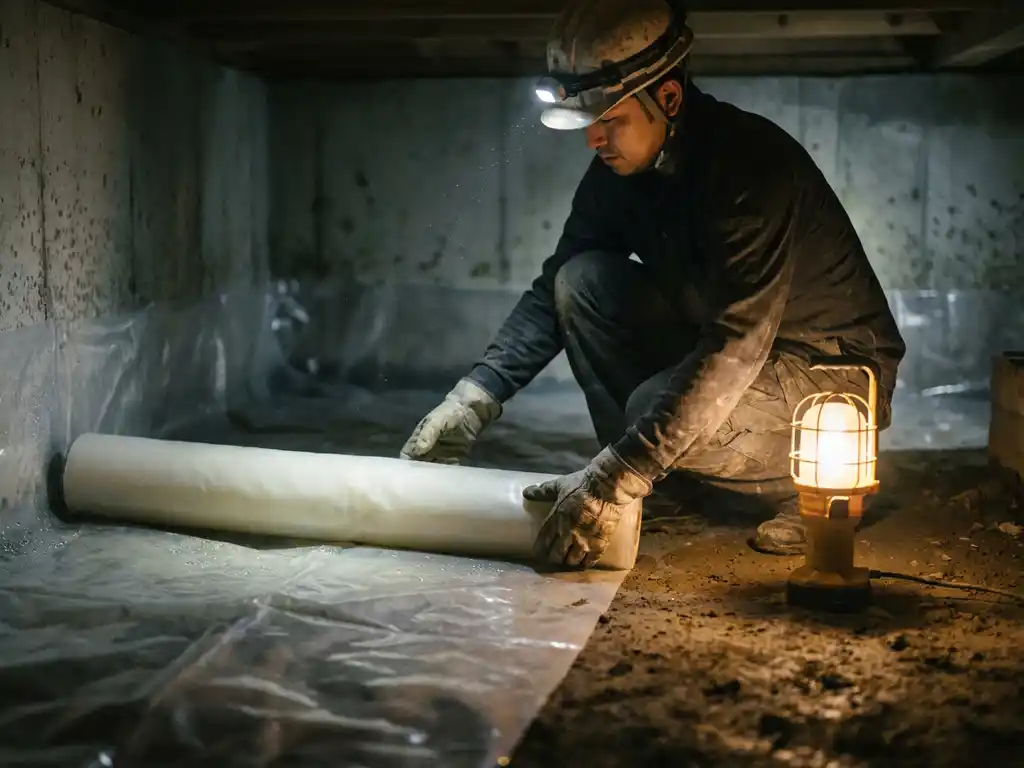
- Crawl space foil: A vapor barrier on the floor of the crawl space prevents moisture from evaporating from the ground and entering the space. This is a relatively simple and affordable measure that works well for mild to moderate moisture problems originating from the ground.
- Drainage: In the case of structurally high groundwater levels, a drainage system around or under the home is the most sustainable solution. The water is actively drained before it reaches the crawl space.
- Combination: In many cases, a combination of foil and ventilation is most effective. The foil blocks rising damp, while ventilation removes the remaining humidity.
Unsure which solution suits your situation? Have the crawl space inspected first to determine the exact source of the moisture. This way, you avoid investing in a measure that does not solve the problem.
How much does it cost to deal with a damp crawl space?
The costs of addressing a damp crawl space vary widely, depending on the chosen solution, the extent of the problem, and the accessibility of the crawl space. Simple measures such as installing ventilation openings are relatively affordable, while a complete drainage system requires a larger investment.
A general overview of the cost ranges:
- Drill ventilation openings and install grilles: This is generally the most cost-effective intervention. The exact costs depend on the number of openings required and the thickness of the wall.
- Crawl space foil: The price is determined by the surface area of the crawl space and the quality of the foil. Including labor costs for installation, this is a manageable investment.
- Mechanical ventilation: A ventilation system entails higher material costs, but requires little maintenance afterwards.
- Drainage: This is the most drastic and costly option, but also the most sustainable in the event of serious groundwater problems.
It is wise to request multiple quotes and have them assessed to determine which solution is most cost-effective for your situation in the long term. Cheap intervention that does not fully solve the problem ultimately leads to higher costs due to persistent damage.
How De Betonboorder helps with crawl space ventilation
A damp crawl space requires a professional approach, and that is exactly what we stand for. We take care of drilling ventilation openings in the concrete and masonry walls of your crawl space, creating effective air circulation that prevents or solves moisture problems. We do this using high-quality diamond core drills, ensuring the work is carried out accurately and with minimal collateral damage.
What we arrange for you:
- Professional drilling of ventilation openings in concrete, stone, or masonry
- Installation of ventilation grilles for a sustainable result
- Neat handover where the workplace is left clean
- Deployment of experienced professionals from our nationwide network
- In many cases, a professional is on site within two days.
A well-ventilated crawl space not only improves the air quality in your home but also contributes to better insulation value. Would you like to know what we can do for your situation? Contact us and we respond within 24 hours.
Related Articles
- How is the strength of my floor calculated after a recess?
- How many decibels does an air conditioner produce and when is that disturbing when sleeping?
- Innova vs. the competition: why choose an Innova monoblock air conditioner?
- The complete Innova range compared: from 9HP Mini to 18HP ELEC
- How long does the warranty on an air conditioner last?
- When should you have an air conditioner installed so you are ready for summer?
- What is a portable air conditioner?
- What is the best Innova air conditioner?
- Can an air conditioner increase the value of your home?
- Which plug do you use in a hollow wall?
- What do you do if your drill gets stuck in the wall?
- How long does it take to remove a load-bearing wall?