
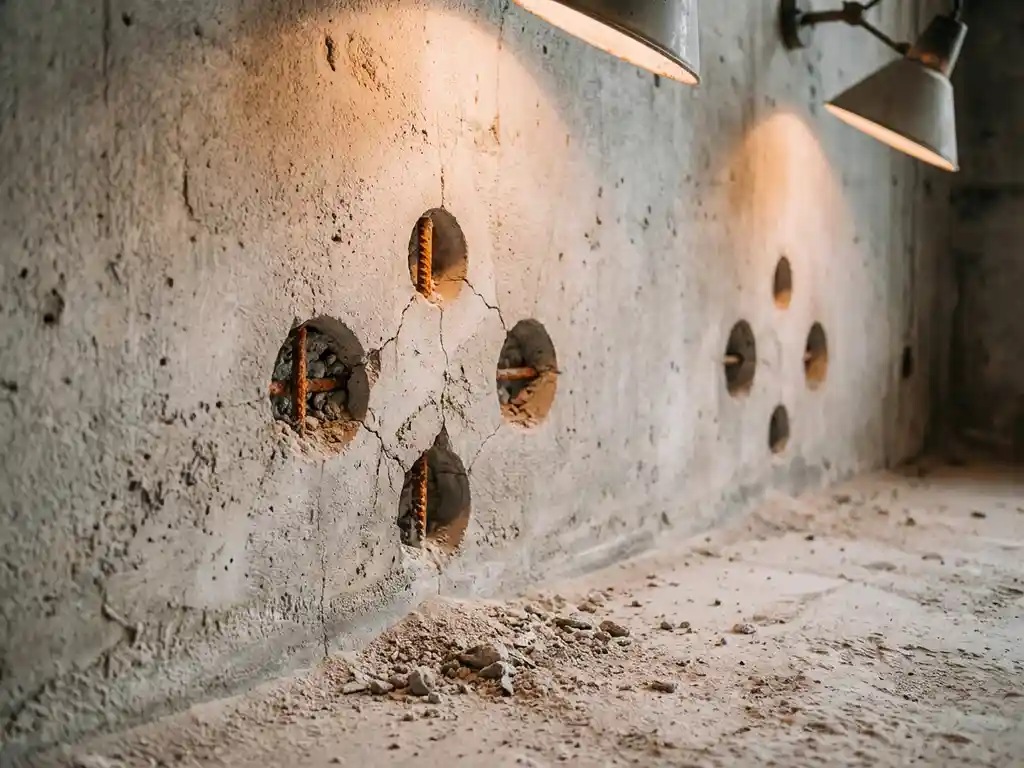
Drilling holes in walls is a common job during remodeling, installations, and renovations. Whether it involves hanging cabinets, running pipes, or creating ventilation openings, multiple holes are often required to complete a project.
But when does it become too much of a good thing? Too many drill holes in a single wall can compromise structural integrity and lead to unsafe situations. It is therefore crucial to understand where the limits lie and how to prevent damage. concrete drilling and other drilling operations.
What happens structurally if you drill too many holes in a wall?
Too many holes in a wall weaken the structural cohesion because the load-bearing capacity decreases and stress concentrations develop around the boreholes. This can lead to cracks, instability, and in extreme cases, even partial collapse of the wall.
Each bore causes a break in the material density of the wall. In reinforced concrete, piercing reinforcement can drastically reduce tensile strength. The remaining material bridges between the holes must absorb more force, which can lead to overstrain.
Caution is particularly advised with load-bearing walls. These walls bear the weight of the floors and roofs above. If too much material is removed through drilling, the wall can no longer adequately fulfill its load-bearing function.
What is the maximum number of holes a wall can have before it becomes dangerous?
There is no universal maximum number of holes, as this depends heavily on factors such as the type of wall, thickness, material, hole size, and spacing. As a rule of thumb, the total drilled surface area should not exceed 10-15% of the wall surface.
For standard 10 cm thick brick interior walls, a few small holes (up to 20 mm in diameter) usually do no harm. With concrete walls, more is possible due to the higher strength, but there are limits here as well. Large holes (above 100 mm in diameter) always require extra caution.
The spacing between holes is crucial. Holes that are too close together can create a weakening zone. Maintain a minimum distance equal to three times the diameter of the largest hole.
What signs indicate damage caused by too many drill holes?
Visible cracks around drill holes, crumbling material, wall sagging, or creaking noises are clear warning signs that the wall has been structurally damaged by excessive drilling.
Pay particular attention to hairline cracks radiating from the holes. These can expand into larger cracks over time. In reinforced concrete, rust spots around holes may indicate damaged reinforcement that has been exposed to moisture.
Other signs are:
- Doors or windows that no longer close properly
- New gaps between wall and ceiling
- Peeling tiles or wallpaper around drill holes
- Distortion of the wall (bulging or sagging)
How do you prevent damage when drilling multiple holes?
Plan all necessary holes in advance, choose the correct drilling technique for the material, maintain sufficient distance between holes, and avoid damaging reinforcement or load-bearing elements.
Always begin by locating pipes and reinforcement with a detector. This not only prevents dangerous situations but also unnecessary weakening of the structure. Use diamond core drills for clean drilling without vibrations, which can cause additional cracks.
Important prevention tips:
- Always drill perpendicular to the wall surface.
- Use the correct speed and pressure for the material.
- Cool the drill bit during intensive use
- Work from small to large for multiple holes
- Check regularly for cracks during the work
When should you hire a professional for concrete drilling?
Call in a professional for load-bearing walls, reinforced concrete, holes larger than 50 mm, complex installations, or when you have doubts about the structural consequences of your drilling plan.
Professionals have specialized equipment at their disposal, such as vibration-free diamond drills and detection equipment to locate reinforcement and pipes. They can also assess the structural impact and propose alternative solutions.
Specific situations where professional help is necessary:
- Drilling in load-bearing structures
- Cable glands with a diameter greater than 50 mm
- Drilling through multiple layers of material
- Work in historic buildings
- Installations requiring high precision
How De Betonboorder helps with safe drilling
We ensure professional drilling work where structural safety comes first. Our experienced professionals assess the situation beforehand and use high-quality diamond core drills for optimal results, without unnecessary damage.
Our services include:
- Professional assessment of drilling plans
- Dust-free drilling with diameters from 4 to 650 mm
- Advice on structural aspects
- Neat finish and tidying up
Are you unsure about your drilling project, or do you want to be sure that it can be done safely? Contact us for expert advice and professional execution. We will contact you within 24 hours, and in many cases, we can arrange a professional within two days.
Related Articles
- Why is it so damp under my house?
- Innova 12HP vs Innova 15HP: how much power do you really need?
- What is the difference between cooling capacity and electrical power in an air conditioner?
- What is an inverter air conditioner?
- What maintenance does an air conditioner need?
- Can you drill into concrete when it is freezing outside?
- Where can I buy the best air conditioner?
- How often should you replace the air filter?
- What are the pitfalls of hiring a cheap concrete driller?
- How deep are electrical cables embedded in a wall?
- What is the difference between a concrete driller and a handyman?
- When will temporary stamps be removed?