
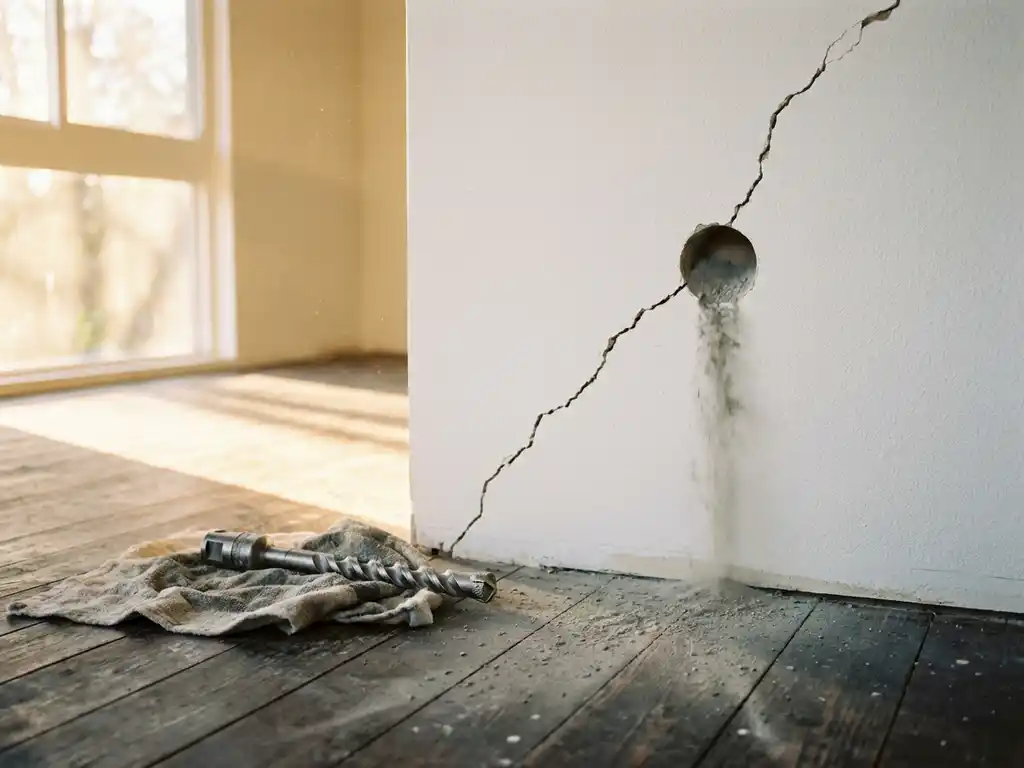
Drilling holes in walls is a common household chore, but sometimes things go wrong and you discover a crack in the wall afterward. This can be quite a shock, especially if you have just finished a project. Fortunately, most cracks after drilling can be repaired effectively, provided you act quickly and appropriately.
In this article, we answer all important questions about cracks that occur after drilling. From the causes to the solutions, so you know exactly what to do if you find yourself in this situation.
Why do cracks appear in the wall after drilling?
Cracks in the wall after drilling are usually caused by vibrations from the drill, the use of an incorrect drilling technique, or tension in the material. Especially in older walls or drywall, the structure can be sensitive to the shocks released during the drilling process.
The main causes are drilling at too high a speed, using a blunt drill bit, or applying too much pressure during the borenThe material of the wall also plays a role: concrete and stone are sturdier than drywall or old brick walls. When drilling through different layers of material, for example from drywall to concrete, differences in tension can lead to cracks around the drill hole.
Other factors that can cause cracks are moisture problems in the wall, existing weak spots, or drilling too close to corners and edges, where the wall is already under tension.
How can you prevent cracks from forming during drilling?
You can prevent cracks during drilling by using the correct drilling technique, choosing a sharp drill bit suitable for the material, and starting to drill slowly. Always start at a low speed and increase it gradually, while applying light, even pressure.
Use the correct drill bit for different materials: wood drills for wood, metal drills for metal, and stone or concrete drills for hard materials. Ensure your drill bit is sharp, as a blunt drill bit requires more force and causes more vibration. For sensitive materials such as drywall, it is better to use a special drywall drill bit.
Other preventive measures include avoiding drilling near corners or edges, checking for pipes and tubes before starting, and using a center punch to prevent slipping. If in doubt about the substrate, it is advisable to make a small test bore first.
What do you do immediately after discovering a crack?
Stop drilling immediately as soon as you discover a crack and first assess the extent of the damage. Take photos for potential insurance claims and check if the crack is spreading. Do not touch the crack and prevent further vibrations in the vicinity.
Check whether the crack is only superficial or goes deeper by carefully shining a flashlight into it. Small hairline cracks in the paint or plasterwork are usually less serious than cracks that run through the entire wall. Also, check if dust or debris falls out of the crack, which may indicate structural damage.
Document the situation thoroughly by taking photos from different angles and measure the length of the crack. This is important for any potential repairs or if you need to call in a professional. Ventilate the room well if a lot of dust was released during drilling.
How do you repair small cracks in the wall yourself?
You can repair small, superficial cracks yourself using acrylic sealant or filler, depending on the type of wall. First, thoroughly clean the crack, apply the filler, let it dry, and sand it smooth before painting over it. For plasterboard, use drywall filler; for other walls, use acrylic sealant or a general-purpose filler.
Start by cleaning the crack by removing loose pieces with a brush or vacuum. For small cracks in painted walls, flexible acrylic sealant works best because it can move with small movements in the wall. Apply the sealant with a caulking gun and smooth it with a damp finger.
If there are tears in the wallpaper, you can try carefully sticking the wallpaper back in place with wallpaper paste. Let everything dry thoroughly before painting over or applying new wallpaper. For the best results, use a primer before applying the final finish.
When should you hire a professional for crack repair?
Call in a professional if the crack is longer than 30 centimeters, runs through the entire wall, or indicates structural damage. Professional help is also needed for cracks that continue to grow after you have stopped drilling. If you are unsure about the severity of the damage, always have it assessed by an expert.
Other signs that you need professional help include cracks that are widening, cracks in load-bearing walls, or situations where water or air is entering through the crack. In the case of cracks in concrete walls or structural elements, it is always wise to consult a specialist, as these can affect the stability of the building.
A professional can also determine if there are underlying problems that caused the crack, such as moisture issues or foundation problems. Moreover, they have the right materials and techniques to carry out structural repairs that last a long time.
Who is responsible for drilling damage and compensation?
The responsibility for drilling damage lies with the person performing the work. If you drilled yourself, you are liable for the damage. In the case of work by a professional, the contractor is responsible, provided the damage was caused by their work. Always check whether insurance or a warranty applies.
For private individuals, homeowners' insurance may cover damage caused by your own work, depending on the policy conditions. Read these carefully and contact your insurer. For rental properties, you must contact the landlord before carrying out repairs.
Professionals usually have liability insurance that covers unintentional damage. Always ask about insurance and warranties in advance, and have this recorded in the quotation. Keep all documents and photos for potential claims.
How De Betonboorder helps with professional drilling
We understand that drilling damage is an unpleasant experience that you would rather avoid. That is why our experienced professionals always work with the right techniques and professional equipment to minimize damage. Our benefits are:
- Use of high-quality diamond drill bits for minimal vibration
- Dust-free drilling for a clean work environment
- Experienced specialists who recognize the right material and the right technique
- Nationwide network for fast service within two days
- Leaving the workplace neat and tidy
Prevent drilling damage by contacting our professionals immediately. Order your professional here and leave the work to experts who know how to drill through any wall without damage.
Related Articles
- What is the target price for drilling ventilation holes in the foundation?
- How much does an air conditioner cost for an apartment that heats up quickly?
- How much does a monoblock air conditioner cost? Complete price overview
- What is a ceiling air conditioning unit?
- How do you set an air conditioner optimally for the best cooling?
- Can an air conditioner be on 24 hours a day?
- How much does air conditioning cost, including installation?
- What happens if damage occurs during drilling?
- For which jobs do you need a concrete drill?
- Do I need a permit for a penetration in the exterior wall?
- Can I stay at home during concrete drilling work?
- When will temporary stamps be removed?