
The payback period for an air conditioner averages between five and ten years, depending on the type of system, your energy consumption, and how often you use the air conditioner. An efficient split-unit air conditioner can pay for itself faster than a portable model, especially if you also use the air conditioner as a heat pump in the winter. In this article, we answer the most frequently asked questions about the financial aspects of an air conditioning investment.
How much energy does an air conditioner save compared to other cooling methods?
A modern air conditioner is significantly more energy-efficient than most alternative cooling methods. Whereas a fan barely cools and a portable cooler consumes a lot of energy for little result, a split-unit air conditioner with a high COP (Coefficient of Performance) value uses only one kilowatt-hour of electricity to produce three to five kilowatt-hours of cooling. This makes an air conditioner relatively efficient compared to electric heating elements or older cooling systems.
Portable air conditioning systems have a much lower efficiency than fixed split units because they vent warm air outside through a hose, thereby also drawing cool air out of the room. A fixed air conditioner with a good COP of 4 or higher performs significantly better in this regard. Moreover, you can also use a modern air conditioner as a heat pump in the winter, allowing you to benefit twice from the investment and increasing annual energy savings.
What is the average cost of an air conditioner, including installation?
The total cost of an air conditioner, including installation, varies significantly based on the system type, capacity, and complexity of the installation. A single-split air conditioner for one room typically costs more than just the unit itself, including installation, because pipes need to be drilled through walls and the outdoor unit mounted. Multi-split systems for multiple rooms are, of course, more expensive.
The installation of an air conditioner also involves additional work. Think, for example, of drilling through exterior walls for the pipe routing. For an accurate calculation of the cost for your specific situation, you can have a price calculation made based on your wishes. Would you like to get an idea of which system suits you? Via the air conditioning selection wizard you will quickly find a suitable system.
How do you calculate the payback period of an air conditioner?
You calculate the payback period by dividing the total investment by the annual savings or added value the air conditioner generates. If you also use the air conditioner as a heat pump in the winter, include the savings on your heating costs. The formula is simple: payback period (in years) = total purchase and installation costs divided by annual energy savings.
Step 1: Map out your current costs
Note down what you currently spend on cooling or heating. Do you use electric radiators or a gas boiler for heating? An air conditioner acting as a heat pump can be significantly cheaper in this regard, especially at current energy prices.
Step 2: Estimate your annual usage
The more hours per year you use the air conditioner, the faster you recoup your investment. If you only use the air conditioner on a handful of hot summer days, it will take longer. If you also use it as your primary heating source in the winter, the payback period can be significantly shorter.
Which factors shorten or lengthen the payback period?
The payback period of an air conditioner is determined by a combination of factors that influence both the costs and the benefits. The most important factors are the type of system, energy prices, usage patterns, and the insulation value of your home.
- System type: An efficient split-unit with a high COP value pays for itself faster than a portable or cheaper unit with lower efficiency.
- Dual use as a heat pump: Anyone who uses the air conditioning for heating in the winter as well effectively doubles the number of useful hours and thereby significantly reduces the payback period.
- Energy prices: With higher electricity prices, the savings compared to alternatives are greater, which shortens the payback period.
- Insulation of the house: A well-insulated home retains cold or warm air better, meaning the air conditioner doesn't have to work as hard and energy consumption remains lower.
- Maintenance: Regular maintenance keeps efficiency at a high level. A clogged filter or low refrigerant pressure increases energy consumption and prolongs the payback period.
When is an air conditioner a bad investment from a financial perspective?
Financially, an air conditioner is a poor investment if you only use it for a few days a year, the home is poorly insulated, or if you purchase a cheap but inefficient system. In those cases, the costs are high and the benefits low, causing the payback period to rise to twenty years or more.
Other situations where air conditioning is less financially sensible:
- You live in a rental property and are not allowed to make structural alterations to the exterior facade.
- You plan to move within a few years, and the appreciation of the home does not outweigh the investment.
- You buy a system that is too big or too small for the space, causing it to constantly run at an inefficient power.
- The installation requires complex modifications that significantly increase the initial costs.
In such cases, it is wise to first carefully compare and calculate whether the investment can be recouped within a reasonable timeframe.
How do you accelerate the return on your air conditioning investment?
You can shorten the payback period of an air conditioner by using the system smartly and intensively, performing proper maintenance, and insulating the home as well as possible. The more efficiently the system runs and the more often you use it for both cooling and heating, the faster the investment pays for itself.
Practical tips to shorten the payback period:
- Use the air conditioner as a heat pump in the winter as well. This is the fastest way to recoup the investment, because you double the annual usage hours.
- Choose a system with a high energy label class. An A+++ system consumes significantly less power than a B or C system for the same cooling performance.
- Ensure good insulation. Close curtains during the day in bright sunlight, use insulating window coverings, and ensure that doors and windows remain closed when the air conditioning is on.
- Set a timer. Only run the air conditioning when really necessary and use night mode or the timer for lower consumption during the night.
- Maintain the system annually. Clean filters and a well-filled refrigerant circuit ensure that the system continues to run at full efficiency.
How De Betonboorder helps with the installation of your air conditioner
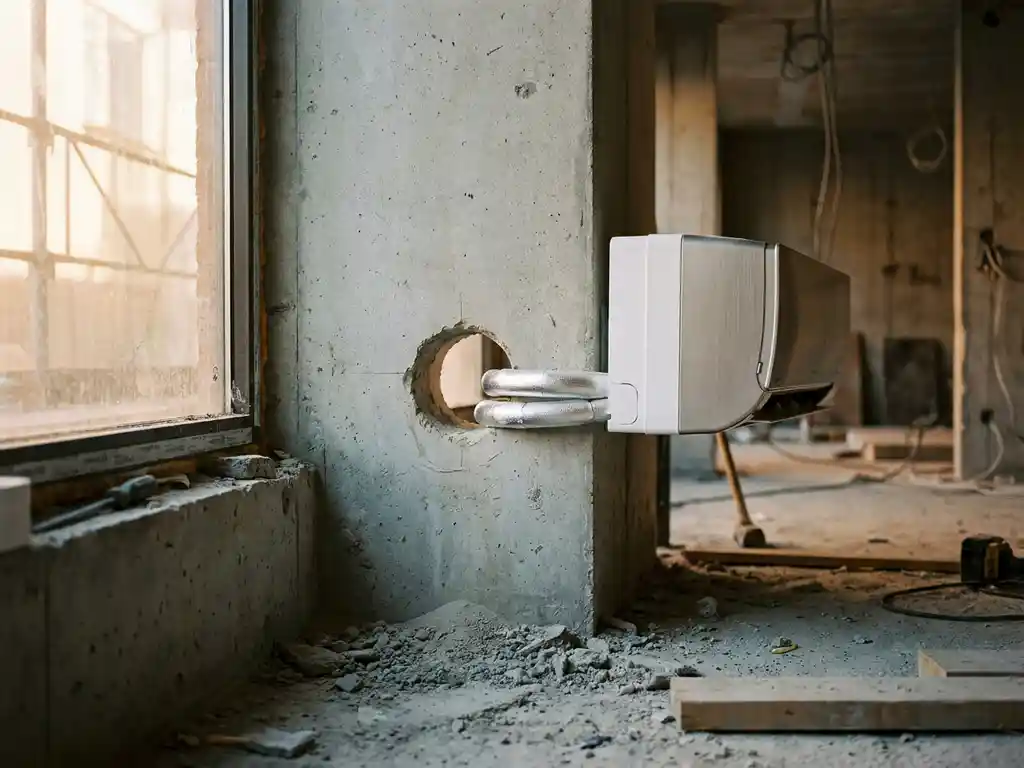
Installing an air conditioner almost always requires drilling holes through exterior walls for the pipe run from the indoor to the outdoor unit. This is precision work where you do not want cracks to appear in the facade or damage the surrounding structure. We ensure a sleek, clean penetration that the installer can use immediately.
What we do for you:
- Professional drilling of through holes in concrete, brick, or other facade materials
- Work with high-quality diamond core drills for a precise result without unnecessary damage.
- Leave the workplace neat and tidy afterwards
- Quick deployment: in many cases, a professional on site within two days
Do you want to know how much it costs to drill a through-hole for your air conditioning system or how soon we are available? Contact us and we respond within 24 hours.
Related Articles
- How much nuisance does drilling ventilation holes in the foundation cause?
- Innova 9HP Mini vs Innova 12HP Vertical: the best choice for a bedroom
- How big does an air conditioner need to be for my room?
- Can an air conditioner run on solar energy?
- Can an air conditioner prevent equipment from overheating?
- Which air conditioner is suitable for an attic room?
- Where can I buy the best air conditioner?
- What is a monoblock air conditioner?
- Which air conditioner works best in humid rooms?
- Can you get a subsidy for an air conditioner?
- What are the dangers of inhaling concrete dust?
- What are the rules for drilling in an apartment?