
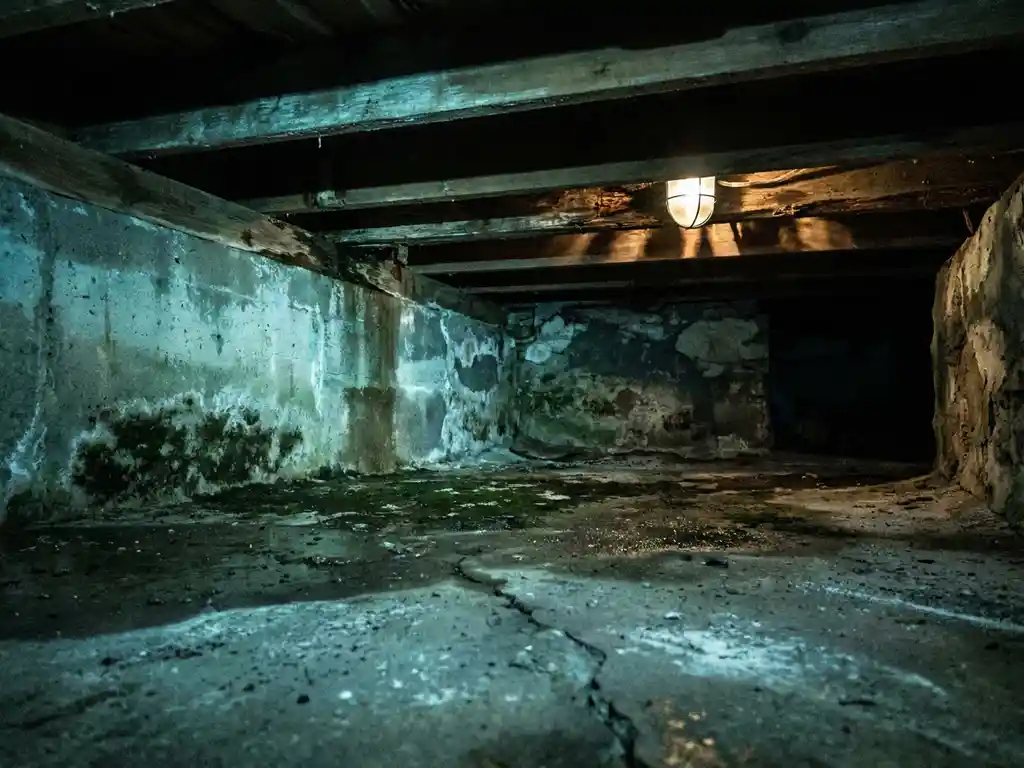
Yes, moisture damage in the crawl space can affect the value of your home. Buyers and appraisers are becoming increasingly critical of the condition of the crawl space, and visible moisture problems, mold, or wood rot can lead to a lower appraisal value or a longer selling time. The extent of the impact depends on the severity of the damage and whether you can demonstrably prove you have taken action. In this article, we answer the most frequently asked questions about moisture damage in the crawl space and what you can do about it.
How does moisture damage occur in the crawl space?
Moisture damage in the crawl space occurs when there is more moisture present than the space can drain. The crawl space is located directly on the ground, where groundwater and condensation are constantly present. Without sufficient crawl space ventilation that moisture accumulates, with all the consequences that entails.
The most common causes are:
- Poor or absent ventilation: Air circulates insufficiently, causing humid air to linger.
- Rising ground moisture: Moisture rises from the soil, especially at high groundwater levels.
- condensation: Warm air from above collides with the cold crawl space floor and condenses like water.
- Leaking pipes: Small leaks under the floor remain undetected for a long time.
- Insufficient vapor barrier foil: Without ground cover, soil moisture draws up freely.
Many older homes have crawl spaces that were simply not designed with modern moisture control in mind. Consequently, in 2026, we are increasingly seeing owners taking measures during renovations to address this structurally.
What damage can moisture in the crawl space cause?
Moisture in the crawl space causes a range of problems that accumulate the longer the issue is ignored. From mold growth and wood rot to health issues and structural weakening of the floor construction. The damage is rarely limited to the crawl space itself.
Concrete consequences include:
- Mold and fungi: These attack wooden beams and floorboards and can spread to the living area.
- Wood rot: With prolonged exposure to moisture, wood loses its load-bearing capacity, leading to sagging floors.
- Musty smell in the house: Moist air rises through cracks and floor crevices and spreads an unpleasant odor.
- Health complaints: Mold spores in indoor air can cause respiratory problems, particularly in children and the elderly.
- Damage to insulation: Wet insulation materials lose their effectiveness and must be replaced.
- Increased heating costs: A damp crawl space insulates less effectively, causing you to use more energy to keep the house at a comfortable temperature.
How much can moisture damage in the crawl space reduce the value of the house?
Moisture damage in the crawl space can noticeably reduce the sales value of a home, depending on the severity and visibility of the problems. With minor moisture problems without structural damage, the impact is limited, but in the case of wood rot, mold, or affected joists, buyers may negotiate hard or back out.
Appraisers include the condition of the crawl space in their assessment. When there is visible mold growth or damaged wood, this is generally classified as a structural defect. Buyers who have a structural inspection carried out will use these types of findings as a bargaining chip.
In addition to the direct decrease in value, the selling time also plays a role. Homes with known damp problems remain on the market longer and attract fewer prospective buyers. Demonstrating that you have resolved the problem, including properly functioning ventilation, can actually be a positive selling point.
Do I need to report moisture damage in the crawl space when selling?
Yes, as a seller, you are legally obliged to disclose known defects, including moisture problems in the crawl space. This stems from the duty of disclosure under Dutch civil law. If you conceal a defect and the buyer discovers it afterwards, he or she can hold you liable for consequential damages.
In practice, this is handled via the questionnaire you fill out as a seller during the transfer. It explicitly asks about moisture problems, leaks, and the condition of the crawl space. Honesty is not only legally required here but also sensible: transparency regarding the problem and the measures taken builds trust with potential buyers.
If you have since solved the moisture problem, that is actually a strong selling point. Document the work performed thoroughly, including any installation of ventilation points or the application of ground foil.
How do you solve moisture problems in the crawl space?
Moisture problems in the crawl space are solved by addressing the cause and structurally improving moisture drainage. A combination of measures works best: improving ventilation, preventing moisture from entering from the outside, and repairing existing damage.
The most effective step-by-step approach:
- Inspect the crawl space thoroughly: Map out where the moisture is coming from and how severe the damage already is.
- Improve ventilation: Ensure sufficient air circulation by clearing ventilation openings or installing additional grilles.
- Lay down the ground foil: A vapor barrier foil on the floor of the crawl space effectively blocks rising groundwater.
- Repair wood rot and mold: Affected beams must be treated or replaced before further damage occurs.
- Check pipes: Have any leaks repaired immediately.
- Consider mechanical ventilation: For persistent moisture problems, a mechanical ventilation system offers a permanent solution.
Prevention is always cheaper than repair. Those who invest in good ventilation of the crawl space, prevents minor moisture problems from escalating into costly structural defects.
When is professional help needed for crawl space moisture damage?
Professional help is needed as soon as moisture damage extends beyond a light layer of condensation or a single damp corner. With visible mold growth, wood rot, sagging floorboards, or a persistent musty smell in the house, the situation is too advanced to resolve yourself.
Hire a professional if:
- There is mold on joists or floorboards
- The floor noticeably springs or sags
- You cannot determine the cause of the moisture problem
- Simple ventilation measures do not solve the problem
- You want to sell the house soon and want certainty about the condition of the crawl space
A professional can not only repair the damage but also install the correct ventilation openings in concrete or masonry. This requires precise work to avoid damaging the structure.
How De Betonboorder helps with crawl space ventilation
We help you structurally address moisture problems in the crawl space by drilling and installing professional ventilation openings. Good crawl space ventilation is the most sustainable solution to keep moisture out, eliminate musty odors, and improve the insulation value of your home.
What we do for you:
- Drilling ventilation openings in concrete, masonry, or other materials
- Installing ventilation grilles for optimal airflow
- Working in both occupied properties and shell buildings
- Deliver neat and tidy upon completion of the work.
- Quick deployment: in many cases, a professional on site within two days
Would you like to know what we can do for your crawl space? Contact us and we respond within 24 hours with appropriate advice.
Related Articles
- How do I prevent wood rot on the floor joists under my house?
- Is crawl space ventilation through the facade the best option?
- Innova 12HP Vertical vs Innova 15HP Vertical: the floor-standing models side by side
- What temperature should you set on an air conditioner?
- How do you choose the right air conditioning capacity?
- Can an air conditioner cause noise nuisance for neighbors?
- Can an air conditioner cause condensation problems?
- How does the timer function of an air conditioner work?
- What happens if damage occurs during drilling?
- How much of a nuisance does drilling indoors cause?
- What is wet drilling and why is it used?
- How do I know if a concrete driller is reliable?