
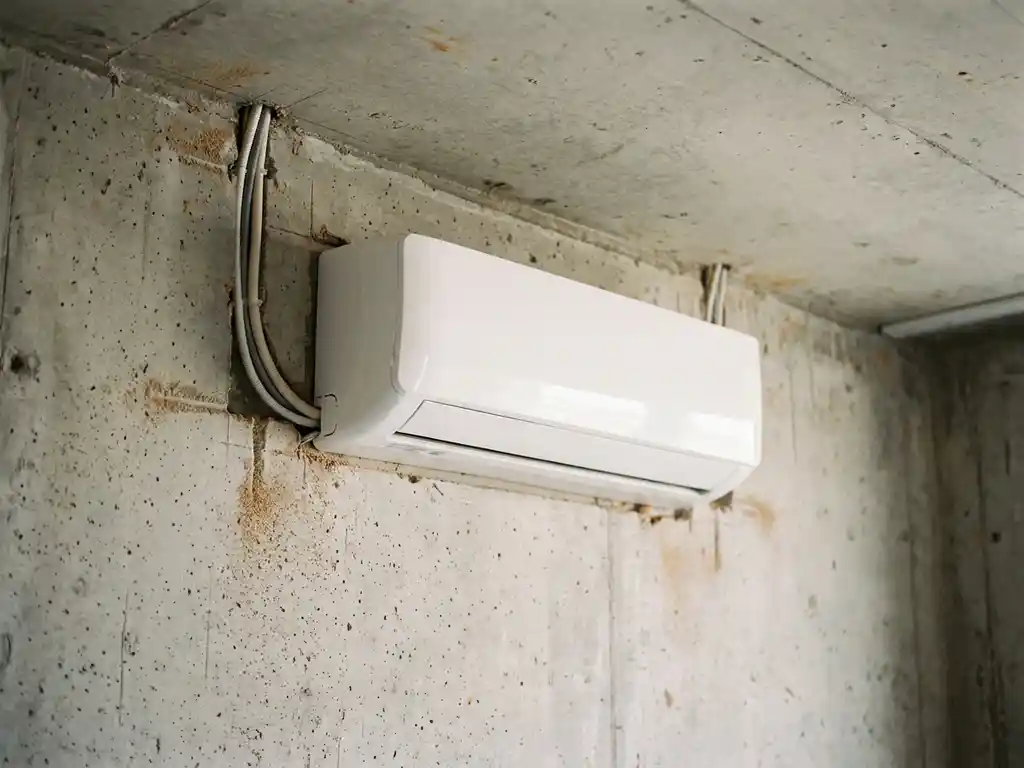
The Olimpia Splendid Unico and the Innova are both popular air conditioning systems without an outdoor unit, but they differ significantly in technical design, suitable room size, and ease of installation. The Unico is a monoblock system that operates through a single hole in the wall, while the Innova uses an air duct that runs through a window or small opening to the outside. Which model best suits your situation depends on your space, your preferences, and how permanent the installation needs to be. In this article, we answer the most frequently asked questions about both systems so that you can make an informed choice.
What are the main technical differences between the Unico and the Innova?
The biggest technical difference is the way both systems dissipate heat. The Olimpia Splendid Unico is a fully enclosed monoblock system that operates via two pipes through a single hole in the wall: one pipe extracts warm air and the other supplies outside air. The Innova works with a flexible air hose that runs to the outside through a window or opening and blows out warm air.
Further technical differences at a glance:
- Condensate drain: The Unico processes condensation internally via evaporation. Some Innova models have a collection tray that you need to empty regularly.
- Cooling capacity: The Unico is available in higher power ratings and is therefore suitable for larger spaces. The Innova is more compact and has a lower capacity.
- Sound production: Because the entire mechanism of the Unico is located inside the wall, the indoor noise is generally lower than with the Innova, where the compressor is located within the room.
- Ventilation option: The Unico can also function as a ventilation system by bringing outside air indoors. The Innova only circulates cooled indoor air.
For those seeking a technically robust and long-lasting solution, the Unico offers more possibilities. The Innova has a simpler design and is therefore easier to move.
What room size is suitable for the Unico and what for the Innova?
The Olimpia Splendid Unico is suitable for rooms of roughly 20 to 60 square meters, depending on the chosen model and capacity. The Innova is generally intended for smaller rooms up to approximately 25 to 35 square meters. The Unico therefore covers a broader spectrum of room sizes.
When determining the correct room size, more factors play a role than just the floor area:
- Ceiling height: A higher ceiling height significantly increases the volume to be cooled. Always calculate with the total air volume, not just square meters.
- Insulation: Poorly insulated rooms lose coolness faster. Higher capacity is desired here, which points more towards the Unico.
- Solar tax: A room with many south-facing windows requires more cooling capacity than a comparable shaded room.
- Use: A home office with a lot of electronics heats up faster than a bedroom. Take the heat sources in the room into account.
If you are unsure what capacity you need, you can via the air conditioning selection wizard Quickly determine which model suits your specific situation.
How does the installation of the Unico differ from the Innova?
The installation of the Unico requires a hole of typically 12 to 15 centimeters in the exterior wall, through which the two connections are routed. This is a one-time procedure performed by a professional and ensures a secure, neat finish. The Innova requires no masonry work: the air hose is routed through a window opening or a small hole, making installation significantly easier.
Installation of the Unico
Drilling a hole in the exterior wall is the core of the Unico installation. This requires a diamond drill that can penetrate concrete, stone, or a cavity wall precisely without damaging the structure. After drilling, a collar is fitted and the device is connected. The total installation time is limited, but the drilling itself requires the right equipment and knowledge.
Installation of the Innova
The Innova is installed as a free-standing or wall-mounted unit. The air hose is routed outside through a special window sealant or a small hole. In principle, this can be done yourself without professional tools. The disadvantage is that the hose is visible and that windows cannot be fully opened while the air conditioner is in use.
Do you want to know what a wall installation for the Unico costs at your location? Use the pricing tool for a quick indication.
Which model is more energy-efficient: the Unico or the Innova?
The Olimpia Splendid Unico is generally more energy-efficient than the Innova. The Unico operates with a closed system where no warm outside air enters the room, which increases cooling efficiency. The Innova draws air from the room itself to cool, creating negative pressure and allowing warm air to flow in through cracks.
In concrete terms, this means the following:
- The Unico has a better EER (Energy Efficiency Ratio) value than most portable systems, such as the Innova, for comparable cooling capacity.
- The Innova partially compensates for energy loss due to negative pressure, causing it to work harder to maintain the same temperature.
- In practice, you notice this difference especially during prolonged use in warmer periods, when energy consumption increases.
For those who use the air conditioning intensively, such as for several hours daily in the summer of 2026, the Unico is the most economical choice in terms of energy costs in the long run.
Which air conditioner without an outdoor unit is best for your situation?
The Unico is best for those who want a permanent, energy-efficient, and powerful cooling solution for a space of 20 square meters or larger. The Innova is the better choice for those who want flexibility, cannot or do not want to have masonry work done, and have a smaller space to cool.
Use the following criteria to make your choice:
- Choose the Unico if: you want a permanent setup, have a larger space, energy efficiency is a priority, and you are willing to have a hole drilled in the wall.
- Choose the Innova if: you rent and are not allowed to make modifications to the home, you want to move the air conditioning between rooms, or you are looking for a temporary solution for a small space.
Both systems have their own strengths. The choice ultimately depends on your living situation, the size of the room, and how permanent you want the installation to be.
How De Betonboorder helps with the installation of your air conditioner
An air conditioner without an outdoor unit, such as the Olimpia Splendid Unico, requires a precise hole in the exterior wall. That is exactly where we, as specialists in concrete drilling, add value. We ensure that the hole is drilled to the correct diameter and position, without causing unnecessary damage to the surrounding structure.
- We drill holes in concrete, brick, cavity walls, and reinforced concrete with diamond core drills for a sleek and clean result.
- We work throughout the Netherlands with a nationwide network of experienced professionals.
- In many cases, we can schedule a concrete driller for you within two days.
- After drilling, we leave the workplace neat and tidy.
- We work for private individuals as well as contractors and SMEs.
Do you want to know what it costs to drill a hole for your air conditioning installation? Check out our pricing tool for a quick indication, or schedule a professional immediately via De Betonboorder.
Related Articles
- How do I get that musty basement smell out of my living room?
- Innova 9HP Mini vs Innova 12HP: small but powerful or generously sized?
- How much does a monoblock air conditioner cost in electricity per month in the summer?
- Hidden costs when purchasing an air conditioner: what should you look out for?
- How much does it cost to keep your entire house cool with an air conditioner?
- What is a VRF air conditioning system?
- How much does it cost to have your air conditioning on for 1 hour?
- How does an air conditioning heat pump work?
- Can an air conditioner work in extreme heat?
- How does load-bearing wall removal work in a 70s home?
- How do you report the removal of a load-bearing wall to the Owners' Association?
- What are the risks of removing a load-bearing wall yourself?