
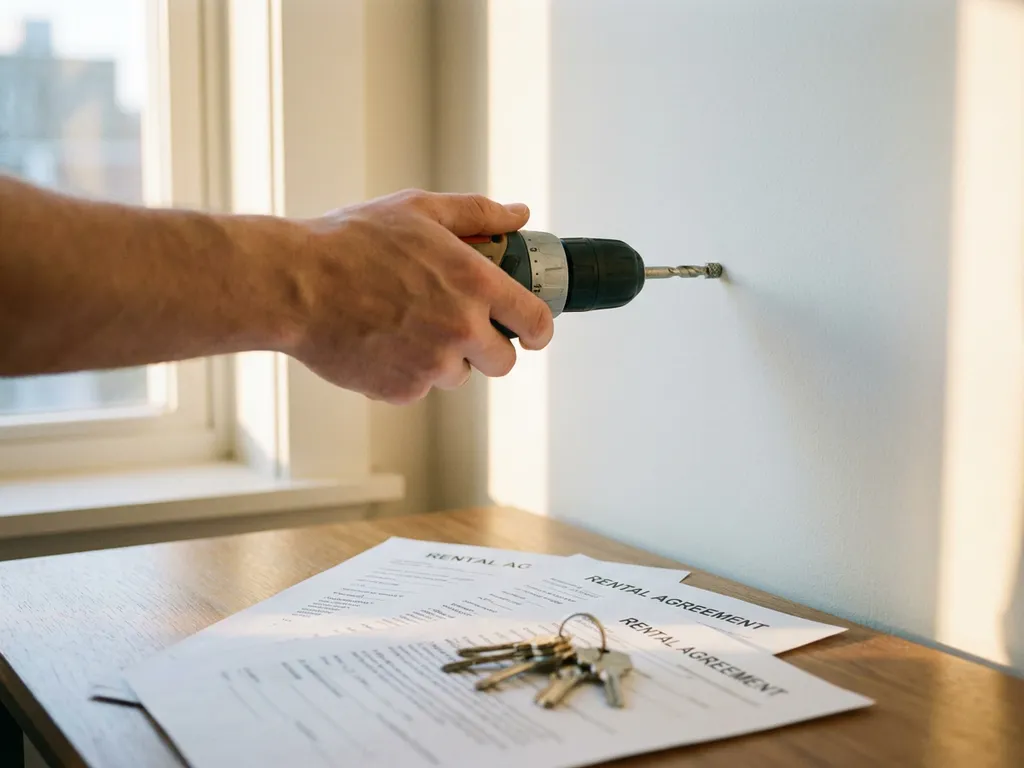
As a tenant, you naturally want to furnish your home to your own taste. Perhaps you want to hang a painting, install a new kitchen, or have an extra electrical outlet installed. Many of these jobs require drilling. But are you allowed to simply drill in a rental property?
The rules regarding drilling in rental properties can be confusing. Some work is permitted without permission, while others require your landlord's approval first. It is important to know these rules to avoid problems at the end of your lease.
When do you need permission from your landlord to drill?
You need permission from your landlord if drilling could cause permanent damage to the structure of the home or affect the value of the property. This applies to all work that goes beyond normal wear and tear caused by occupancy.
Concrete situations where permission is required include drilling large holes for pipes, breaking through load-bearing walls, making holes in concrete or masonry for installations, and drilling for fixed installations, such as air conditioners. Also for concrete drilling—works that may affect the structure of the building—prior permission is always required.
Most rental agreements contain specific clauses regarding renovations and modifications. Therefore, always read your rental agreement carefully before you start drilling. Some landlords have strict rules, while others offer more flexibility for minor adjustments.
What are the consequences of drilling without the landlord's permission?
Drilling without permission can lead to the withholding of your security deposit, damage claims, and in extreme cases, even the termination of your tenancy. As a tenant, you are responsible for repairing all damage caused without permission.
The financial consequences can be significant. Your landlord may charge you for repair costs, often at market prices higher than what you would pay yourself. Additionally, unauthorized damage can negatively impact your references for future rental properties.
In some cases, the landlord may decide to terminate the lease due to breach of contract. This occurs primarily in the event of major, structural alterations carried out without permission. It is therefore always better to ask for permission in advance than to encounter problems afterwards.
How do you ask your landlord for permission for drilling work?
Request permission in writing via email or letter, describing exactly what work you intend to carry out, where you want to drill, and what materials are involved. If possible, attach drawings or photos to provide clarity.
A good request contains the following elements: a clear description of the project, the location of the drilling work, the diameter and depth of the holes, and information about the professional performing the work. Also explain why the work is necessary and how you intend to prevent any potential damage.
Give your landlord sufficient time to respond, usually at least two weeks. Some landlords want to conduct an inspection first or seek advice from an expert. Always wait for written approval before starting the work.
Which drilling activities are permitted without the landlord's permission?
Minor drilling work for hanging paintings, mirrors, shelves, and other light objects is usually permitted without permission. This applies to holes up to approximately 6-8 millimeters in diameter in drywall and wooden walls.
Permitted work without permission includes drilling small holes for plugs and screws in non-load-bearing walls, hanging curtain rails, attaching wall shelves, and installing light fixtures. This work falls under normal use of the dwelling.
Please ensure that you always work neatly and fill any holes when moving out. Use the correct drill bits and plugs for the material you are drilling into. If in doubt whether a drilling job requires permission, it is always best to contact your landlord first.
What should you do if your landlord refuses permission to drill?
If your landlord refuses permission, ask for the specific reasons and try to find an alternative solution together. Sometimes there are other ways to achieve the same goal without permanent modifications to the home.
Possible alternatives include using self-adhesive hooks instead of drilled holes, freestanding furniture instead of wall mounting, or having the work carried out by a certified professional. Some landlords are willing to cooperate if you can demonstrate that the work is performed professionally.
If the refusal seems unreasonable, you can contact the Rent Commission for advice. They can assess whether the landlord has reasonable grounds for the refusal. In some cases, a tenant is entitled to certain adjustments, especially if these are necessary for accessibility or safety.
How De Betonboorder helps with professional drilling work
We understand that drilling in a rental property requires extra care. That is why we always work neatly and professionally, so that your landlord is satisfied with the end result. Our experienced professionals ensure that all work is carried out in accordance with regulations.
Our services for tenants include:
- Advice on which activities require permission
- Professional execution with minimal damage to the home
- Dust-free drilling to minimize nuisance
- Clean up neatly after completing the job
- Documentation of the work performed
Do you have permission from your landlord and do you want to have professional drilling work carried out? Then contact us for the professional execution of your drilling job. We ensure that everything is done according to the rules and that your landlord is satisfied with the result.
Related Articles
- How many ventilation holes does my crawl space need?
- How do I request a quote for crawl space ventilation?
- Does crawl space ventilation also work in the winter?
- What temperature should you set on an air conditioner?
- What is the difference between cooling capacity and electrical power in an air conditioner?
- Can an air conditioner be bad for your health?
- What maintenance does an air conditioner need?
- How does a monoblock air conditioner work?
- How do I know if my floor can withstand a large drilling?
- What are the pitfalls of hiring a cheap concrete driller?
- How do you drill a hole for a spotlight in a concrete ceiling?
- How do you drill multiple holes at exactly the same height?