
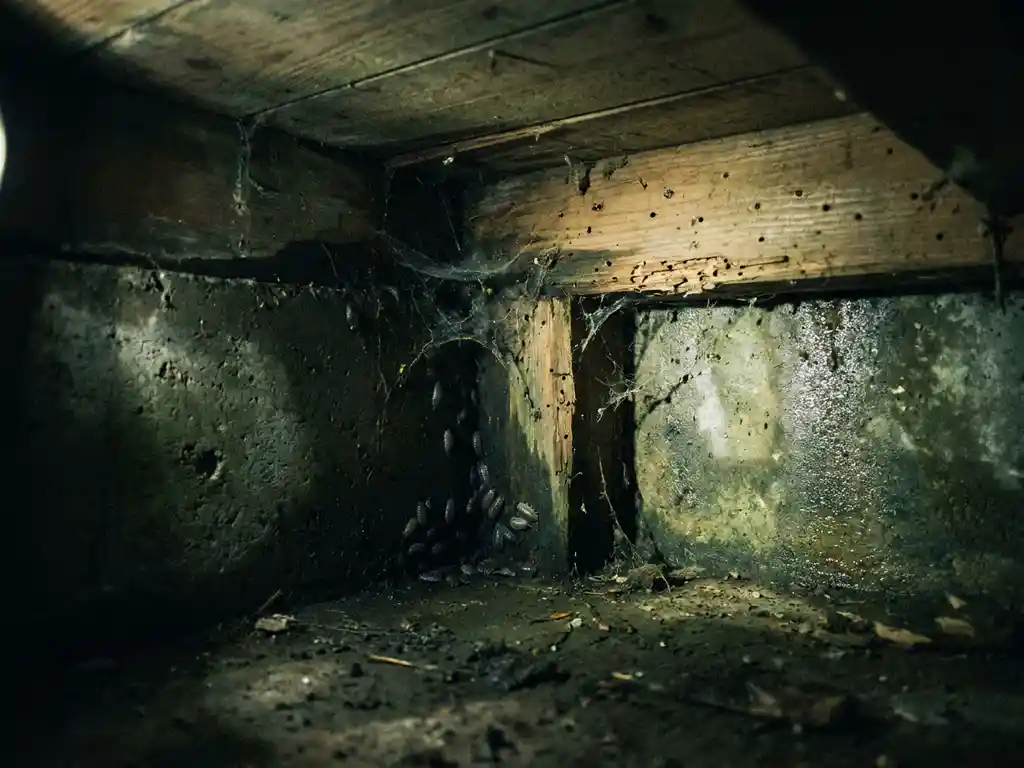
Yes, a damp crawl space can certainly lead to pests and woodworm. Moisture attracts insects, rodents, and fungi that find ideal living conditions in a wet, dark space beneath your home. The sooner you tackle the moisture problem, the lower the risk of structural damage to your house. In this article, we answer the most frequently asked questions about moisture, pests, and crawl space ventilation.
What attracts pests to a damp crawl space?
A damp crawl space is an ideal habitat for pests. High humidity, stagnant water, and rotting wood provide food, warmth, and shelter for insects and rodents. Cellar insects, woodlice, silverfish, mice, and rats, in particular, feel at home in a wet, poorly ventilated crawl space.
What attracts pests is a combination of factors. Damp wood begins to rot and attracts wood-eating insects. Mold and moss grow on wet surfaces and provide food for small insects. Rodents seek warmth and nesting opportunities, and a damp crawl space offers both.
Once pests have established themselves, it is difficult to驱赶 them without addressing the underlying cause, namely the moisture. Improving the ventilation in the crawl space is therefore the most effective way to keep pests out permanently.
How does woodworm develop due to moisture in the crawl space?
Woodworm is not caused directly by moisture, but moisture makes wood vulnerable to infestation. The larvae of the woodworm beetle preferentially attack soft, damp wood. When the wood in the crawl space is exposed to high humidity for a prolonged period, it softens and becomes an ideal breeding ground for woodworm beetles.
The beetle lays eggs in small cracks and pores of the wood. The larvae then eat their way through the wood, leaving behind the familiar small, round holes. This process is slow but inexorable. By the time you see the holes, the woodworm has already been able to go about its business for months or even years.
Damp wood in the crawl space is particularly vulnerable because it rarely dries. Without proper air circulation, humidity remains high, keeping conditions optimal for woodworm. A healthy crawl space with adequate ventilation keeps the wood drier and less attractive to these beetles.
How do you know if your crawl space is too damp?
Your crawl space is likely too damp if you recognize one or more of the following signs: a musty smell in the house, condensation on the inside of windows, visible mold spots on walls or floors, and damp patches on the ground floor. Humidity above 70 percent in the crawl space is considered too high.
The most reliable way to measure moisture levels is with a hygrometer, a simple measuring instrument that you can place in the crawl space. If the device consistently indicates values above 70 percent, action is required.
Other visible signs you can check are:
- Rust formation on metal parts in the crawl space
- Visible moisture or puddles on the bottom
- Mold or algae on the walls and foundation
- Wood that feels soft or shows discoloration
- A musty smell rising from the floor
If you recognize several of these signs, there is a good chance that your crawl space is too damp and that you need to take measures in the short term.
What are the consequences of a damp crawl space for the home?
A damp crawl space has consequences that extend beyond the space itself. Moisture seeps up through the floor and walls, leading to mold growth, wood rot, deterioration of insulation material, and an unhealthy indoor climate. In the long term, structural damage to the foundation and load-bearing parts of the home can occur.
The most common consequences listed:
- Wood rot: Load-bearing beams and floorboards are affected and lose their load-bearing capacity
- Mold: Mold spores spread through the air throughout the house and can cause health problems.
- Poor insulation: Damp insulation material loses its insulating effect, which leads to higher energy costs.
- Pests: As described earlier, moisture attracts insects and rodents.
- Musty smell: an unpleasant odor that is difficult to remove without addressing the cause
What many people do not realize is that a damp crawl space can also negatively affect the value of a home. During a home sale or valuation, moisture damage can make a significant difference in the final selling price.
How do you improve ventilation in the crawl space?
You improve ventilation in the crawl space by creating sufficient air circulation. The most effective solution is installing ventilation grilles in the exterior wall of the crawl space. These grilles ensure a constant supply of fresh air and the removal of humid air, causing humidity to drop structurally.
A good approach consists of the following steps:
- Check the existing situation: Are vents already present, and are they not clogged by dirt or insulation material?
- Determine the number of grids: As a rule of thumb, at least one ventilation grille is required per 50 square meters of floor area.
- Have new openings drilled: If there are insufficient or no grilles present, holes must be drilled in the outer wall for new ventilation grilles.
- Consider a mechanical ventilation system: In case of severe moisture problems, an electrically powered fan can further improve air circulation.
- Cover the bottom: A vapor barrier on the floor of the crawl space prevents groundwater from rising.
Drilling holes for ventilation grilles requires precision work, especially when dealing with reinforced concrete or masonry exterior walls. Leave this type of work to a specialist to prevent damage to the structure.
How De Betonboorder helps with crawl space ventilation
We at De Betonboorder help you quickly and professionally improve your crawl space ventilation. Whether you are a private individual or a contractor, we ensure a neat execution from start to finish. This is what we do for you:
- We drill precise holes in concrete, stone, or masonry for new ventilation grilles.
- We work with high-quality diamond core drills for clean penetration without unnecessary damage to the facade.
- We leave the workplace neat and tidy.
- In many cases, we can schedule a professional for you within two days.
- We will contact you within 24 hours of your request.
Good one crawl space ventilation can prevent moisture problems, reduce the musty smell in the house, and improve the insulation of your home. Do not wait until the damage becomes visible. Contact us and we'll arrange it quickly for you.
Related Articles
- How long do I have to wait after a stairwell before the stairs can be installed?
- How do I know if an opening in my floor is structurally sound?
- Is crawl space ventilation a permanent solution or does it require maintenance?
- Can an air conditioner regulate humidity?
- What is the difference between cooling capacity and electrical power in an air conditioner?
- Which air conditioner is suitable for an attic room?
- Can an air conditioner double the electricity bill?
- What happens if you accidentally drill through a pipe?
- Are you allowed to drill in a rental property without permission?
- How do I know if my wall is strong enough to hang something heavy on?
- Can you partially remove a load-bearing wall?
- What happens if you remove a load-bearing wall without a permit?