
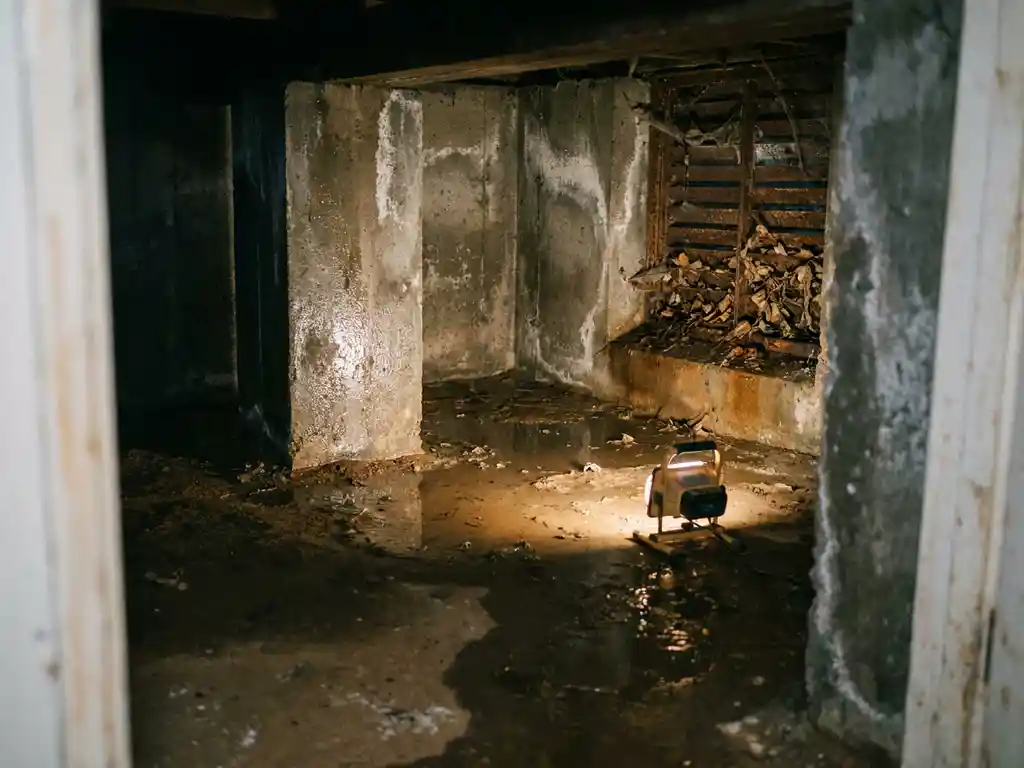
Yes, a damp crawl space can certainly become a problem when selling your house. Buyers and appraisers are paying increasing attention to the condition of the crawl space, and moisture problems can lead to a lower selling price, a longer selling time, or even the collapse of a deal. Fortunately, most moisture problems are easy to solve, especially if you address them before viewings begin. In this article, we answer the most frequently asked questions about moisture in the crawl space and what you can do about it as a seller.
What does a home buyer notice about a damp crawl space?
A home buyer often notices a damp crawl space during the first viewing, without having to look inside themselves. Musty air in the living room, visible damp patches on the floor or walls, and a ground floor that feels cold are signals that immediately raise suspicion. A critical buyer or a structural inspection brings the rest to light.
During a structural inspection, which is nowadays requested as standard for many home sales, the crawl space is always inspected. Inspectors pay attention to:
- Standing water or wet soil in the crawl space
- Mold formation on beams, insulation material, or pipes
- Wood rot on the floor joists or underside of the floor
- Missing or blocked ventilation openings
- A musty or earthy smell that permeates the living space
Even if a buyer is not an expert themselves, their buying agent or structural consultant will mention these points in the report. That report is subsequently used as a negotiating tool.
How does a damp crawl space affect the selling price of a house?
A damp crawl space has a negative effect on the selling price of a house. Buyers who discover moisture problems factor the expected repair costs into their offer, and in practice, that amount is often higher than the actual costs. Additionally, it can significantly weaken the seller's negotiating position.
The impact on the price depends on the severity of the situation. Minor moisture problems without structural damage generally result in a modest discount or a request for repairs before the transfer. More serious cases, involving wood rot or mold in the structure, can noticeably reduce the value of the home. Buyers perceive this as a risk and want to be compensated for it.
In addition to price, the selling time also plays a role. A home with a demonstrable moisture problem remains on the market longer because serious buyers back out or include additional conditions in the purchase agreement. A well-maintained crawl space, on the other hand, strengthens confidence and can result in a quicker sale.
What are the most common causes of moisture in a crawl space?
The most common cause of moisture in a crawl space is insufficient ventilation. When humid air cannot escape properly, moisture condenses on cold surfaces such as beams and pipes. In addition, groundwater, leaks, and a missing vapor barrier play a major role in moisture problems under the floor.
The main causes listed:
- Poor or missing crawl space ventilation: Without sufficient airflow, moisture accumulates.
- High groundwater level: Water can enter the crawl space during precipitation or in low-lying areas.
- Missing or damaged vapor barrier: Without foil on the ground, ground moisture evaporates directly into the crawl space.
- Leaking pipes or drains: Small leaks under the floor are sometimes only noticed when damage has already occurred.
- Clogged vents: grates that are clogged with dirt or have been deliberately sealed off
In many older homes, the crawl space ventilation simply no longer sufficient for the current situation, especially if insulation has been added later that further impedes air circulation.
How do you solve moisture problems in a crawl space before selling?
Moisture problems in a crawl space are solved by addressing the cause, not just the symptoms. The most effective approach combines improving ventilation, installing a vapor barrier, and checking for leaks. Anyone who arranges this before the sale is in a much stronger negotiating position.
Practical steps you can take:
- Check the ventilation openings: Are they clear and still functioning? Clogged grilles are easy to clean or replace.
- Have extra ventilation openings installed: In exterior walls, a ventilation grille can be installed through a concrete drill hole, which immediately improves air circulation.
- Install a vapor barrier: A PE film on the crawl space floor prevents ground moisture from evaporating into the space.
- Check for leaks: Have pipes and drains checked by a plumber.
- Remove affected material: Treating mold on beams or replacing damaged insulation material is essential for a positive inspection.
A well-functioning concrete driller can install ventilation openings in the foundation or exterior walls so that fresh air can flow through the crawl space. This is often a quick and cost-effective intervention that yields visible results.
Do you need to report moisture problems in the crawl space when selling?
Yes, as a seller, you are obliged to disclose known defects, including moisture problems in the crawl space. This follows from the duty of disclosure under Dutch civil law. If you knowingly conceal a known defect, you run the risk of liability after the transfer, even if an “age clause” is included in the purchase agreement.
In principle, the duty to disclose takes precedence over the buyer's duty to investigate. This means that “the buyer could have seen it himself” is not a sufficient defense if you, as the seller, were aware of the problem. Therefore, disclosing is not only honest, but also legally sound.
Practically speaking, it is smart not only to report moisture problems but also to have them resolved before the sale. A problem that has been resolved and documented with an invoice or report gives buyers confidence and strengthens your negotiating position. Conversely, an unresolved problem that you report invites substantial discounts.
How De Betonboorder helps with crawl space ventilation
Do you want to tackle your home's crawl space quickly and professionally before selling? We are happy to help you with that. With DeBetonboorder, you can easily drill extra ventilation openings in the foundation or exterior walls, allowing damp air to leave the crawl space and fresh air to flow in.
- We drill precise holes at the desired locations in concrete or masonry.
- Our professionals work neatly and leave the workplace clean.
- In many cases, we can start working for you within two days.
- We operate throughout the Netherlands, for both private individuals and contractors.
- After drilling, a ventilation grille can be installed immediately for optimal air circulation.
Good crawl space ventilation not only solves moisture problems, but also reduces the musty smell in the house and contributes to a better insulation value of your home. These are exactly the arguments that convince a buyer. Feel free to contact us and we ensure your crawl space is ready for sale.
Related Articles
- Is moisture from the ground really coming into my house?
- How much does a monoblock air conditioner cost? Complete price overview
- Where should you hang an air conditioner in the living room for the best cooling?
- What is the difference between a monoblock and a split air conditioner?
- What is the ideal humidity with air conditioning?
- What is the difference between a portable and a monoblock air conditioner?
- Can an air conditioner work in extreme heat?
- Can an air conditioner cause a draft?
- What do I need to tell my neighbors before drilling starts?
- What do you do if there is a crack in the wall after drilling?
- How do you prevent a tile from cracking when drilling?
- Can you remove a load-bearing wall without a structural calculation?