
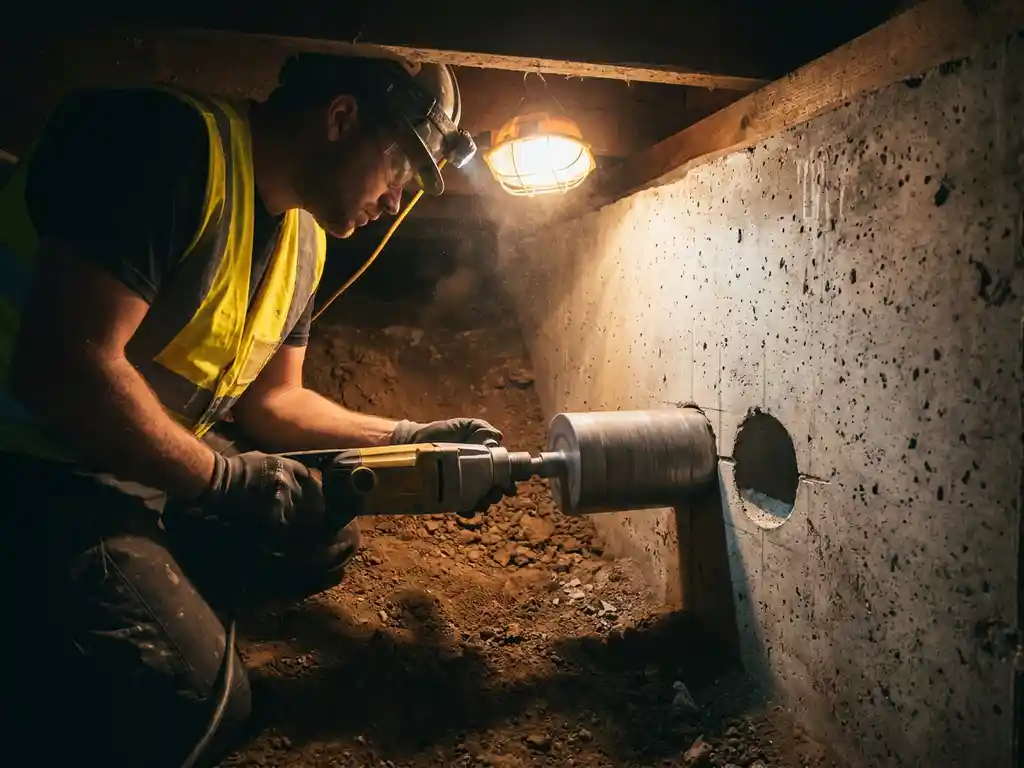
Ventilation holes in the crawl space are drilled using a diamond drill equipped with a diamond core of the correct diameter. This tool cuts precisely through concrete or masonry without damaging the surrounding structure. The holes are made in the outer wall of the crawl space so that fresh air can circulate freely and moisture is prevented from accumulating. In this article, we answer the most frequently asked questions about drilling ventilation holes in the crawl space.
Which tools are used to drill ventilation holes?
To drill ventilation holes in the crawl space, use a wet or dry diamond drill with a matching diamond core drill bit. This type of tool is suitable for concrete, masonry, and other hard materials. A standard hammer drill is not suitable for this purpose, as it causes vibrations that can damage the surrounding material.
The diamond core drill cuts through the material in a controlled manner, resulting in a tight and precise hole. The appropriate core is selected depending on the wall material, such as reinforced concrete, aerated concrete, or ordinary masonry. During wet drilling procedures, water is used to cool the core and limit dust formation. This is beneficial not only for the tool but also for the working environment.
In addition to the drill, you also need additional tools, such as a water collection container, a vacuum cleaner or a wet vacuum, and protective equipment. If you are working in an occupied building, it is especially important to minimize dust and dirt as much as possible.
What is the correct size for ventilation holes in the crawl space?
The standard diameter for ventilation holes in the crawl space is between 100 and 150 millimeters. A diameter of 125 mm is most commonly used and offers a good balance between sufficient airflow and a clear opening that can be easily covered with a ventilation grille.
The exact size depends on the size of the crawl space and the number of holes you make. A larger crawl space requires more or larger openings to ensure sufficient air circulation. As a rule of thumb, the total ventilation opening must be at least 1/150 of the floor area, but local building regulations may impose additional requirements.
Also take into account the size of the ventilation grille you want to install. Grilles are available in standard sizes, so it is wise to first determine which grille you will be using and match the drilling size accordingly. This prevents the grille from not fitting properly or requiring additional adjustments.
Where should ventilation holes be placed in the crawl space?
Ventilation holes in the crawl space are installed in the exterior walls of the home, as low as possible above ground level. Preferably, they are placed on multiple sides of the house to create a continuous airflow that runs through the entire crawl space.
The ideal positioning takes the wind direction into account. By making holes on the windward side (the side facing the wind) and the leeward side (the side facing away), a natural ventilation flow is created. This principle is called through-flow ventilation and is the most effective way to combat moisture in the crawl space.
Avoid placing ventilation holes in places where water can enter, such as directly next to a drain or in a low spot in the wall that floods during rain. Also, check whether there are pipes or structural elements in the wall at the intended drilling position before you start drilling.
More information about the installation and operation of crawl space ventilation you can find it on our service page.
Can you drill ventilation holes in the crawl space yourself?
It is technically possible to drill ventilation holes in the crawl space yourself, but this is only recommended if you have experience using a diamond drill. For inexperienced users, the risk of damaging the wall or incorrect placement of the holes is real.
Moreover, a crawl space is a cramped, dark, and sometimes damp working environment. Maneuvering a heavy drill in such a space requires technical skill and the proper safety equipment. Drilling into the wall from the outside is often easier, but even then, you must know exactly where you are drilling to avoid pipes or reinforcing steel.
If you are considering doing it yourself, make sure you at least have:
- A suitable diamond drilling machine (rent or buy)
- The right diamond drill bit for your wall material
- Protective clothing, gloves and a dust mask
- A pipe locator to detect hidden pipes and reinforcing steel
- Sufficient lighting in and around the crawl space
Do you doubt your own capabilities, or do you want to be sure that the work is carried out properly and safely? Then it is wise to hire a professional via our craftsman request page.
How much does it cost to drill ventilation holes in the crawl space?
The cost of drilling ventilation holes in the crawl space depends on several factors, such as the number of holes, the diameter, the wall material, and the accessibility of the workspace. A crawl space requires extra effort due to the limited space, which affects the time and materials required.
Factors that influence the price include:
- The number of holes to be drilled
- The thickness and material of the wall (concrete, masonry, reinforced concrete)
- The accessibility of the drilling site
- Whether additional work is required, such as installing grilles
For an accurate price estimate, it is always wise to request a quote. This way, you know exactly where you stand and won't be faced with any surprises.
How De Betonboorder helps with crawl space ventilation
Good one crawl space ventilation is essential for a dry and healthy home. Moisture in the crawl space can lead to mold growth, wood rot, and a musty odor in the home. We ensure professional execution from start to finish, so you don't have to worry about a thing. This is what we arrange for you:
- Professional drilling of ventilation holes with high-quality diamond core drills
- Precise positioning for optimal air circulation
- Work in both unoccupied and occupied situations
- Nationwide network of experienced professionals, available within two days in many cases
- Neat handover, where the workplace is left clean and tidy
Would you like to know what we can do for your situation? Please feel free to contact us. contact us or request a professional directly via our application page. We will contact you within 24 hours.
Related Articles
- What is needed to create an opening in the upper floor for a staircase?
- How do I make an extra floor accessible in a terraced house?
- Innova 12HP vs Innova 15HP: how much power do you really need?
- Innova vs. the competition: why choose an Innova monoblock air conditioner?
- Air conditioning for a 30 m² living room: what cooling capacity do you need?
- Innova ELEC series compared: 12HP vs 15HP vs 18HP
- Air conditioning for a home practice: cool and productive through the summer
- Which air conditioner is best for an office?
- Can an air conditioner prevent equipment from overheating?
- What is the difference between R32 and R410A refrigerant?
- What is the difference between an impact drill and a hammer drill?
- How do you repair a drill hole in the wall that is too big?