
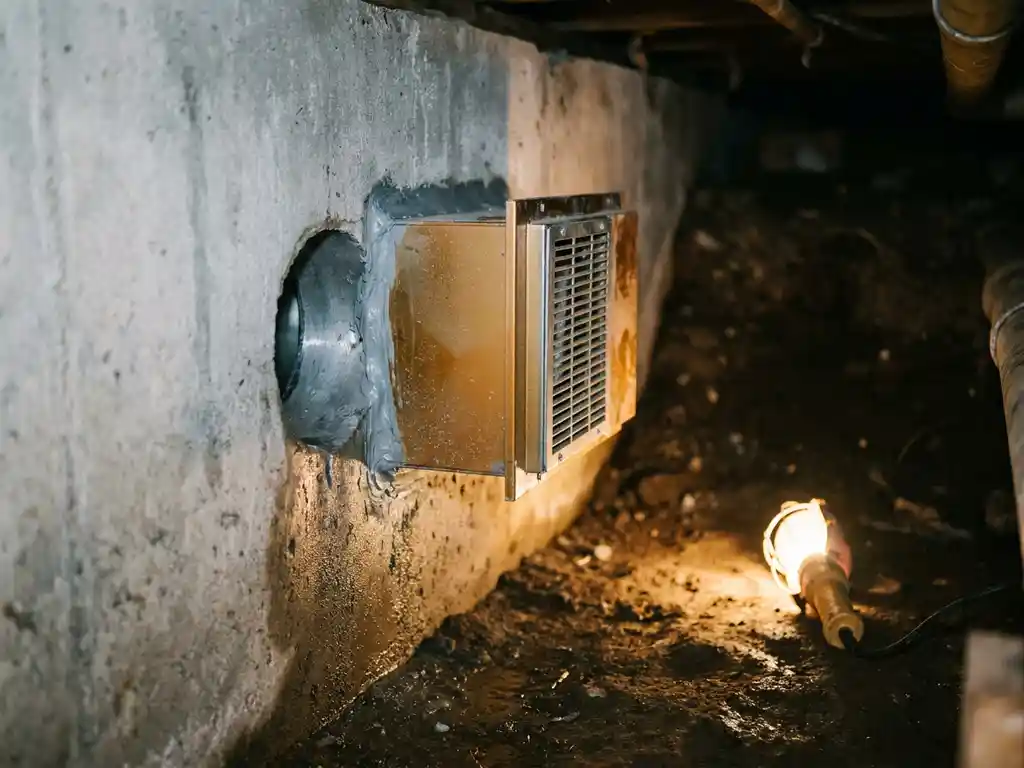
Mechanical crawl space ventilation works by means of an electric fan that actively extracts air from the crawl space or supplies fresh outside air, ensuring that humid air is continuously refreshed. This system provides a stable airflow regardless of the weather or wind direction, making it more reliable than passive alternatives. In this article, we answer the most frequently asked questions about how such a system works, why it is necessary, and what the installation entails.
What does a mechanical ventilation system do in a crawl space?
A mechanical ventilation system in a crawl space is an electrically powered installation that actively extracts moist air or blows in dry outside air. Due to this forced airflow, the relative humidity in the crawl space remains low, which prevents mold growth, wood rot, and moisture penetration into the living space.
The core of the system consists of one or more fans connected to the crawl space via ducts or grilles. Depending on the type of system, air is either extracted and discharged outside, or outside air is actively drawn in and the humid air is pushed out through an exhaust grille. The fan runs continuously or is controlled by a hygrostat controller that measures the humidity and automatically switches the fan on or off based on the measured values.
A well-functioning system also ensures that ground heat and the insulation value of the floor are better utilized, because moisture in the crawl space significantly reduces the insulating effect of floor insulation.
Why is crawl space ventilation necessary in Dutch homes?
Crawl space ventilation is necessary in Dutch homes because the soil beneath a house constantly evaporates moisture. In an enclosed or poorly ventilated crawl space, this moisture accumulates in the air, leading to condensation on beams, floorboards, and pipes. The Netherlands has a relatively humid climate, which exacerbates this problem.
The consequences of insufficient crawl space ventilation are noticeable throughout the entire home. Floors may start creaking or sag as wooden joists are affected by mold or wood rot. Residents often experience a musty odor in the house, which originates directly from the crawl space and rises through cracks and floorboards. In more severe cases, structural damage to the foundation or load-bearing floor can occur.
In addition, the construction period of the home plays a role. Many Dutch homes built before 1980 have crawl spaces with limited or outdated ventilation openings that no longer meet current requirements. In such cases, additional mechanical ventilation is almost always the most effective solution.
What is the difference between mechanical and natural crawl space ventilation?
The main difference between mechanical and natural crawl space ventilation is the drive for the airflow. Natural ventilation relies on the pressure difference between inside and outside and on wind force to flow air through vents. Mechanical ventilation uses an electric fan to ensure an active, constant airflow, regardless of weather conditions.
Natural crawl space ventilation
In a natural system, ventilation openings or grilles are installed in the exterior walls. Air flows through the crawl space naturally when there is a sufficient pressure difference. This system works well if the crawl space is sufficiently large, the grilles are correctly positioned, and external conditions are favorable. However, on windless, damp days, the airflow can stagnate, precisely at the moments when ventilation is most needed.
Mechanical crawl space ventilation
A mechanical system is not dependent on wind or weather conditions. The fan always ensures predictable air exchange. This makes the system more suitable for crawl spaces with an unfavorable orientation, limited exterior wall surface area, or a high moisture load from the soil. The energy consumption of modern fans is low, keeping additional costs on the energy bill to a minimum.
When is mechanical crawl space ventilation the best choice?
Mechanical crawl space ventilation is the best choice when natural ventilation yields insufficient results or is structurally impossible. This is the case for crawl spaces with limited exterior wall surface area, high groundwater levels, a compact layout, or persistent moisture problems despite the presence of vents.
Concrete situations where mechanical ventilation is preferred:
- The crawl space has too few outside air vents due to the location or construction of the home.
- There is persistent high humidity, visible mold, or a persistent musty odor.
- The house is located in an area with little wind or is surrounded by buildings that limit wind pressure.
- Existing grilles are clogged, blocked, or outdated, and replacement alone does not solve the problem.
- Floor insulation has been installed that obstructs natural air circulation.
Even in homes where a crawl space is sealed with ground insulation or foil, mechanical ventilation is necessary to maintain the level of the remaining air in the space.
How is mechanical crawl space ventilation installed?
The installation of mechanical crawl space ventilation consists of installing a fan, drilling through the exterior wall or foundation for the air ducts, and connecting the system to power. The exact approach depends on the dimensions and layout of the crawl space.
The installation proceeds broadly in the following steps:
- Inspection of the crawl space: The dimensions, humidity level, and existing ventilation openings are assessed to select the correct system.
- Drilling holes: Openings are drilled in the outer wall or foundation for the supply and drainage channels. This requires precision work to avoid damaging the structure.
- Fan placement: The fan is mounted in or near the crawl space, often on the outside of the house or in the crawl space itself.
- Connection to electricity: The system is connected to the power grid, optionally with a hygrostat controller for automatic control.
- Sealing and finishing: The penetrations are neatly finished and checked for airtightness.
Drilling the necessary openings in concrete or masonry is a crucial part of the installation. Accurate drilling prevents cracking in the foundation and ensures a tight, watertight penetration.
How much does it cost to have mechanical crawl space ventilation installed?
The cost of having mechanical crawl space ventilation installed varies depending on the size of the crawl space, the chosen system, and the amount of drilling required. A simple system for an average home is generally affordable, but an on-site inspection is necessary for an accurate quote.
The total investment consists of multiple cost components:
- Material costs: The fan, ducts, grilles, and any hygrostat controller
- Labor costs: The time for inspection, drilling, and installation
- Drilling work: The number and diameter of the holes to be drilled in concrete or masonry
- Finish: Neatly sealing and finishing the cable entries
Larger crawl spaces or situations requiring multiple fans naturally demand a higher investment. Always seek information beforehand via a no-obligation quote so that you know exactly what to expect.
How De Betonboorder helps with crawl space ventilation
We handle the complete installation of crawl space ventilation, from inspection to finishing. Drilling the necessary openings in concrete, foundations, or masonry is a specialized skill, and that is precisely where our professionals excel. What we arrange for you:
- Professional drilling of ventilation openings in concrete and masonry with diamond core drills
- Minimal collateral damage to the surrounding structure
- Installation of the ventilation system including grilles and ducts
- Tidy handover: the workplace is left clean and tidy.
- In many cases, a professional on site within two working days.
Good crawl space ventilation prevents moisture problems, reduces musty odors, and improves the insulation value of your home. Via The Concrete Driller You can arrange this quickly and easily. Contact us today. get in touch for a no-obligation quote, and we will contact you within 24 hours.
Related Articles
- Does crawl space ventilation also work in the winter?
- Can air conditioning worsen allergies?
- Innova vs Qlima: which air conditioner is the quietest in the bedroom?
- Can an air conditioner cause a headache?
- What types of air conditioners exist?
- How do I know if a job is too big to do myself?
- How do I know if my wall is made of concrete or sand-lime brick?
- Why does a concrete driller use water when drilling?
- What is wet drilling and why is it used?
- Removing a load-bearing wall in a terraced house: what should you look out for?
- What happens if you remove a load-bearing wall without a permit?
- What preparation is needed for load-bearing wall removal?