
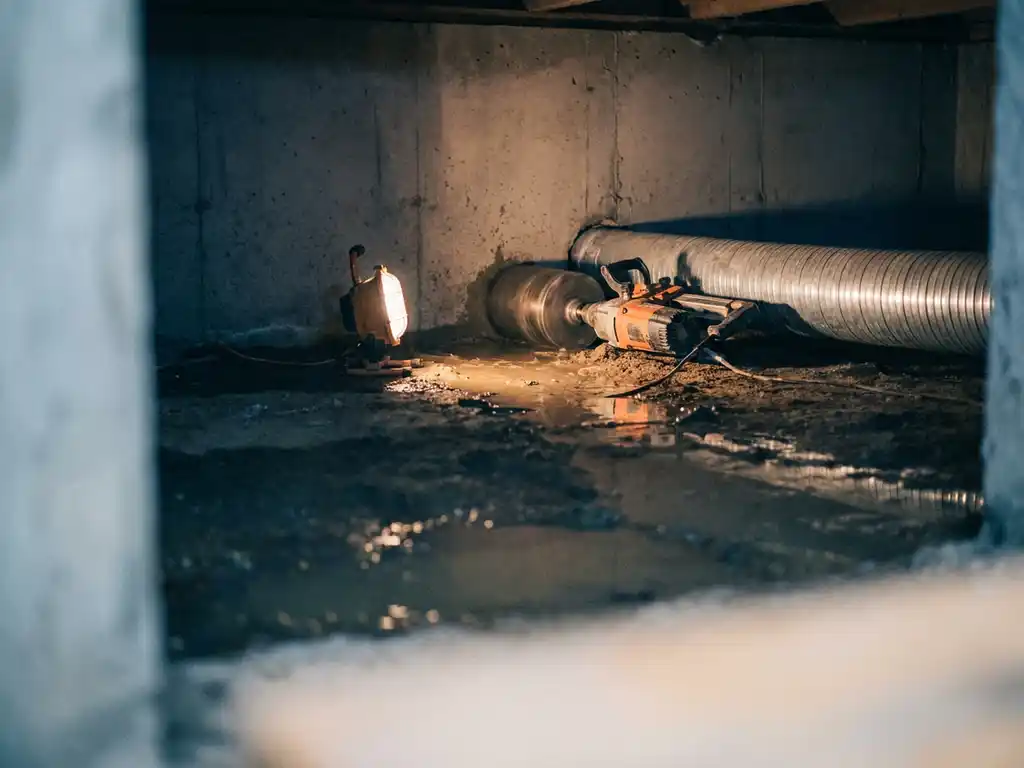
If you discover water in your crawl space, the first step is to find the cause and remedy it as soon as possible. Standing water in a crawl space is not a harmless problem. It draws moisture up into your floor and walls, promotes mold growth, and eventually damages the structure of your home. In this article, we answer the most frequently asked questions about water in the crawl space, so you know what to do and when to call for help.
How does water get into a crawl space?
Water in a crawl space typically enters via three routes: groundwater seeping up, rainwater entering from the outside, or condensation due to poor ventilation. crawl space ventilationWhich cause fits your situation also determines which solution is most effective.
Groundwater is a common culprit, especially in regions with high groundwater levels or after a period of heavy rainfall. The water seeks the path of least resistance and often finds it through small cracks in the foundation or through the unpaved floor of the crawl space. Rainwater can enter if the drainage around the house is not functioning properly, if the gutters overflow, or if the terrain surrounding the home slopes towards the house rather than away. Condensation occurs when warm, humid air comes into contact with the cool subsoil of the crawl space. Without adequate ventilation, that moisture has nowhere to go and settles on the floor and structural elements.
What are the dangers of water in the crawl space?
Water in the crawl space is a serious problem that you cannot ignore. It causes mold growth, wood rot in floor joists, a musty smell in the house, and can eventually even damage the foundation. The longer the moisture remains present, the greater the damage and the associated costs.
Mold is one of the most direct dangers. Spores spread upwards through the air into your home and can cause health problems, particularly for people with asthma or allergies. Wooden floor joists that remain damp for extended periods become softer and can eventually sag. This is not only uncomfortable but also dangerous. Additionally, a damp crawl space reduces the insulating capacity of your floor, which is noticeable in higher heating costs. A wet floor also attracts pests such as woodworm and cockroaches, which in turn cause additional damage.
How do I know if my crawl space is sufficiently ventilated?
A crawl space is adequately ventilated if there is a constant airflow that removes moisture before it can condense or accumulate. Signs of insufficient ventilation include a musty smell in the house, condensation on the underside of the floor, visible mold, or a continuously damp soil, even during dry periods.
You can make a general assessment of the ventilation yourself by checking whether there are sufficient ventilation openings in the exterior wall of the crawl space. The rule of thumb is that there should be openings on multiple sides of the space so that air can actually flow through. If all openings are on the same side, no real airflow is possible. Also, check whether the existing vents are clogged with dirt, cobwebs, or insulation material. If the crawl space still feels damp after a dry summer, this strongly indicates a ventilation deficiency.
What can I do myself if there is water in the crawl space?
If there is standing water in the crawl space, these are the steps you can take yourself: remove the standing water, provide temporary ventilation, investigate the cause, and take measures to prevent recurrence. Minor problems can sometimes be solved independently, but professional help is needed for structural moisture problems.
- Remove the water: Use a wet vacuum or a submersible pump to pump out the standing water. Then let the room dry as thoroughly as possible.
- Ventilate actively: Place a fan at the crawl space opening to promote air circulation and speed up the drying process.
- Check the outside: Check whether gutters drain properly, whether the terrain around the house slopes away from the house, and whether cracks are visible in the foundation.
- Check the ventilation openings: Clear existing grilles of dirt and check that they are not blocked or damaged.
- Install a vapor barrier: A foil on the floor of the crawl space can prevent moisture from rising from the ground. This is a relatively simple measure that can have a significant effect.
Please note that these measures provide temporary relief. If the water returns or the cause is unclear, it is advisable to have a specialist take a look.
When should I hire a professional for my crawl space?
Call in a professional if water returns to the crawl space after removal, if there is visible mold or wood rot, if you cannot determine where the water is coming from, or if the existing ventilation proves to be structurally inadequate. These are signs that there is more going on than a one-off frost pipe or a clogged vent.
A professional can accurately determine the cause and offer targeted solutions, such as installing additional ventilation openings in the exterior wall or installing a mechanical ventilation system. In the case of foundation problems or severe moisture damage, prompt intervention is essential to prevent further structural damage. Do not wait too long in that case, because the longer you wait, the greater the damage and the costs.
How De Betonboorder helps with crawl space ventilation
We at De Betonboorder help you with a concrete and sustainable solution for moisture problems in the crawl space. Through us, you can have crawl space ventilation installed quickly and easily, so that moisture no longer has a chance to cause damage. This is what we do for you:
- We drill ventilation openings in the exterior wall of your home, precisely in the right place for optimal airflow.
- We install high-quality ventilation grilles that remove moisture and tackle the musty smell in the house.
- We work for private individuals as well as contractors and SMEs throughout the Netherlands.
- We leave the workplace neat and tidy after the job is finished.
- In many cases, we can schedule a professional within two days and contact you within 24 hours.
Good one crawl space ventilation is one of the most effective ways to structurally solve moisture problems and improve the insulation value of your home. Would you like to know what we can do for your situation? Contact us and together we look at the best solution for your crawl space.
Related Articles
- How many days is my house in a mess near a stairwell?
- What does mold on the underside of my floor mean?
- Are my wall ventilation grilles blocked, or are there too few?
- Does moisture damage in the crawl space affect the value of my house?
- How does a ducted air conditioning system work?
- How much does it cost to have your air conditioning on for 1 hour?
- Which air conditioner is suitable for an attic room?
- What happens if damage occurs during drilling?
- Why does a concrete driller use water when drilling?
- What is the difference between removing a load-bearing wall and removing a regular wall?
- Do you need a permit to remove a load-bearing wall?
- How do you test whether a wall is load-bearing?